Marine Patrol Troopers Step Up Boating-Under-the-Influence Patrols Along South Alabama Waterways
Alabama Marine Patrol troopers are adding extra units on South Alabama waterways this weekend as part of a national push against drunk boating.
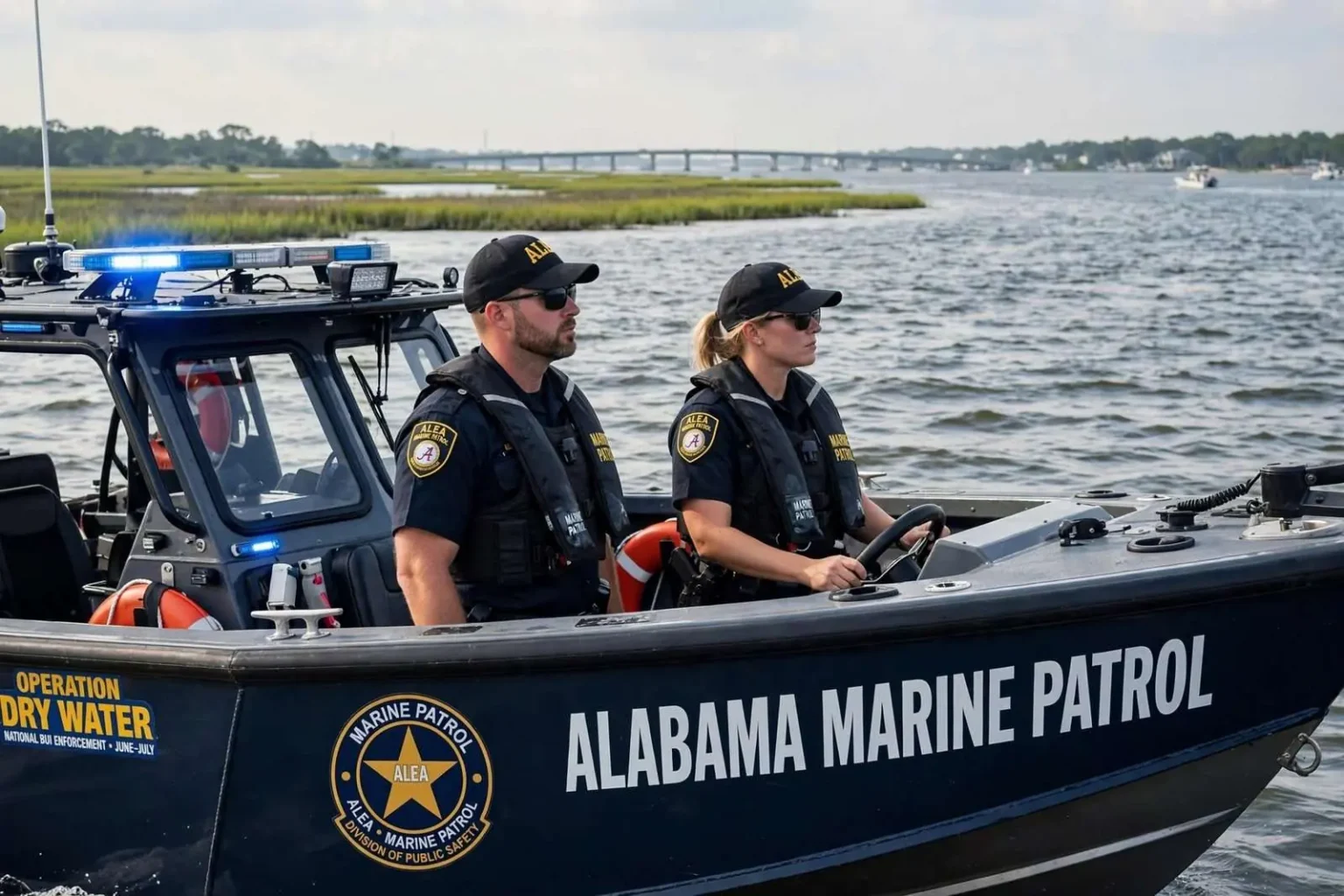
Alabama Marine Patrol troopers are putting extra boats on the water this weekend as part of a nationwide push to cut down on alcohol-related boating accidents along the state’s rivers, bays and coastal waterways, including those popular with Mobile and Baldwin county boaters.
The stepped-up patrols are part of Operation Dry Water, a campaign launched in 2009 by the National Association of State Boating Law Administrators in partnership with the U.S. Coast Guard. Troopers with the Alabama Law Enforcement Agency’s Marine Patrol Division are adding additional units from Friday through Sunday, focusing on the holiday stretch leading into the Fourth of July, historically one of the deadliest periods for boating accidents nationwide.
Operation Dry Water has grown into one of the largest coordinated enforcement campaigns in recreational boating, drawing participation from agencies in every state. The idea is straightforward: put a visible law enforcement presence on the water during the busiest weekend of the year, and remove operators who have been drinking before their decisions turn into collisions.
The case against drinking and boating
According to the Coast Guard’s most recent recreational boating statistics, alcohol was a primary factor in 277 boating crashes nationally, contributing to 108 of 610 total boating deaths and causing nearly 250 injuries in a single year. The Coast Guard has identified alcohol as the single leading contributing factor in recreational boater deaths.
The reasons alcohol is so deadly on the water are physical as much as legal. Sun exposure, wind, engine noise, vibration and the rocking motion of a boat intensify alcohol’s effects — a phenomenon boating safety researchers call boater’s fatigue — so an operator who would be marginally impaired on the highway can be dangerously impaired at the helm after the same number of drinks.
Impairment degrades exactly the skills that boating demands: judgment of speed and distance, balance, night vision, and the reaction time needed to avoid the collisions that account for most boating accidents. Falls overboard, many of them tied to alcohol, remain among the top causes of boating fatalities, and victims who enter the water impaired are far less able to save themselves.
Alabama law treats boating under the influence as a serious offense, with operators subject to arrest and prosecution much like drivers on the highway. Marine Patrol troopers on weekend patrols conduct vessel checks and, where impairment is suspected, administer sobriety testing adapted for the marine environment — a standard part of Operation Dry Water enforcement in every participating state.
Col. John E. Richardson, director of ALEA’s Department of Public Safety, urged boaters to take a pledge against drinking and driving on the water. He asked residents to never operate a boat while intoxicated, never put themselves or passengers at risk, and never treat boating under the influence as anything less than dangerous.
Richardson’s message reflects the tone enforcement agencies have adopted for the campaign: rather than simply announcing patrols, officials ask boaters to commit in advance to sober operation, designating a sober operator the way highway campaigns promote a designated driver. Boating groups and marinas along the Gulf Coast have echoed the pledge during the holiday weekend, when launch ramps and sandbars fill with vessels of every size.
July, the deadliest month on the water
National reporting shows accidents spike sharply in July, with close to 1,000 crashes and more than 120 deaths recorded in that month alone in recent data, accounting for roughly a fifth of all boating fatalities for the year.
The July surge is a function of exposure: more boats on the water than any other month, more operators with limited experience at the helm, more congestion at ramps and channels, and more hours logged between daylight and dark. Add a holiday weekend to the busiest boating month, and agencies get the conditions under which small mistakes — a sharp turn, a crowded channel, an overloaded skiff — turn into emergency calls.
Alabama officials say the extra patrols are meant to head off that pattern before it starts, particularly around the busy holiday weekend when waterways across Mobile and Baldwin counties see heavy recreational traffic.
The patrol zones in question are among the busiest recreational waters in the Southeast. Mobile Bay and the Mobile-Tensaw Delta draw boaters from the entire metro area, Baldwin County’s lakes and the Intracoastal Waterway funnel weekend traffic toward the coast, and the waters around Gulf Shores and Orange Beach fill with everything from kayaks to offshore fishing boats once the summer season reaches full speed.
For troopers, the geography is a challenge in itself. Marine Patrol units cover large, open water where a distress call may be miles from the nearest responder, and response times are measured differently than on the highway. That reality is why the division concentrates its enforcement where the traffic is heaviest — at ramps, passes and the sandbar gathering spots where impaired operation is most likely to cluster.
The push comes a few months after a crash on the Intracoastal Waterway in Baldwin County left three people injured, a reminder to local boaters that serious collisions happen close to home and not just in distant accident statistics.
How Alabama’s Marine Patrol works the water
The Alabama Law Enforcement Agency, created by the Legislature in 2013 to consolidate the state’s law enforcement functions, houses the Marine Patrol Division within its Department of Public Safety. The division carries on work that Alabama has assigned to marine officers for generations: enforcing boating laws, investigating accidents, rescuing stranded boaters and inspecting vessels on waters statewide.
Troopers assigned to the coast are responsible for an enormous patrol area that includes the Mobile-Tensaw Delta, Mobile Bay, the Intracoastal Waterway, Perdido Bay and the state’s coastal river systems. During peak season the division also works alongside local marine police from Gulf Shores, Orange Beach and other municipalities, coordinating on the water where jurisdictions meet.
During Operation Dry Water weekend, the extra units serve a dual purpose: catching impaired operators and deterring the rest. Experience from the campaign’s first years showed measurable results, with participating agencies nationwide removing hundreds of impaired operators from the water each June and July weekend and recording drops in alcohol-related accidents during patrol hours.
The campaign’s educational arm runs alongside enforcement. Boating safety advocates use the weekend to remind operators of the basics that prevent most fatalities — wear a life jacket, take a boater safety course, file a float plan, check the weather, and never boat alone at night. The Coast Guard and NASBLA promote the same checklist nationally, and Alabama’s boating education requirement means most operators on the water have already passed through a safety course as part of licensing.
What boaters should know this weekend
For the holiday weekend, marine officials’ guidance to the boating public is consistent across agencies. Choose a sober operator before leaving the dock, and remember that passengers can be impaired too — intoxication is a factor in drownings and falls overboard, not just collisions. Keep life jackets accessible for every person aboard, and have children wearing them. Watch speed and wake in crowded areas, keep navigation lights working for evening runs, and carry the safety equipment the law requires.
Boaters who encounter an impaired or reckless operator are encouraged to report it to authorities, providing location, vessel description and direction of travel if possible. Reports during Operation Dry Water weekend receive priority response, since troopers are staged and specifically looking for those situations.
The penalties for boating under the influence in Alabama can include arrest, fines, jail time and the loss of boating privileges, and a BUI conviction follows an operator much like a DUI on the highway. Troopers stress that the arrest is the avoidable part of the equation: the same weekend spent on the water with a sober captain carries no risk of either.
Operation Dry Water’s message, on the Gulf Coast as everywhere, comes down to the numbers the Coast Guard keeps: alcohol remains the leading factor in recreational boater deaths, and July is the deadliest month on American waters. The extra boats running this weekend from the Mobile Bay causeway to Perdido Pass are there to make sure the holiday is remembered for the fireworks, not a mayday call.
Local businesses feel the weekend’s weight as well. Marinas, bait shops and fuel docks along the causeway and the beach highways see their busiest stretches of the summer around the Fourth, and the same traffic that fills their facilities fills the water above their no-wake zones. Safety campaigns that keep the weekend calm protect not only boaters but the coastal economy that depends on the water staying open and tragedy-free through the peak of the season.
Troopers will be back at full patrol strength through the holiday itself, and officials urge anyone headed to the water to build the sober-operator plan into the trip before leaving the driveway, when it is still easy to make the right call.