

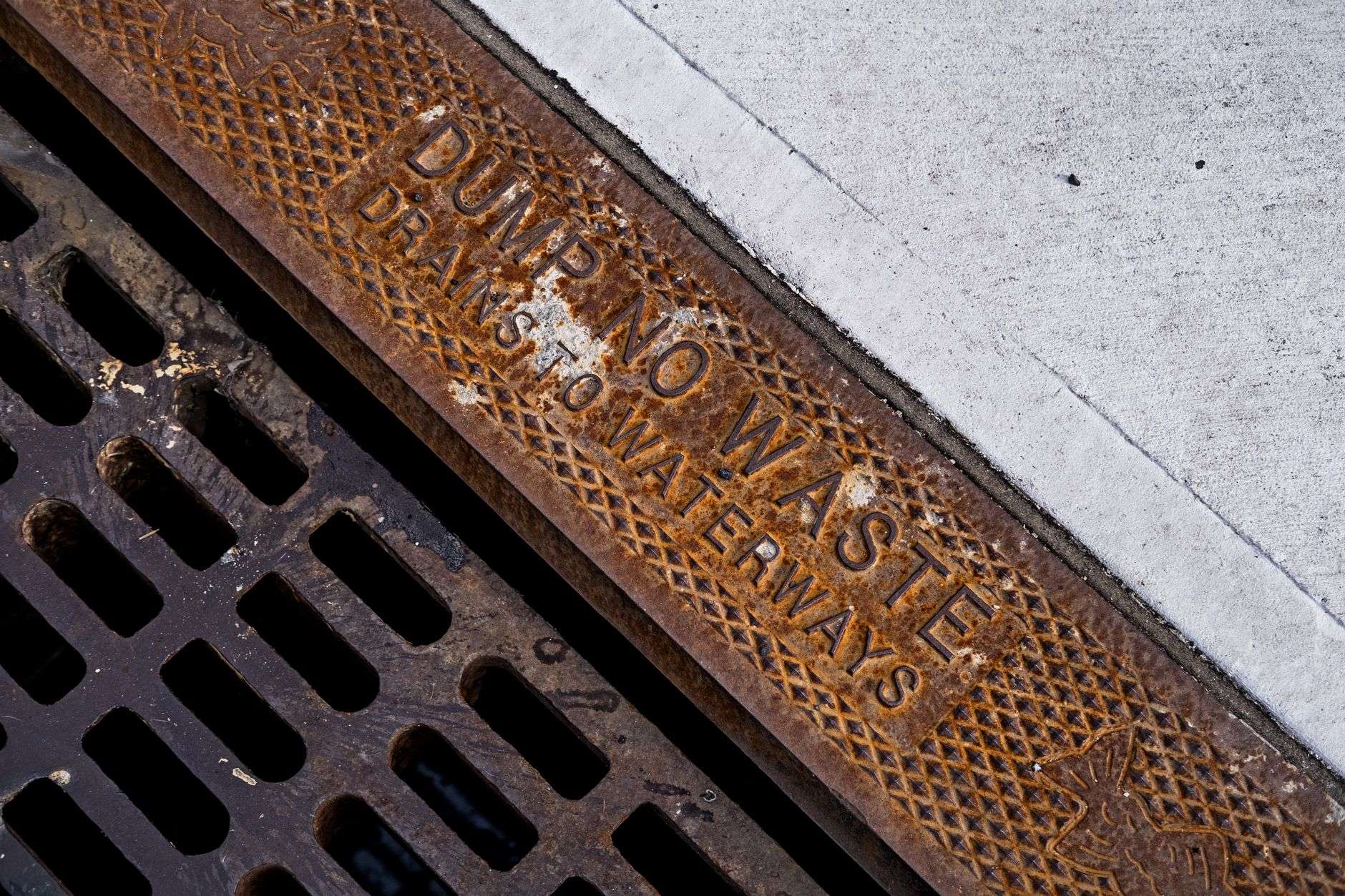
About 2,010 gallons of wastewater escaped the sewer system and reached Spring Creek on Sept. 12 after a blockage on a main line near 2854 Longleaf Drive in Mobile, according to the Mobile Area Water and Sewer System.
Crews cleared the obstruction and, MAWSS said, are taking steps intended to keep the same stretch of line from overflowing again. The utility reported that the spill was brought to its attention by a citizen rather than by an alarm or a routine inspection.
Mobile County Health Officer Dr. Kevin Michaels issued the standard public health guidance that accompanies these events, urging residents to stay out of the affected water and soil.
What a Sanitary Sewer Overflow Is
A sanitary sewer overflow, abbreviated SSO in utility and regulatory documents, occurs when untreated or partially treated sewage leaves the collection system before it reaches a wastewater treatment plant. The escape point is usually a manhole, a broken or cracked pipe, a pump station or a building cleanout.
That is a different thing from a treatment plant discharge, which is permitted, monitored and treated. An SSO is by definition an unpermitted release, and that is why each one is documented, reported and, when it reaches a waterway, followed by a public health advisory.
The health concern is straightforward. Sewage can carry bacteria, viruses and parasites capable of causing diarrhea, vomiting, skin infections and other illnesses. The volume in this case — roughly 2,010 gallons, or about the contents of a small backyard swimming pool — is modest by the standards of a major storm event, when a single night of heavy rain can push tens or hundreds of thousands of gallons out of systems across the region. It is still enough to warrant caution for anyone who lives, walks a dog or lets children play near the creek.
The Health Officer’s Guidance
Michaels asked residents in the affected area to take several precautions:
- Avoid contact with affected water, soil and any obvious sewage
- Keep children and pets away from ditches, creeks, flooded areas and standing water that may be contaminated
- Do not swim, wade or fish in posted areas or in water that looks or smells contaminated
- If contact with possibly contaminated water or soil does occur, wash skin and clothing thoroughly with soap and clean water as soon as possible
That last item is the one health officials emphasize most. Most illness associated with sewage exposure is preventable by prompt, thorough washing. The advice extends to pets, whose fur can carry contaminated material back into a house, and to shoes and clothing worn while working in a yard that drains toward an affected ditch.
Why Main Lines Block
MAWSS attributed this overflow to a blockage on the main line. In an urban collection system, the causes of main-line blockages tend to fall into a short list: roots that work into joints in older clay or concrete pipe, structural failure or sagging in aging line, debris, and the two culprits that utilities across the country spend the most time warning about — grease and wipes.
Cooking grease poured down a kitchen sink does not stay liquid. It cools, congeals and coats the inside of pipe the way plaque coats an artery, gradually narrowing the channel available for flow. Restaurant kitchens are required to run grease interceptors for exactly this reason, but residential grease adds up across thousands of households.
Wipes are the newer problem. Baby wipes, cleaning wipes and the disposable wipes marketed as “flushable” are manufactured to hold together when wet — that is the entire point of the product — and they do not break apart in a sewer line the way toilet paper does. Once a wipe snags on a root intrusion or a rough joint, it catches the next one, and the mass binds with congealed grease into a plug that can seize a line. Utilities generally advise that nothing but human waste and toilet paper belongs in a toilet, and that cooled grease belongs in a sealed container in the trash rather than in a drain.
A blockage does not usually produce an overflow immediately. Flow backs up behind the obstruction until it finds the nearest relief point, which in a gravity system is typically a manhole cover. That is the mechanism behind a discharge like the one on Longleaf Drive: wastewater exiting the system at the surface and running downhill with the stormwater until it reaches a creek.
How These Spills Get Reported
Wastewater systems in Alabama operate under National Pollutant Discharge Elimination System permits administered by the Alabama Department of Environmental Management. Those permits require the permittee to properly operate and maintain the collection system, and they require unpermitted discharges to be reported to the department.
ADEM publishes reported overflows on a public sanitary sewer overflow map, which shows the location of active and recent spills statewide. Entries remain on the map for 10 days after an overflow has ceased. The department notes that it does not independently verify the reports before they post; the information comes from the permittee.
Alabama has also operated an email notification system that lets residents subscribe for alerts about sewage spills in counties they select. Public notification of these events was not always routine, and the current combination of utility notices, health department advisories and the ADEM map is the product of a sustained push by river and watershed advocacy groups for what they termed a sewage right to know.
Between the health department notice, the ADEM map and coverage by local news outlets, a spill of a few thousand gallons that once might have passed unremarked now generates a public record. The fact that this particular overflow was reported by a citizen is a reminder that the system still depends in part on residents noticing something wrong and picking up the phone.
Where the Water Goes
MAWSS identified Spring Creek as the receiving water. Like the rest of the city’s surface drainage, water in Mobile’s urban creek network moves downhill toward Mobile Bay, which means an overflow into a neighborhood creek is not a contained event — it is a contribution, however small, to the bacterial load in the larger estuary that supports the region’s fishing, boating and seafood industries.
That is the reason public health guidance covers fishing as well as swimming and wading, and the reason repeated overflows in a single drainage attract regulatory attention even when each individual event is small.
About MAWSS
The Mobile Area Water and Sewer System is the public utility that supplies drinking water and collects wastewater for the City of Mobile and portions of the surrounding area, including parts of Mobile County, Semmes, Prichard, Chickasaw and Spanish Fort. It is governed by a Board of Water and Sewer Commissioners.
On the water side, the system draws from the J.B. Converse Reservoir, a 3,600-acre man-made lake built in 1952 and known locally as Big Creek Lake. Water is treated at two plants — the E.M. Stickney facility, rated at 60 million gallons per day, and the H.E. Myers facility, rated at 30 million gallons per day. The distribution network runs roughly 2,200 miles of line and includes five reservoirs, nine storage tanks, 13 booster stations, 12,514 fire hydrants and about 90,000 meters. Average daily delivery is around 41 million gallons.
The sewer side of the operation is older in places and harder to see, and it is where the utility’s long-running compliance work is concentrated. The system’s overflow history goes back decades: in 2002, the Water and Sewer Board entered a federal settlement resolving Clean Water Act claims over numerous unpermitted discharges from its transmission and collection systems dating to 1993, with annual unpermitted overflow volumes in the late 1990s measured in the millions of gallons. The case was the first resolved under the U.S. Environmental Protection Agency’s regional program aimed at bringing southeastern wastewater systems into compliance.
Recent Local Context
South Alabama News has covered several MAWSS infrastructure stories in recent weeks that bear directly on the overflow problem. In August, the utility was nearing completion of a $36 million sewer overflow mitigation project in Mobile, and it has been running a program aimed at aging private sewer lines — the privately owned laterals that connect individual homes to the public main, and a significant source of the groundwater and stormwater infiltration that overloads the system during rain. The utility also reported an overflow into Fowl River in August after a contractor struck a force main.
Residents who see or smell sewage in a ditch, creek or street, or who notice water surfacing around a manhole cover, are asked to report it to MAWSS so crews can respond.