

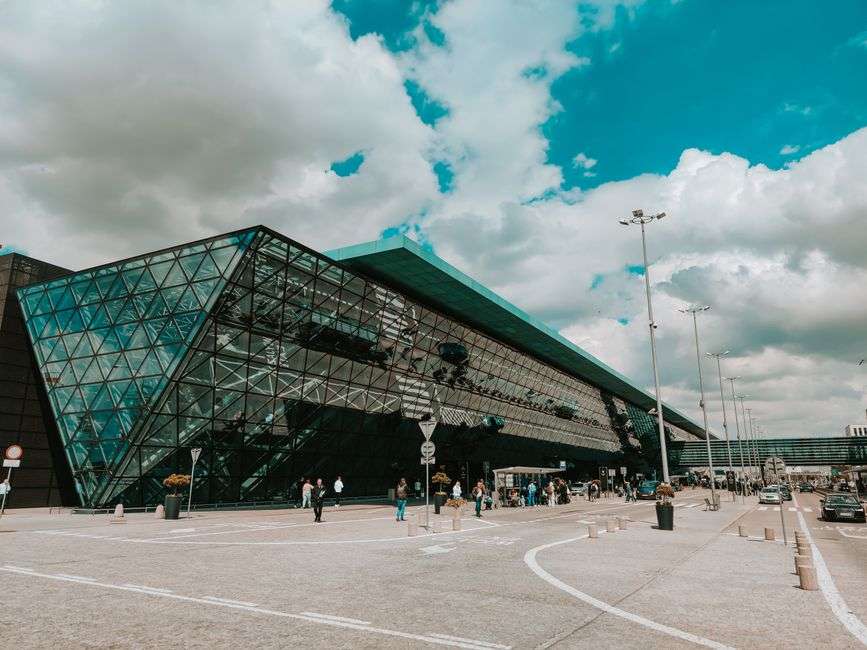
The board that oversees Mobile’s downtown airport voted unanimously this week to give the facility a new name, rebranding it as Mobile International Airport as part of a broader push to grow the site into a global gateway for the region. The unanimous vote was the easy part of an ambitious undertaking: the name change arrives in the middle of a quarter-billion-dollar terminal project, a competitive struggle with a bigger airport an hour down the highway, and an effort to persuade airlines that Mobile deserves more nonstop routes than it has ever had.
A name with intent
The Mobile Airport Authority approved the change during a regular meeting, with board members and staff framing the new name as a reflection of where the airport is headed rather than just a cosmetic update. Authority President Chris Curry told board members the rebrand comes as the agency turns its attention to a September 2024 deadline to open a new terminal and parking garage at the site, located at the Brookley Aeroplex just south of downtown Mobile. “Now, it’s what’s next,” Curry said of the effort, adding that the authority is “always working, always grinding” to hit that timeline.
Despite the new name, the airport’s three-letter identifier used by airlines and travelers worldwide, BFM, will not change. Curry said keeping the code tied to Brookley was a deliberate choice meant to preserve the site’s identity and history even as its ambitions grow. “We think it’s very important to make sure Brookley remained relevant,” he said. The code is the last institutional trace of the site’s military origin, and keeping it spares travel agents, booking systems, and frequent flyers the confusion that comes with an identifier change.
There is practical weight in that continuity. Airport codes are wired into the global reservation infrastructure — airline schedules, baggage routing, code-share agreements — and changing one ripples through systems worldwide for years. By retaining BFM while changing the marketing name, the authority gets the rebrand’s benefits without the operational headache, and it signals to partners that the airport’s transformation is physical and commercial rather than bureaucratic.
What international actually means
Airport officials say the international designation is about more than symbolism. Once the new terminal is complete, the facility is expected to allow corporate travelers arriving from overseas to be processed directly in Mobile, rather than connecting through another U.S. airport first for customs and immigration screening. A federal customs presence — the infrastructure, staffing, and agreements the designation requires — is what separates an airport that can accept an international arrival from one that can only talk about it.
Curry said that capability could make Mobile a more attractive landing spot for international companies weighing investment in the region, potentially giving local economic development officials another selling point as they recruit overseas manufacturers and other businesses to south Alabama. The logic is direct: the region’s biggest industrial employers — the aerospace manufacturers, shipbuilders, and steel producers that anchor the Gulf Coast economy — are multinational companies whose executives, engineers, and clients move through the region constantly, and an airport that can clear customs beside downtown saves each of them a connecting flight through Atlanta or Houston.
The proximity of the Airbus campus across the airfield sharpens the point. The European aerospace giant, its supplier network, and the international traffic they generate sit within walking distance of the new terminal site — a geography almost no other airport in North America can replicate, and one the authority has every reason to advertise.
The terminal and the money
Board members also reviewed early design renderings for the new terminal and parking garage during the meeting. The plans call for a terminal that would open with five or six gates, with the design allowing for future expansion to as many as 12 gates as passenger demand grows. Building the shell for growth into the first phase — rather than rebuilding twice — is the standard playbook for airports that expect demand to arrive in bursts, as Mobile’s has with each new industrial announcement.
The broader push to build a modern commercial terminal at the downtown site carries a price tag of roughly $250 million, with Mobile County and the city of Mobile already having committed a combined $45 million toward the project. Curry said the authority’s goal is to complete the terminal without taking on debt, if that proves possible, arguing that a debt-free build would let the authority offer airlines lower costs to operate at the airport. “If we can build the terminal piece debt free, we can charge the airlines less, which means we can attract more competition and get better flights,” Curry said.
The financing strategy is unusual by industry standards, and its logic is worth spelling out. Airports that borrow for terminals repay those bonds through airline rents and passenger facility charges — costs that flow straight into ticket prices and landing fees. An airport that builds debt-free can undercut its rivals on the charges that airlines weigh when deciding where to add a route, and in a market the size of Mobile, where a single carrier decision can add or subtract an entire destination from the departure board, that margin matters.
That competitive pricing strategy is aimed squarely at winning back passengers who currently drive past Mobile to fly out of Pensacola International Airport. Curry pointed to a study showing that about half of air travelers for whom Mobile is technically the closest airport still choose to fly out of a different facility, often citing better fares or more flight options elsewhere. Authority officials are betting that a new terminal, additional gates and more competitive airline pricing will be enough to reverse that trend and keep more local passengers flying out of Mobile.
The leakage problem is the defining fact of Mobile’s air service history. Every Mobile driver who parks at a Pensacola terminal takes their ticket dollars — and the airline revenue that justifies new routes — across a county and state line, weakening the case for expansion at home. It is a self-reinforcing cycle: fewer passengers mean fewer routes, and fewer routes push more passengers to drive away. The authority’s bet is that a convenient downtown location, lower airline costs, and modern facilities can break the cycle from the top end.
The long road to Brookley
The relocation of commercial service to Brookley also reset the airport’s competitive footing in ways the authority is still exploiting. Where Mobile Regional sat amid west Mobile’s residential sprawl, buffered from anything a traveler might need, the downtown site borders the city’s hotel and entertainment core — close enough to the cruise terminal, the convention center, and the historic district that a business trip can be conducted without a rental car. Those are precisely the amenities corporate travel buyers weigh, and they align with the international designation the rebrand now advertises.
The rebranding effort and the terminal project reflect a broader transformation underway at the Brookley site, which has served as home to Mobile’s commercial airline service since flights shifted there from Mobile Regional Airport. The move downtown — an unusual, closely watched relocation that reversed the national trend of airports migrating away from city centers — put commercial aviation minutes from Mobile’s business district, hotels, and waterfront, and it shared an airfield with one of the most ambitious aerospace manufacturing operations in North America.
The site’s return to aviation prominence carries its own historical weight. Brookley Field was a major Air Force installation through World War II and the Cold War, employing thousands before its closure gutted the surrounding neighborhoods in the late 1960s. The aeroplex’s industrial rebirth — beginning with aircraft maintenance and manufacturing operations, then the Airbus assembly line, and now commercial airline service and an international terminal — has progressively refilled an economic hole that stood open for half a century.
City and county leaders have pointed to the investment as a key piece of their long-term strategy to strengthen air service and support economic growth across the region, and the new name tells that story in three words. Between now and the September 2024 deadline, the authority’s work will be measured in construction milestones and airline announcements rather than signage — but the unanimous vote this week made the destination explicit: an airport named international, built debt-free if possible, five gates rising toward twelve, trying to bring its own city’s travelers home.
The coming year will test each piece of that plan in turn. Federal approvals for customs operations, airline negotiations over gate leases and pricing, and the construction schedule itself all carry risk, and airport boards across the country have learned that terminal deadlines rarely survive contact with supply chains unchanged. But the authority’s calculation is straightforward: downtown’s convenience is a permanent advantage, the region’s industrial growth is real, and every passenger retained is a revenue stream that makes the next route easier to win.