

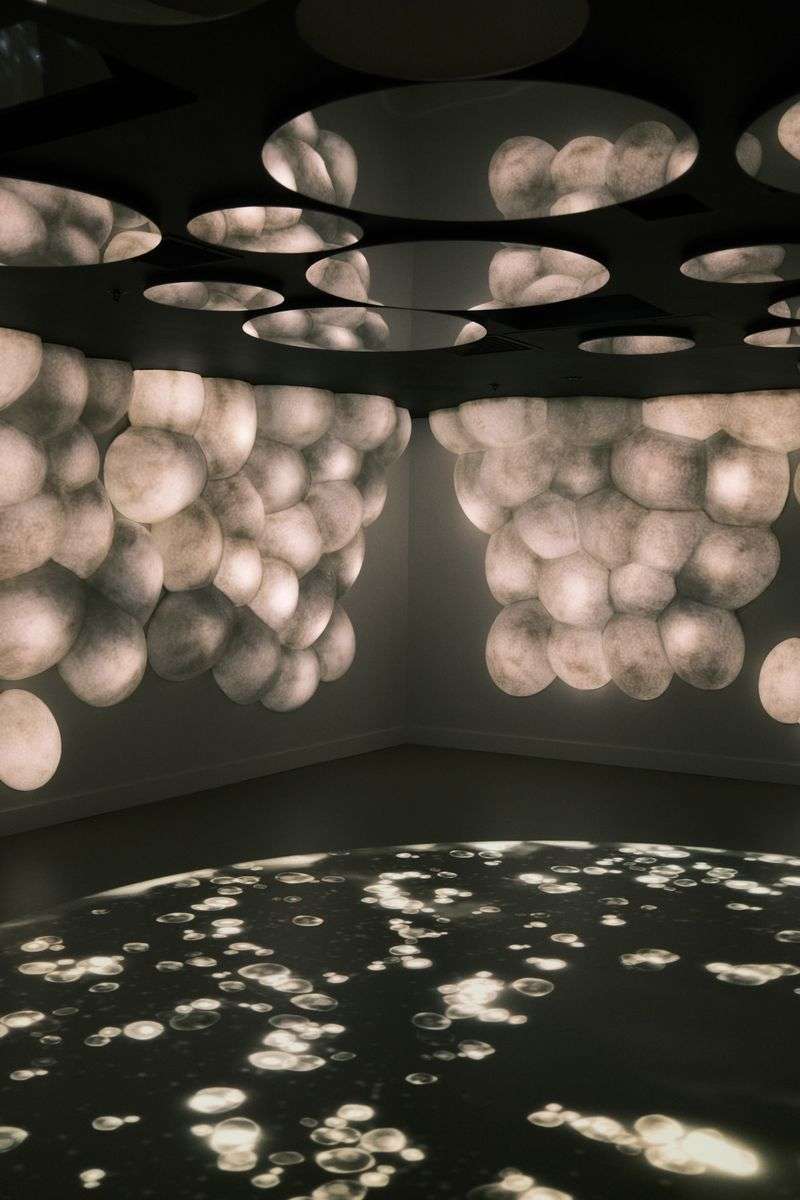
A converted downtown storefront on Dauphin Street became a stage for something Mobile audiences hadn’t quite seen before in early June 2010, when local artist Elizabet Elliott brought “The Ballad of the Bear King” to the Blind Mule for a short run of performances on June 1, June 3, and June 5. The project, which blended installation art, live performance, and original music into a single site-specific experience, grew out of a story Elliott said she had been carrying with her for two years before it found a stage.
Elliott, a Mobile native, developed the piece after returning to the city following four years abroad in New Zealand, where she studied in the conceptual-art program at Massey University. In an interview ahead of the performances, she said the time away reshaped how she thought about Southern identity and the cultural histories embedded in her hometown, giving her a new lens through which to examine the place she grew up.
An Artist Shaped by Two Hemispheres
Massey University, based in Palmerston North with additional campuses in Wellington and Auckland, has long been one of New Zealand’s most prominent institutions for art and design education, housing a College of Creative Arts that draws students from across the Pacific and beyond into programs spanning fine arts, design, and conceptual practice. For an artist from the Gulf Coast, spending years immersed in that environment represented a significant departure from the art scenes typically found in small and mid-sized Southern cities, where opportunities for graduate-level conceptual art training are comparatively rare.
Elliott described that experience as one that broadened her understanding of art-making itself, pushing her away from viewing creative work as a solitary pursuit and toward seeing it as something built collaboratively, in community with other artists and with audiences. That shift in thinking became the philosophical backbone of “The Ballad of the Bear King,” a project explicitly designed to draw people into shared creative space rather than to present a finished, single-interpretation artwork for passive viewing.
Building a Shared Space Between Artist and Audience
Rather than crafting a work with one intended meaning, Elliott said she built her installations around sensory and architectural cues — touch, smell, sound, and color — that gave visitors room to construct their own interpretations. That approach places her within a broader tradition of installation and site-specific art that has grown increasingly prominent in contemporary practice over the past several decades, in which the physical characteristics of a space and the audience’s embodied experience of moving through it are treated as part of the artwork itself, rather than a neutral backdrop for it.
Site-specific work of this kind stands in contrast to more conventional gallery or theatrical presentations, where a piece can typically be relocated from one venue to another with minimal change to its meaning. Because “The Ballad of the Bear King” was built around the particular architecture and atmosphere of the Blind Mule, the production was inseparable from its setting — an approach that requires artists to design not just content, but the entire physical environment an audience will move through.
A Collaborative Production
Elliott did not build the project alone. She developed “The Ballad of the Bear King” alongside Michael Waldron, who handled site-specific set design and blocking, and Adam Taylor, who led the production’s sound design. Their combined work brought together musicians, street-style performances, temporary sculptural objects, and animation elements, layering multiple artistic disciplines into a single evening rather than confining the production to a conventional theatrical format.
That kind of multidisciplinary collaboration is characteristic of much of the site-specific and installation-based performance work that has emerged in small arts communities across the country, where limited institutional infrastructure often pushes artists toward pooling skills across mediums — visual art, sound, movement, and design — to produce ambitious work outside the resources of a traditional theater company or gallery. For a city the size of Mobile, assembling a team capable of executing set design, live sound, musical performance, and installation art simultaneously represented a notable undertaking for an independent, artist-driven production.
The Blind Mule as a Venue for Experimental Work
The performances took place at the Blind Mule, a Dauphin Street establishment in downtown Mobile that, alongside its role as a restaurant and bar, has served over the years as an informal gathering point and event space within the city’s Lower Dauphin Street arts district. That district — commonly referred to by the shorthand “LoDa” — has functioned for decades as a hub for Mobile’s independent galleries, studios, and performance spaces, offering artists venues outside the city’s more established institutions, such as the Mobile Museum of Art, in which to present experimental or non-traditional work.
Choosing a working restaurant and bar rather than a formal theater or gallery for a production combining installation art, live music, and performance reflects a pattern seen in independent arts scenes nationally, where found and repurposed spaces — bars, warehouses, storefronts — frequently serve as the proving ground for work that falls outside conventional theatrical or gallery formats. Such venues typically offer artists greater creative latitude over how a space is transformed, along with lower overhead than a dedicated performance venue, at the cost of the technical infrastructure a purpose-built theater would provide.
Making Art Accessible
Elliott said a central goal of “The Ballad of the Bear King” was accessibility — bringing art to people who might not otherwise set foot in a formal gallery. Staging the work in a bar rather than a museum or black-box theater was consistent with that aim, lowering the social and logistical barriers that can keep casual visitors away from more traditional art spaces. At the same time, she said the project was meant to give the participating artists themselves a chance to collaborate, experiment, and learn from one another, treating the production as a professional development opportunity for the local creative community as much as a public presentation.
That dual purpose — public accessibility paired with artist collaboration — reflects a recurring theme in the way small and mid-sized cities cultivate homegrown arts scenes. Without the scale of major metropolitan arts funding or a dense concentration of professional companies, independent artists in cities like Mobile have often relied on self-organized, cross-disciplinary projects to create opportunities for public engagement and peer collaboration that might otherwise not exist locally. Projects built this way tend to be short-lived by design — often running for just a handful of performances, as “The Ballad of the Bear King” did over its three scheduled dates — but they can play an outsized role in building connective tissue between a city’s individual artists, musicians, and performers.
Context: Mobile’s Arts Landscape in 2010
The 2010 staging of “The Ballad of the Bear King” arrived during a period when downtown Mobile’s arts and entertainment offerings were expanding alongside broader efforts to revitalize the historic downtown core. Lower Dauphin Street, along with adjacent blocks, had been steadily building a reputation as a nightlife and cultural corridor, with galleries, music venues, and eventually the Alabama Contemporary Art Center (then in earlier stages of its development) contributing to a growing sense that downtown Mobile could support the kind of experimental, artist-led programming more commonly associated with larger cities.
For an artist returning home after years abroad, that environment offered a foundation — however still-developing — for staging ambitious, independently produced work. Elliott’s description of wanting to merge her New Zealand training in conceptual art with her Gulf Coast roots speaks to a broader pattern among artists who leave a smaller hometown for graduate study or international programs and later return, bringing outside influences back into a local scene that may have limited exposure to those approaches otherwise. That kind of cross-pollination has historically played a meaningful role in shaping regional arts scenes across the South, as artists trained elsewhere bring new techniques and frameworks home and adapt them to local material — in this case, Southern identity and Mobile’s own layered cultural history.
What Site-Specific Theater Asks of an Audience
Unlike a conventional play performed on a proscenium stage, site-specific and installation-based performance typically asks audiences to move through a space rather than sit and observe it from a fixed vantage point. Sound, smell, temperature, and the physical arrangement of objects all become part of how a story unfolds, and different audience members can end up with meaningfully different experiences of the same production depending on where they stand, what they touch, or which performer they happen to follow. Elliott’s stated approach — building sensory and architectural cues rather than a single linear narrative — fits squarely within that tradition, and helps explain why she described the work as creating “a shared space between artist and viewer” rather than delivering a fixed message to a passive audience.
This style of production also places significant technical and organizational demands on its creative team, since every element of the environment must be designed, built, and coordinated rather than simply staged within an existing theatrical set. The involvement of a dedicated set designer in Waldron and a sound designer in Taylor reflects the level of coordination such a production requires, even on the comparatively small scale of a three-night run at a Dauphin Street venue.
As downtown Mobile’s arts scene has continued to evolve in the years since, independent, artist-driven productions like “The Ballad of the Bear King” remain part of the city’s broader story — one in which individual artists, working with modest resources and borrowed or repurposed spaces, have periodically pushed the boundaries of what local audiences encounter, blending disciplines and inviting the public into experiences built around participation rather than observation alone.