

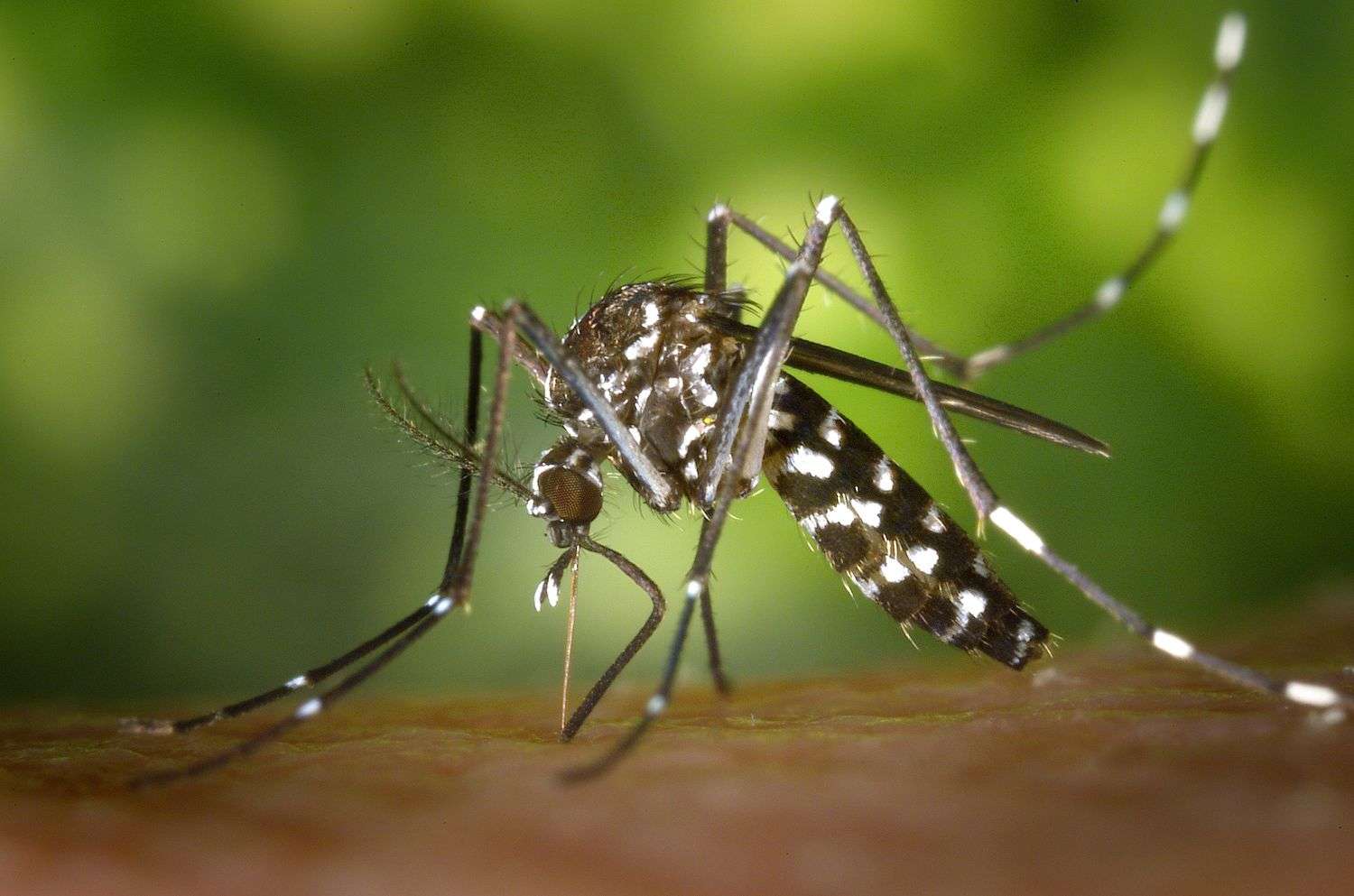
The Mobile County Health Department’s Vector Services division has been working to keep up with a surge in mosquito complaints across the county following weeks of severe weather. A string of storms, heavy rainfall, strong winds and Tropical Storm Bertha disrupted the department’s nighttime spraying operations on multiple occasions this summer, since safe weather conditions are required to carry out the work. To catch up on the backlog, the Vector Services team worked through the weekend to resolve complaints that had accumulated during the weather-affected stretch.
The department said it remains focused on providing effective, data-driven mosquito control for residents across Mobile County. That approach matters in a county where standing water is never in short supply. Mobile’s humid subtropical climate, its low-lying terrain and its position on Mobile Bay make it prime habitat for mosquitoes, and heavy storm systems leave behind flooded ditches, waterlogged yards, blocked storm drains and scattered containers holding fresh rainwater — all of it breeding ground. When spraying trucks miss a week of operations because of wind or rain, the insect population can rebound quickly, and complaint volume climbs with it.
Nighttime spraying is the division’s most visible tool, but it is also among the most weather-dependent. Wind can carry spray mist off target or make aerial application unsafe, and rain washes products out of the air and breaks up the inversion conditions that help ground-based fogging work effectively. Several consecutive stormy days in a row can therefore wipe out an entire cycle of scheduled treatments, which is why the recent backlog built up so quickly and why the weekend push was needed to bring response times back to normal.
Surveillance beyond the spray truck
Beyond spraying operations, Vector Services also monitors for mosquito-borne illness through its Sentinel Chicken Surveillance Program, which has been deployed at 13 strategic locations across the county. The program uses blood samples drawn from roughly 50 sentinel chickens to test for the presence of mosquito-borne viruses. Initial testing this season has not detected any such viruses, according to the department.
Sentinel chickens have long served as an early-warning system across the Gulf South because the birds are bitten by the same mosquitoes that bite people, but they do not develop illness from the viruses. When a sentinel flock tests positive for a mosquito-borne virus, it signals that infected mosquitoes are active in that area before human cases appear, giving health officials time to intensify control work and warn the public. The 13 stations are placed to cover different parts of the county, so a positive result also helps pinpoint where extra attention is needed.
The surveillance program is one piece of a broader public health picture in a region where mosquito-borne disease has deep historical roots. South Alabama sits within the range of viruses that circulate between wild birds and mosquitoes each summer, and health departments across the Gulf Coast treat the season as a standing concern from late spring until the first cool nights of fall. Data-driven control — using complaint mapping, trapping and test results to decide where and when to spray — is considered more effective than blanketing the county evenly, and it is the model the department says it follows.
What residents can do
Mobile County residents who want to report mosquito activity or request service can do so through the department’s online portal or by calling 251-690-8124 for mosquito control issues and 251-690-8819 for rodent control issues. Complaints feed directly into the division’s response planning, since service requests help crews identify neighborhoods where breeding is heavy and prioritize follow-up visits once weather permits spraying again.
The health department also offers an interactive story map under the Community Tools section of its website, providing public education resources on mosquitoes and arbovirus prevention. The online material explains how the division’s programs work and gives residents practical guidance they can apply on their own property.
That do-it-yourself component is a significant part of mosquito control in any Gulf Coast county, because a large share of mosquito breeding happens in water that collects on private property. Common culprits include birdbaths, pet bowls, flower pot saucers, buckets, wheelbarrows, children’s toys, gutters clogged with leaves, and discarded tires. Mosquitoes can complete their life cycle from egg to biting adult in about a week in warm weather, so even a small container that holds water after each rainstorm can produce a steady supply of new insects. Health officials recommend the standard drill: empty and scrub water-holding containers at least weekly, store items that can’t be drained under cover, keep gutters flowing, and change water in birdbaths and animal dishes on a regular schedule.
Personal protection matters just as much during peak mosquito hours. Many of the species that trouble Mobile County bite most actively in the early morning and around dusk, so residents who are outside at those times are encouraged to use an EPA-registered insect repellent, wear long sleeves and pants when practical, and make sure screens on windows and doors fit tightly. Property owners can also reduce adult mosquito resting spots by keeping tall grass and vegetation trimmed, since mosquitoes shelter in shaded, humid foliage during the heat of the day.
Storm recovery and the weeks ahead
The weekend push to clear the backlog reflects the reality of mosquito control in a storm-prone county: the same weather that creates ideal breeding conditions also keeps the spray trucks parked. Hurricane season, which runs through the end of November, regularly brings tropical systems to the northern Gulf Coast, and Tropical Storm Bertha was one such storm that disrupted operations this summer. After any significant rain event, Vector Services typically faces a doubled workload — new complaints from neighborhoods with fresh standing water, and catch-up spraying for areas that missed scheduled treatments.
The division’s nighttime operations will continue as weather allows through the mosquito season, and the Sentinel Chicken Surveillance Program’s testing cycle runs alongside it, with samples drawn and analyzed on a regular schedule. Residents who notice heavy mosquito activity in their neighborhood are encouraged to keep reporting it even after a backlog has been cleared, since fresh complaint data is what tells crews where to focus next. County officials note that the combination of resident reports, laboratory surveillance and targeted spraying is what keeps mosquito-borne disease risk low across Mobile County, even in summers as wet and stormy as this one.
How a countywide mosquito program operates
A program like Mobile County’s does not simply drive routes and fog streets at random. Vector Services divides its work among several functions that run in parallel: surveillance and trapping to learn which mosquito species are active and where, laboratory testing to detect mosquito-borne viruses, source reduction to eliminate breeding habitat where possible, and adulticide and larvicide applications aimed at the insects themselves. Larviciding — treating standing water before mosquitoes emerge as flying adults — is often the most efficient step, since it stops breeding in ditches, detention ponds and other low spots that cannot easily be drained. Adult spraying at night handles the mosquitoes that have already emerged, and it is the piece most visible to residents watching trucks work their streets after dark.
Complaint-driven response is a key part of the system. When a resident calls or files an online report, the location is logged and inspected, and the finding determines the response: a treatment for standing water, an inspection of nearby drainage, or inclusion of the street in the nighttime spray rotation. That is also why the recent backlog mattered beyond convenience — every day of storm-related delay left both the insects and the complaints multiplying, and the weekend catch-up work was aimed squarely at restoring that response loop.
The division also handles rodent control, which is why the department maintains separate phone lines for the two programs. Rodent complaints tend to rise after storms and flooding as well, since high water displaces rats from burrows and drainage systems and pushes them into yards and structures. Keeping the two services organized under one division lets the county coordinate environmental health work that overlaps heavily in the aftermath of severe weather.
Why Gulf Coast counties watch mosquito-borne disease so closely
The Gulf Coast’s climate gives mosquitoes a long active season that stretches from early spring well into fall, and the region’s history with mosquito-borne illness runs deep. Mobile and other port cities along the Gulf played significant roles in historic outbreaks of yellow fever in the nineteenth century, a legacy that helped shape the modern public health infrastructure across south Alabama. The diseases that circulate today, spread by mosquitoes feeding on infected wild birds, are managed rather than eliminated, and surveillance is the tool that keeps them in check.
The sentinel chicken model remains one of the most cost-effective ways to track that circulation. The flocks require daily care and periodic blood draws through the season, but each positive test converts directly into action — intensified trapping and spraying in the surrounding area, and a public notice urging residents to step up repellent use and dump standing water. The fact that initial testing this season has found no mosquito-borne viruses is encouraging news for the county, but health officials treat each week of the season as a new sample, and the program will keep drawing and testing until the weather cools.
For now, the department’s message to residents is straightforward: the backlog from the stormy stretch is being cleared, spraying continues whenever conditions allow, and the county’s reporting lines and online tools remain the fastest way to get a neighborhood inspected. With hurricane season still ahead and more summer rain nearly certain, the weekend catch-up work positions the county to absorb the next round of storms with a shorter list of unresolved complaints — and with the surveillance program standing watch for any sign that mosquito-borne virus has entered the local mosquito population.