Mobile Mardi Gras Group Order of Isis Shortens Name Amid Terror Confusion
A Mobile Mardi Gras group is dropping its full name for parade season after members faced public confusion with an unrelated militant group overseas.
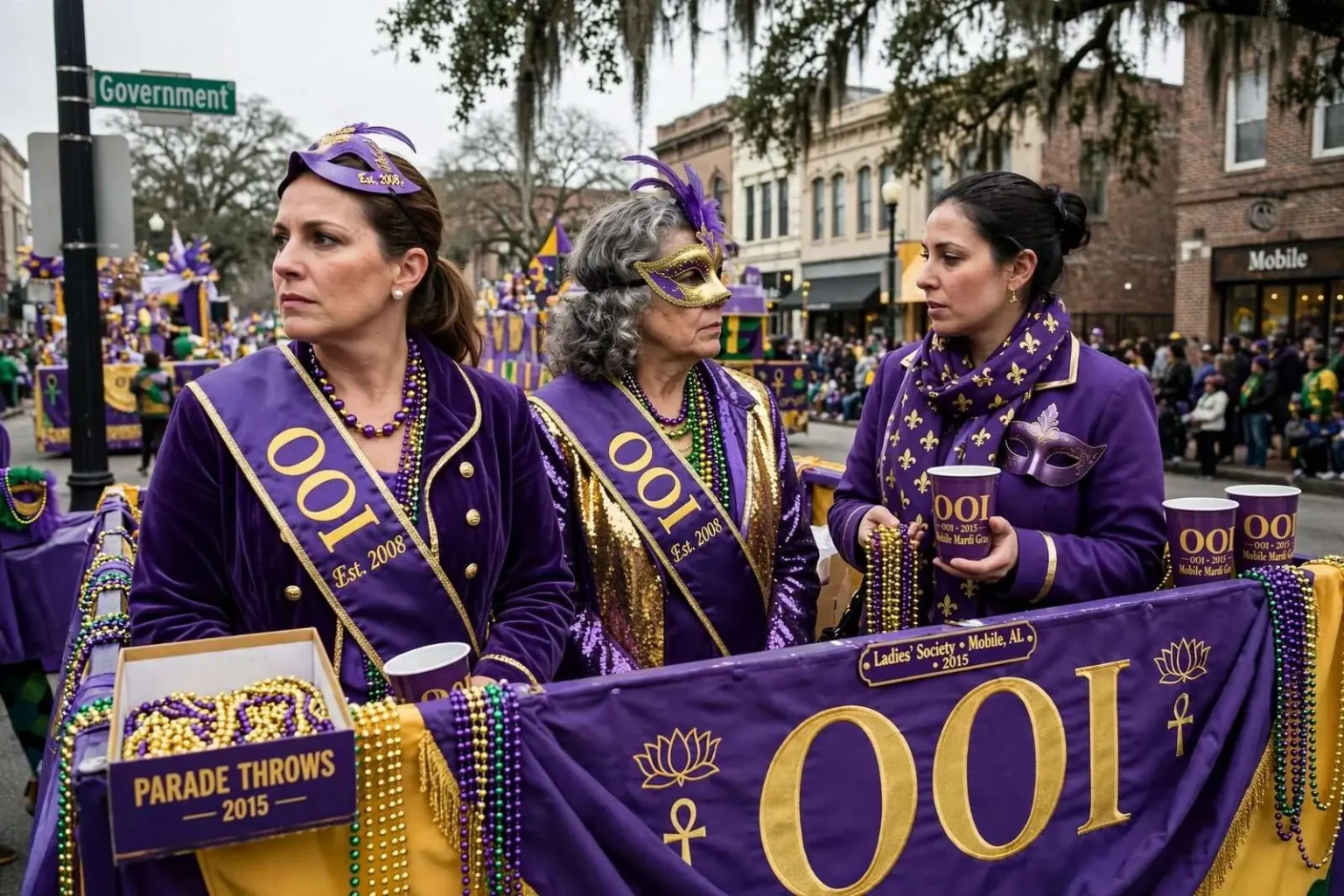
Members of a Mobile Mardi Gras organization known as the Order of Isis have decided to start going by their initials for the upcoming parade season, after members said they were repeatedly stopped in public and questioned about the name’s overlap with the militant group that had recently seized territory in Iraq and Syria. The decision, made by the group’s board as the 2015 Carnival season approached, is a small but telling example of how international events can reach into the most local of traditions — in this case, one of the oldest and most cherished cultural institutions on the Gulf Coast.
A name born from mythology, not headlines
The ladies’ society, which formed in 2008 and counts roughly 115 members, chose its name years ago as a nod to the Egyptian goddess associated with friendship and love. In Mobile, where mystic societies have borrowed names from mythology, history, and astronomy for generations — Comos, Venus, and dozens of others — the reference was unremarkable. Isis, the ancient Egyptian mother goddess, has been a popular namesake for civic groups, businesses, and even children’s names across the Western world for more than a century, long before the acronym for the Islamic State began dominating cable news.
But as international news coverage of the Islamic State group intensified through the summer of 2014, members said the coincidence of names had gone from a curiosity to a real headache. The militants’ brutality led evening newscasts around the world, and the group’s name became shorthand for terror in a way no Mardi Gras society could compete with. What had been an elegant mythological reference suddenly required explanation everywhere it appeared.
One member told a reporter she was cornered by a stranger at a Mobile-area Sam’s Club who peppered her with questions after spotting the group’s name on her shirt. She explained that she belonged to a local Mardi Gras organization, not anything connected to overseas violence, but she said the encounter left her rattled. Another member described a similar exchange at the doctor’s office where she works, saying colleagues and patients alike had started asking pointed questions about her clothing — in that case, a garment bearing the society’s name that had seemed entirely unremarkable when it was made.
Safety decided it
Leaders of the group said safety was the deciding factor. With Mardi Gras parade season approaching and members set to ride floats in front of large public crowds along the traditional Mobile parade routes, organizers did not want the name on banners, throws or costumes to invite hostility or confusion. Carnival in Mobile is a family affair: parade routes along Government Street and through downtown draw tens of thousands of spectators, including children, and float riders are exposed to the crowd in a way that leaves no room for ambiguity about who they are.
Instead, the group will identify itself publicly by its acronym for the 2015 season, dropping the spelled-out name from float signage and promotional material while it waits for the news cycle to move past the Islamic State group’s rise. Members said the change is intended as a pause rather than a permanent rebranding — the goddess and the society’s founding identity remain, even if the spelling does not appear on a single throw this season.
A logistical wrinkle in the throws
The timing created a logistical wrinkle. Board members said the organization had already placed orders for some throws, footballs, cups and other parade novelties printed with the full name before the decision was made. Mardi Gras throws are ordered months in advance — plush animals, medallion beads, and printed cups are manufactured to order and shipped to the Gulf Coast through the fall — so the board’s decision came after a portion of the season’s inventory was already in production or in hand.
Officials said there may still be time to adjust some orders, and the society planned to work with its vendors to redirect or reprint what it could. For the items already printed, the group weighed its options with typical Carnival pragmatism, recognizing that a cup with a mythological name on it will still land in a spectator’s hands as a keepsake from a Mobile parade, whatever the international news may say.
Mardi Gras in a connected world
The episode illustrates a peculiar modern problem for America’s oldest Carnival celebration. Mobile’s mystic societies are local institutions with roots stretching back to 1703, yet their names now travel instantly and globally through social media, photographs, and search engines, where they are read without any local context. A name that delighted Mobile audiences in 2008 can be misread by someone across the country in 2014, and the society’s members — riding floats, wearing sashes, handing out throws — are the ones who bear the consequences.
For the Order of Isis, the choice of initials for 2015 is a quiet, practical accommodation: the parade goes on, the floats roll on schedule, and the society’s identity waits out the headlines. Mobile’s Carnival has survived wars, hurricanes, and depressions; its societies have shown, once again, that adapting is part of the tradition.
The women of Mobile’s Carnival
The Order of Isis belongs to a distinguished lineage within Mobile Mardi Gras: the ladies’ societies. Women’s mystic societies, led historically by organizations like Mobile’s famous ladies’ parading groups, carved out their own place in Carnival after decades in which the men’s societies dominated the parade routes and ballrooms. The newer ladies’ organizations formed in the 2000s brought fresh energy to the season, combining traditional elements — floats, masks, themed throws, and a tableau ball — with modern membership drawn from every corner of the community.
A society of roughly 115 members is a substantial undertaking by Carnival standards. Members pay dues, design and fund their throws, build float themes with their parade associations, and devote months of volunteer work to the ball and the parade. For many members, the society is a year-round social anchor, with meetings, decorations, and committee work filling the calendar long before the first parade rolls on the Friday before Fat Tuesday.
How the 2015 season will look
Under the acronym plan, the society’s float signage, banners, and promotional materials will carry only its initials this season, and its public-facing identity — from parade announcements to social media — will follow suit. Spectators along the route will see a Mobile mystic society doing what mystic societies do: riding masked, tossing beads and cups, and celebrating a season that belongs to the whole city. The meaning behind the initials, for anyone who asks, is exactly what it has always been — an homage to an Egyptian goddess whose mythological associations are friendship and love.
The society’s board has left the door open to restoring the full name once the association with the militant group fades from daily headlines. Whether that takes one season or several, members said, will depend less on Mobile than on events half a world away — a strange dependency for an organization whose calendar is governed by the date of Easter.
Mobile Mardi Gras and the weight of history
Mobile’s claim as the home of the first American Mardi Gras, celebrated in 1703 by the founders of the colonial capital of French Louisiana, gives its Carnival a self-awareness that newer celebrations lack. The city’s mystic societies are conscious custodians of tradition — they maintain archives, preserve float designs, and pass memberships across generations. That consciousness made the Order of Isis decision easier in one sense: Mobile Carnival has always adapted its pageantry to its times, from the transition of Mardi Gras from elite masked balls to public parades, to the integration of the city’s Carnival organizations, to the rise of the ladies’ societies themselves.
The 2015 season will also be a test of how gracefully that adaptation works. If the society’s floats roll without incident and the acronym becomes shorthand as natural as the full name once was, the episode will be remembered as a footnote — the year a Mardi Gras society outran a terrorist group’s headlines with two letters and a parade. In a city that has been celebrating for more than three centuries, resilience of that kind is simply part of the season.
For the members who were stopped in parking lots and questioned at their workplaces, the change offers something simpler: the ability to wear their society’s colors in public again without needing to explain that a goddess of friendship and love has nothing to do with the violence on the evening news. When the floats roll in 2015, the name on the side will be shorter, but the tradition behind it will be exactly as long as Mobile’s history.
Other Gulf Coast organizations with the same name have faced similar choices in recent years, underscoring how widespread the mythological reference had been before 2014. Businesses, festivals, and clubs across the country quietly reconsidered signage, websites, and logos as the acronym became toxic in public perception. Mobile’s society, bound to a public parade calendar and a crowds of thousands, simply had the highest stakes — and made the call with the most clarity.