Mobile Mayor Sandy Stimpson is disputing the findings of an independent review into complaints of mistreatment within the city’s public works department, calling the months-long inquiry a waste of taxpayer money that produced no new evidence of wrongdoing. The review was commissioned after employees in the department’s trash collection division raised concerns to the Mobile City Council about how they were being treated by supervisors, including allegations of racial bias, retaliation and a hostile work environment.
The council hired Patrick Sims to conduct an independent investigation into those claims and report back his findings. Sims interviewed 35 current and former public works employees as part of his inquiry.
He told council members that most of those employees did not believe a supervisor’s treatment of them was motivated by race. But his report flagged two personnel moves that he said may warrant additional scrutiny on the question of retaliation.
One employee, Travesia Agee, who had helped negotiate a pay increase on behalf of trash collection workers, was reassigned to a different position in a different building, according to the report. Another employee, Eileen Corkern, was terminated.
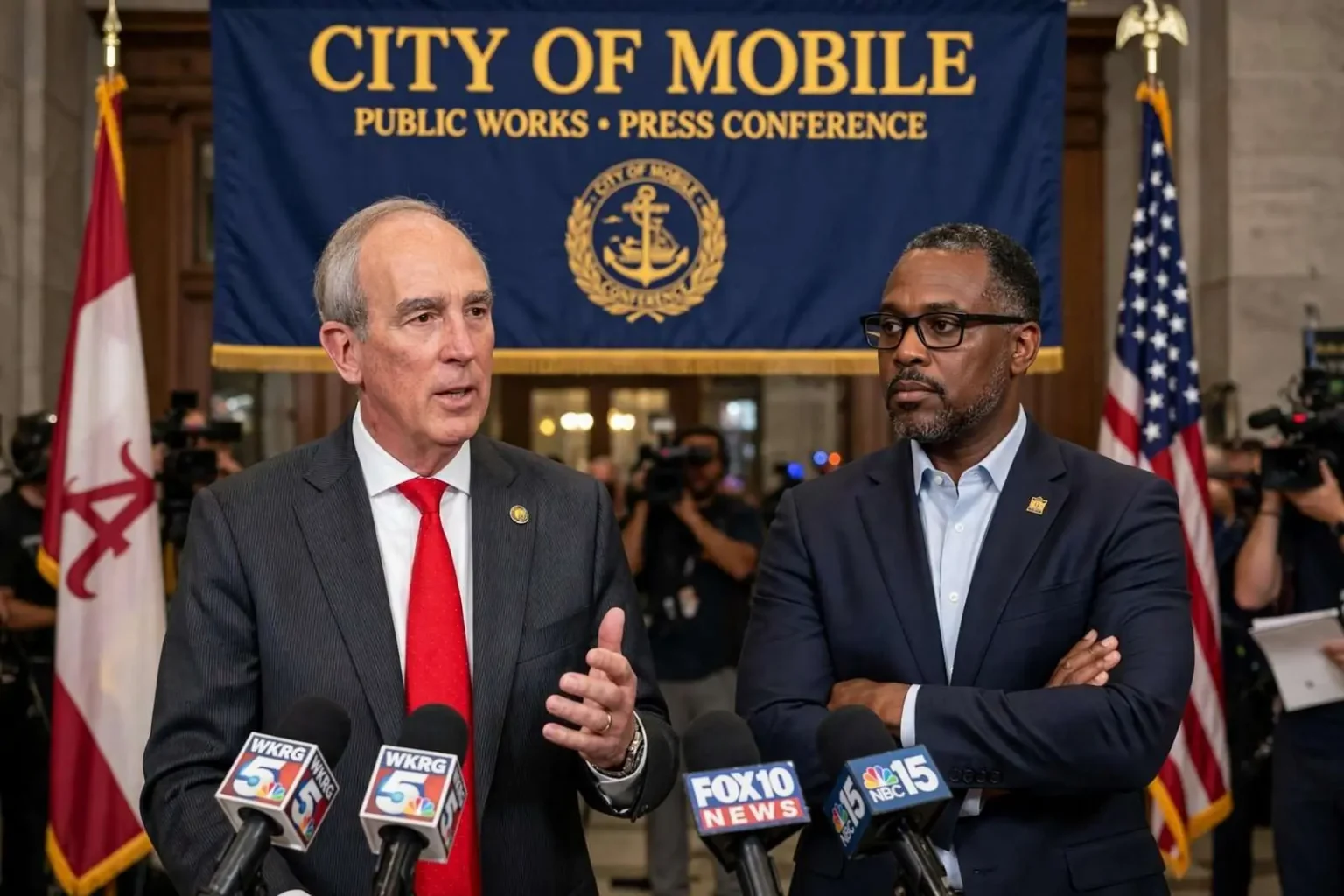
Sims wrote that both cases deserved a closer look. Stimpson, appearing alongside interim Public Works Director John Peavy, said the city had already identified and begun addressing the underlying issues before the council ever received the report.
He argued the findings validated steps his administration had already taken rather than uncovering anything new. “To us there were no surprises, and after reading the report we actually felt there was a validation of some of the things we had identified and expressed ourselves about, and things we were doing to correct it,” Stimpson said.
He added that the report “failed to produce any evidence of misconduct that wasn’t already known, or acted upon,” and said no evidence emerged to support claims of racism or a hostile work environment raised by the employees’ union. Consistent with the city’s policy of not discussing personnel matters publicly, Stimpson declined to explain why Corkern was let go, but said her termination was not the result of retaliation.
The mayor downplayed the broader significance of the complaints, saying they involved a small fraction of the roughly hundreds of employees who work in public works citywide. “So what you have is a small group of disgruntled employees that have cast a dark shadow on all of public works,” Stimpson said.
“It’s unfair to the men and women of public works who are coming in every day, doing a great job fulfilling their responsibilities.” Both Stimpson and Peavy suggested that outside individuals not employed by the city had encouraged some employees to voice their complaints, though neither offered specifics on who those outside parties might be. Around the same time Sims was conducting his review, the administration separately hired consultant Robert Adams to study solutions for the friction between supervisors and rank-and-file workers.
Stimpson said that since Adams completed his assessment, the city has rolled out supervisory training and directed Peavy to spend more time building rapport with employees on the ground. “When John tells you he’s buying doughnuts or coffee for the employees, it is a way for John to spend some time with them … to be able to tell them he truly appreciates what they’re doing,” Stimpson said.
“So even though I haven’t gotten a written report, I know things are already in place to equip John to do a better job as leader of public services.” After presenting his findings, Sims recommended that supervisors within the trash collection division undergo additional training, a suggestion that echoes recommendations already made in the separate Adams review. The dispute over the report comes against the backdrop of a broader disagreement over how public works employees are compensated.
According to the report, some trash department workers said they doubted they would actually benefit from an incentive-based pay program the city offered instead of a raise, after they had spent months requesting one. That incentive program remains in place for public services employees even though the council approved a 5 percent raise for those workers in the city’s final fiscal year 2019 budget.
As of the time of the report, the administration had not yet implemented those council-approved raises. Instead, Peavy said, workers can earn incentive pay tied to safety records, attendance and holding a commercial driver’s license, or CDL.
The attendance incentive pays $5 per day, or $50 per pay period, which Peavy said adds up to roughly $1,200 a year once vacation, holidays and sick days are factored in. An employee who calls in sick loses that day’s incentive, but an employee who misses a day without calling in forfeits the incentive for the entire week.
“There’s the motivation,” Peavy said. “There’s the incentive.” When the incentive plan was rolled out, roughly 180 employees qualified for a 2.5 percent pay bump tied to holding a CDL, according to Peavy, though he noted that having the license does not necessarily mean an employee regularly drives a truck.
He said it reflects a level of responsibility that allows the city to shift those workers into other roles when needs arise. Additional incentives include a $250 quarterly bonus for employees who avoid damaging equipment and a bonus tied to work performed in bad weather.
Combined, Peavy said, the various incentives could add up to the equivalent of an 11 to 12 percent raise for some employees. Stimpson said he chose the incentive-based approach over a straightforward across-the-board raise in part because it could be structured to be cost-neutral for the city.
He also argued that, unlike police and fire-rescue employees, where a documented pay gap existed compared with peer departments, public works employees in Mobile were already paid comparably to workers in similar roles in other Alabama cities. City officials said records related to the costs of both the Sims and Adams reviews had been requested and would be made public once available.
How Mobile’s Government Is Structured
Mobile has had a mayor-council form of government since 1985, when it replaced a three-member city commission. The council’s seven members are elected from single-member districts. Under that structure, the mayor oversees day-to-day operations of city departments such as public works, while the council adopts the annual budget. The council commissioned the Sims review on its own.
Related coverage from South AL News
- Hundreds of Mobile Public Works Employees Left Out of $500 Bonus Program
- Mobile County 911 Director Not Charged With DUI After Spanish Fort Public Intoxication Arrest
- Public Works Crews From Across the Gulf Coast Head to Foley for Heavy Equipment Roadeo at OWA
- Alleged Gang Members Indicted in Death of Mobile Public Works Employee