Mobile Uber Drivers Keep Working as City Council Weighs New Rules
As Mobile weighs an ordinance to regulate ride-hailing companies, Uber drivers like Charles McCann keep working in legal limbo on city streets.
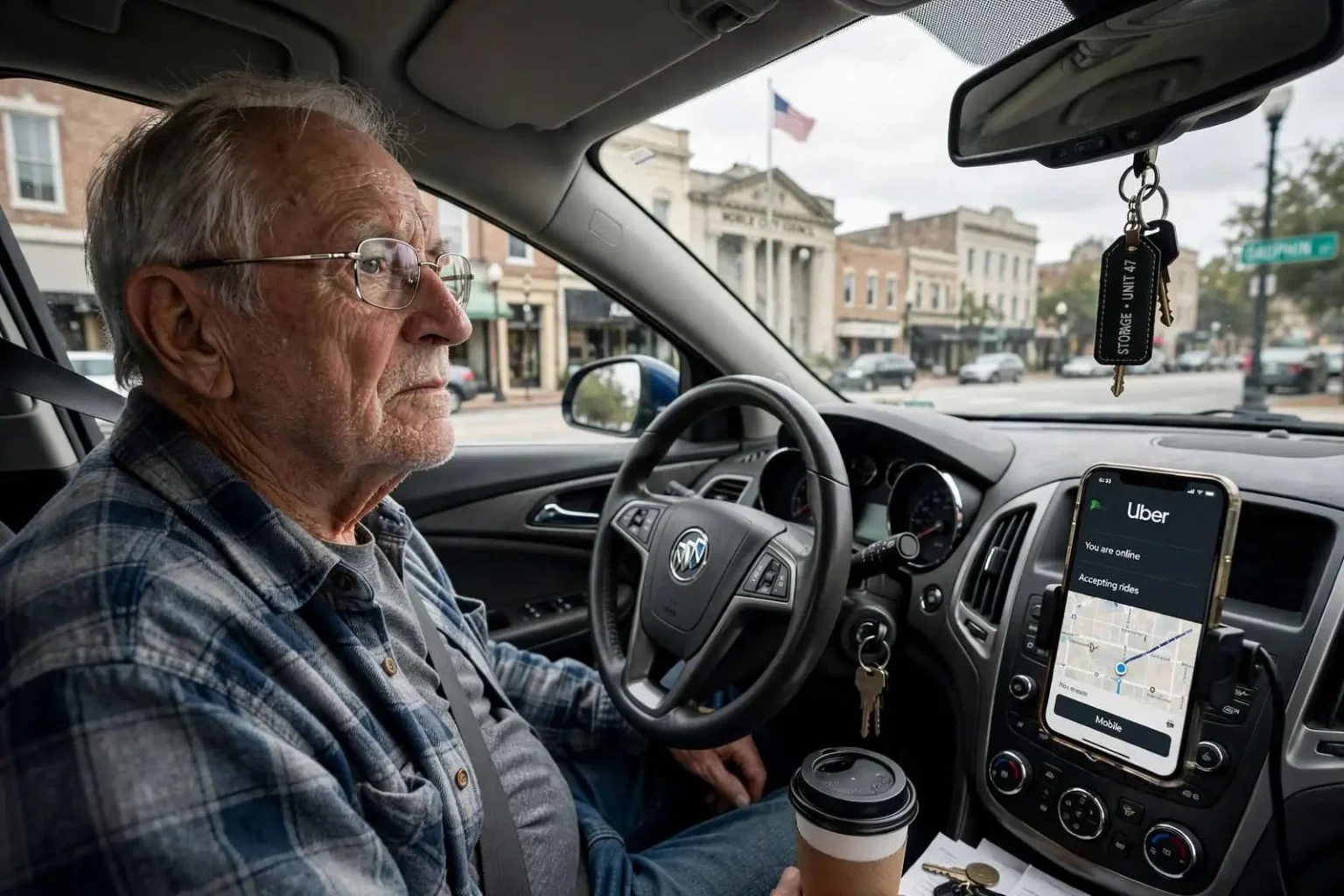
Charles McCann has become something of a familiar face behind the wheel of ride-hailing service Uber in Mobile. The 68-year-old manages a storage facility by day and drives for extra income on the side, and since Uber began operating in the city, he says he has earned close to $400 over more than 30 trips. He is hoping the arrangement sticks around.
A Mobile City Council committee is set to take up an amendment that would let drivers like McCann, who work for what the industry calls “transportation network companies,” operate legally within city limits. Until that vote happens, though, drivers are working in a gray area, with little clarity about how existing law treats app-based ride services. The question facing the council is whether to write Uber and its competitors into the municipal code as a new category of business, fold them into the old rules, or leave them on the sidewalk altogether.
“I don’t mind doing whatever they want us to do, really,” McCann said from behind the wheel of his Buick. “I would hate for them to throw us out now because I’ve started going.”
Uber representatives argue that local rules simply need to catch up with a new kind of transportation option, while some existing operators, including shuttle services, taxi companies and limousine businesses, contend the ride-hailing model is functionally the same as what they already offer and should be regulated the same way. The dispute is about fairness and standards: incumbents operate under permit, inspection, insurance and rate rules that the app-based newcomers do not yet face.
The council’s public safety committee moved up its review of the proposed ordinance to address the issue sooner rather than later. In the meantime, Uber vehicles continue to operate on city streets without the markings traditional taxis carry, a detail that has drawn complaints from some residents and competitors. Riders hailing a licensed cab know what to look for — a roof light, a decal, a medallion number — while a Uber passenger’s car looks like any other sedan until the app confirms the ride.
A good-faith gesture while the rules catch up
The company said this week it would offer free rides in Mobile for a short period, framing the move as a gesture of good faith while the city works out new rules. Free-ride promotions have been a signature part of Uber’s playbook in cities across the country, simultaneously rewarding early users, recruiting new ones and reminding local officials that constituents have come to like the service by the time regulation comes up for a vote.
The proposed ordinance, which would create a distinct legal category for smartphone-based services like Uber and Lyft, was introduced this week by Mayor Sandy Stimpson and Councilman Levon Manzie. Stimpson has said the goal is to let the companies operate “in a manner that is safe, convenient and best serves the citizens of our city.” Writing a new category into the code rather than stretching the taxi ordinance would allow the city to set its own requirements for the industry — background checks, vehicle standards and insurance — without pretending the services are the same thing as a metered cab.
Some council members, however, have expressed frustration that the company began operating before receiving formal council approval, and internal correspondence has pointed to friction between the mayor’s office and members of the council over how the rollout was handled. The complaint is a familiar one in cities where Uber has arrived: the company’s habit of launching first and negotiating later has tested the patience of local officials who see it as a challenge to the idea that businesses operating in a city must first ask permission.
The mayor’s office has said Uber is operating while the ordinance works its way through the approval process, a pattern it says has played out in other cities weighing similar rules. From that perspective, the council is not deciding whether ride-hailing exists in Mobile — it already does — but whether the city will shape it or ignore it. If the ordinance fails to pass, officials have indicated they would consider regulating ride-hailing vehicles under the same rules that apply to other vehicles for hire, a step the industry has historically resisted because traditional requirements can be ill-suited to part-time drivers using personal cars.
Not everyone is waiting patiently. An attorney representing a local transportation company sent a pointed letter to the council, its attorney, the mayor’s office, the police chief and the city attorney, warning that the company could seek a court order halting Uber’s operations in Mobile. The attorney said litigation remained a last resort for now rather than an immediate step. The letter puts every decision-maker on notice that a competitor believes the law is being broken, and signals how high the stakes have become for incumbent operators.
How other cities have handled it
Cities elsewhere offer a mixed track record for how these fights play out. Ride-hailing companies have reached workable arrangements with local governments in places like New Orleans, Chattanooga and Pensacola, while other cities have seen more contentious standoffs. In the cooperative cases, councils wrote modest requirements — background checks, insurance verification, per-ride fees — and let the services operate; in the contentious ones, enforcement actions, impounded vehicles and lawsuits became the story before any compromise did.
The experience of peer cities matters in Mobile for a practical reason: municipal officials rarely want to be the first to solve a new legal problem, and they equally dislike being the last to benefit from a solution that has already worked next door. New Orleans offered a nearby example of a council that chose to accommodate the industry while keeping regulatory authority in city hands.
What a transportation network company actually is
The phrase “transportation network company” that the ordinance would add to Mobile’s code is an industry term of art that has spread rapidly through statehouses and city halls. It describes a business that connects passengers with drivers through a digital app, arranges the ride, collects the fare and takes a commission, while the drivers use their own personal vehicles and are treated as independent contractors rather than employees. Uber and Lyft are the best-known examples, and the model differs from a taxi company in almost every structural respect: no dispatch office, no fleet, no meter, no drivers on payroll.
Those differences are exactly why the old ordinances fit poorly. Traditional vehicle-for-hire rules assume a company that owns or controls its cars, so they can require inspections, livery markings and commercial insurance attached to a specific vehicle. A part-time driver using a personal car on evenings and weekends does not fit that template, and neither does an app that dispatches thousands of trips a year without ever employing a driver. Regulators across the country have generally responded by creating the new category the Mobile ordinance proposes, pairing lighter vehicle requirements with mandatory insurance coverage that applies while the driver is connected to the app and carrying passengers.
Insurance is the question that has drawn the most attention in cities weighing these rules. When a driver is between fares, personal auto policies typically apply; when the app is on and a passenger is in the car, the company’s commercial coverage takes over. Municipal ordinances generally require proof of that layered coverage before a transportation network company may operate, a requirement the industry has accepted in most markets as the price of legality.
What it means for drivers and riders
For drivers like McCann, the committee’s decision will determine whether the work he has picked up in retirement continues. The typical ride-hailing driver in a city Mobile’s size drives part-time — supplementing another job or a fixed income, exactly as he does — and the income is real but modest, a few hundred dollars a month in many cases. The app handles payment and navigation, and the driver supplies the car, the fuel and the hours.
For riders, the service has filled gaps that the existing taxi market left open: trips that are too short for a limousine, too casual for a car service, and unavailable at the hours when cabs are scarce. Whether the council writes a new category into the code, stretches the old one, or lets the gray area persist a while longer, the underlying demand is not going away, and the committee’s task is to decide how Mobile will bring an app-era industry inside a city code written for a different time.
The economics behind McCann’s roughly $400 in earnings over 30-plus trips illustrate why the industry has grown so quickly in cities Mobile’s size. Drivers keep most of each fare, with the company taking a commission, and there is no shift schedule — a driver simply turns the app on when he is free and off when he is not. For a 68-year-old managing a storage facility, that flexibility is the entire appeal; the same trips that supplement his income would be impossible to schedule around a taxi company’s shifts.
The council’s deliberations will also be watched by drivers and entrepreneurs on the sidelines, who have seen in ride-hailing a template for app-based work of other kinds. How Mobile classifies Uber will shape not just this dispute but the way the city greets the next service that arrives with a smartphone, a fleet of independent contractors and no permit on file — a pattern that has repeated itself in industries from food delivery to freight.