Mobile Woman Pleads Guilty in Fraud Case Tied to Business Fire
A Mobile woman pleaded guilty to mail fraud after filing a false insurance claim tied to a fire she set at her former Old Shell Road business.
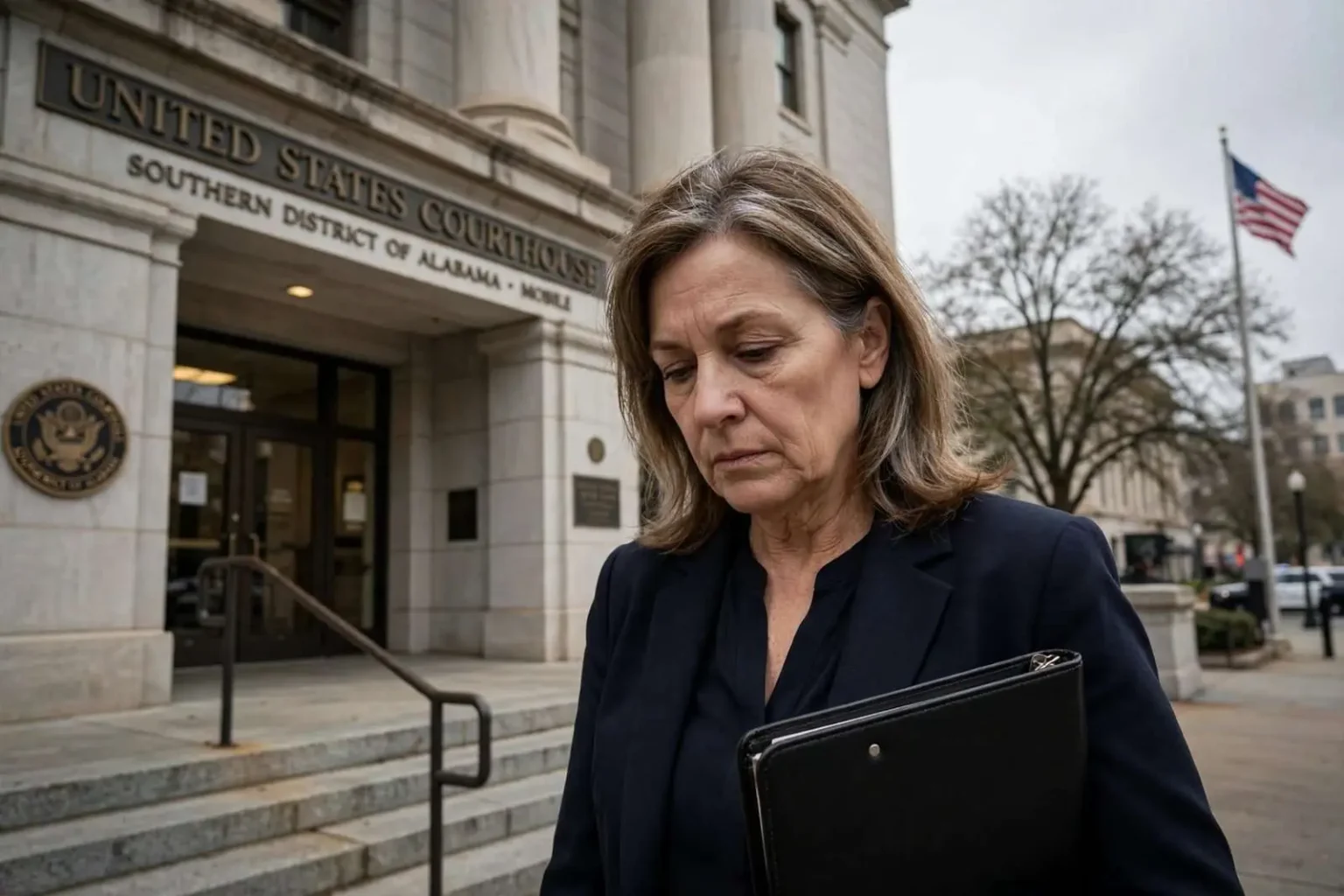
A Mobile woman has pleaded guilty in federal court to mail fraud after filing a false insurance claim tied to a fire at her former business, according to the U.S. Attorney’s Office for the Southern District of Alabama. Jean Sanborn admitted to falsely claiming she was entitled to insurance proceeds from State Farm Insurance after a fire destroyed Complete Skin Care Center, a business she had operated on Old Shell Road in Mobile.
The plea closes one chapter of a case that began more than five years earlier, and it pairs an arson-related fraud conviction with a separate financial disclosure offense — a combination prosecutors say reflects a pattern rather than a single bad decision. Sanborn entered her plea in Mobile’s federal courthouse, resolving the charges without the trial her case had been headed toward since investigators first linked the 2008 fire to an insurance claim.
What Prosecutors Said Happened
Prosecutors said Sanborn started the fire herself on Sunday, December 21, 2008, and then knowingly submitted a fraudulent claim seeking payment for the loss. The business, a skin care studio along the Old Shell Road corridor in west Mobile, was destroyed in the blaze. Investigators concluded the fire was not accidental, and the subsequent claim to her insurer became the basis of the federal charge, because mailing or causing the delivery of a fraudulent claim through the mail system brings such conduct under federal jurisdiction.
U.S. Attorney Kenyen Brown said in a statement that Sanborn’s insurance claim was false because she knew she had intentionally set the fire with willful disregard for the consequences of her actions. The statement framed the case in the terms federal prosecutors typically emphasize in fraud prosecutions: that the defendant knew the claim misrepresented the truth at the moment it was filed, and that the misrepresentation was made to obtain money she was not entitled to receive.
Beyond the arson-related fraud charge, Sanborn also pleaded guilty to a separate count of falsifying documents connected to a personal bankruptcy filing. Prosecutors said she gave false answers about her finances during bankruptcy proceedings, concealing investments and income from the court. Bankruptcy fraud charges of this kind rest on the sworn schedules and statements every filer must submit, and concealing assets or income from a bankruptcy court is a federal offense independent of whatever triggered the filing.
The two charges, taken together, painted a picture of financial distress that prosecutors said ran through both proceedings. Federal filings in such cases generally allege that a defendant’s finances were unraveling in the period before the fire, and that insurance proceeds or concealed income represented attempts to hold that unraveling at bay. Prosecutors did not allege anyone else was involved in either offense.
How the Case Was Built
Federal court records show the case was handled through the U.S. Attorney’s Office in Mobile as part of ongoing efforts to prosecute insurance and bankruptcy fraud in the Southern District of Alabama. The office, which covers southwest Alabama from its Mobile offices, handles the full range of federal criminal work in the district, and financial fraud prosecutions like this one draw on records that can take months or years to assemble — fire investigation reports, insurance claim files, banking records and bankruptcy filings all cross-referenced against one another.
Cases like this one are typically investigated jointly by federal agents and state fire marshals when arson is suspected to be connected to an insurance payout, since intentionally setting a fire to collect on a policy is treated as a serious federal offense distinct from local arson charges. Local firefighters and investigators respond first and document the scene; state fire marshals analyze burn patterns, debris and physical evidence; and federal agents follow the paper trail of the claim itself. It is the intersection of the physical evidence and the financial paperwork that makes these cases, and the coordination between agencies is often what determines whether charges are ever filed.
The fire occurred on a Sunday in late December, a timing investigators weigh in arson-for-profit cases because businesses that burn on weekends or holidays are more likely to be empty, and the calendar itself can be relevant when reconstructing a suspect’s movements and the business’s condition beforehand. Prosecutors did not detail in public filings how the investigation progressed from the initial fire response to the federal charges, but the gap between the 2008 fire and the plea illustrates the deliberate pace of such cases.
The Charges and the Potential Penalty
Under federal sentencing guidelines, the mail fraud and false statement charges together carry a statutory maximum of up to 20 years in prison and a fine of as much as $250,000, though actual sentences in fraud cases typically fall well below the maximum depending on the specifics of the offense and a defendant’s criminal history. Federal sentencing is driven by guidelines that calculate a range from the dollar loss involved, the defendant’s role in the offense and the defendant’s record, with judges retaining authority to depart from the range in appropriate cases.
Restitution is a near-certain component of any sentence in a case like this. Courts routinely order defendants in insurance fraud prosecutions to repay the insurer for amounts paid on fraudulent claims, and a guilty plea to the charge establishes the predicate for that order. The precise loss figure, which shapes both the guidelines range and any restitution, is typically laid out in a presentence report prepared after the plea and before sentencing.
Sanborn’s guilty plea resolves the criminal case without a trial, though a sentencing date would still need to be set by the presiding federal judge. Between plea and sentencing, probation officers compile the presentence report, both sides file objections or recommendations, and the judge holds a sentencing hearing where victims and the defense may be heard. The process generally takes a couple of months, and the plea agreement’s terms can cap or recommend parts of the ultimate sentence.
A Pattern in Mobile’s Federal Courthouse
The case is one of several fraud prosecutions handled out of Mobile’s federal courthouse in recent years involving business owners accused of destroying property to profit from insurance payouts. Prosecutors in the Southern District have made a point of pursuing such cases, arguing that arson-for-profit schemes impose costs well beyond a single insurer — they raise premiums for every policyholder in the region and put firefighters at risk responding to intentionally set blazes.
Local and federal investigators have said such cases can take years to build because they require proving intent, tracing insurance paperwork, and often coordinating between local fire investigators and federal prosecutors. Unlike a burglary or robbery, where the criminal act is visible and immediate, an insurance fraud case must prove what was in a defendant’s mind when a claim was signed — a burden met through financial records, communications and the physical evidence of the fire itself. That evidentiary chain is slow to assemble, and defense challenges to fire science have made careful, methodical investigation more important than ever.
The Old Shell Road corridor, where Complete Skin Care Center operated, runs through one of Mobile’s busiest commercial stretches, lined with small businesses, professional offices and older retail centers. A business fire on that corridor draws an immediate multi-agency response, and the destruction of a small business reverberates past its owner to employees and neighboring shops. Prosecutors did not release an estimate of the fire’s total damage, but the loss of the business itself was documented in the insurance claim that became the centerpiece of the case.
What the Plea Means Going Forward
By pleading guilty, Sanborn waived her right to a trial on both counts and accepted the factual basis prosecutors presented. The remaining question for the court is punishment: the statutory maxima establish the outer boundary, but the guidelines calculation — built from the dollar loss, the involvement of a commercial fire, the concealment in the bankruptcy case and her criminal history — will drive the actual range. Judges in the Southern District typically schedule sentencing within a few months of a guilty plea in fraud cases of this scale.
The case also serves as the sort of public reminder prosecutors intend it to be. Insurance fraud prosecutions are, in part, messages to claimants and adjusters alike: that fires will be investigated with the same rigor applied to the paperwork that follows them, and that the mail system’s involvement converts what might look like a state arson matter into a federal felony. For the agencies that worked the case, the plea validates a years-long process that began with a fire scene on Old Shell Road in December 2008 and ended, at least in its criminal phase, with a guilty plea in downtown Mobile.
For the surrounding business community, the outcome closes a case that had lingered in the background of the corridor for more than five years. Small business owners along Old Shell Road and throughout west Mobile watched the investigation unfold in fits and starts, and the resolution — without a trial, and with sentencing to come — brings the legal end of the fire closer, even as the practical losses it caused were settled long ago.