

MOBILE, Ala. — The National Weather Service in Mobile issued a rip current statement over the weekend, warning swimmers along the Alabama and Florida Gulf Coast to stay alert for dangerous water conditions. The advisory, issued at 9:55 p.m. Sunday, Aug. 2, and in effect until 6 a.m. Monday, covered Mobile and Baldwin coastal counties in Alabama, as well as Escambia, Santa Rosa and Okaloosa coastal counties in Florida.
Rip current statements from the Mobile forecast office are among the most consequential products the office issues during the summer, because they reach the hundreds of thousands of visitors who crowd the beaches of Dauphin Island, Gulf Shores, Orange Beach and the Florida panhandle communities during peak season. A Sunday-night issuance, in particular, catches beachgoers planning Monday outings before they leave their condos and hotels.
Forecasters warned that rip currents in the affected areas were strong enough to sweep even experienced swimmers away from shore and into deeper water. Rip currents are powerful, narrow channels of water that flow away from the beach, and they are among the leading causes of ocean rescues and drownings along the Gulf Coast each year.
The currents form when waves and wind pile water against the shore and that water finds a concentrated path back out to sea, usually through a low spot or channel in the near-shore sandbar. To a swimmer at the surface, a rip current does not pull a person under — it pulls them out, away from the beach, which is why the instinct to swim straight back to shore is so dangerous and so often the fatal mistake.
The National Weather Service urged beachgoers to swim only in areas monitored by lifeguards. Anyone caught in a rip current is advised to remain calm and float rather than swim directly against the current, which can quickly exhaust even strong swimmers. Where possible, swimmers should attempt to swim parallel to the shoreline to escape the current’s pull.
If unable to break free, forecasters recommend facing the shore and calling or waving for help to attract the attention of lifeguards or bystanders. Floating and signaling keeps a swimmer alive at the surface while rescue resources move, and it conserves the energy that fighting the current would waste within minutes.
A Recurring Summer Hazard: rip current statements are common along the Alabama and Florida Gulf Coast during the summer months, particularly when onshore winds and swell combine to create choppier surf. The northern Gulf’s gently sloping sandy bottom produces the sandbar-and-channel geography in which rip currents thrive, and even days without storms can generate the wave energy that sets the currents running.
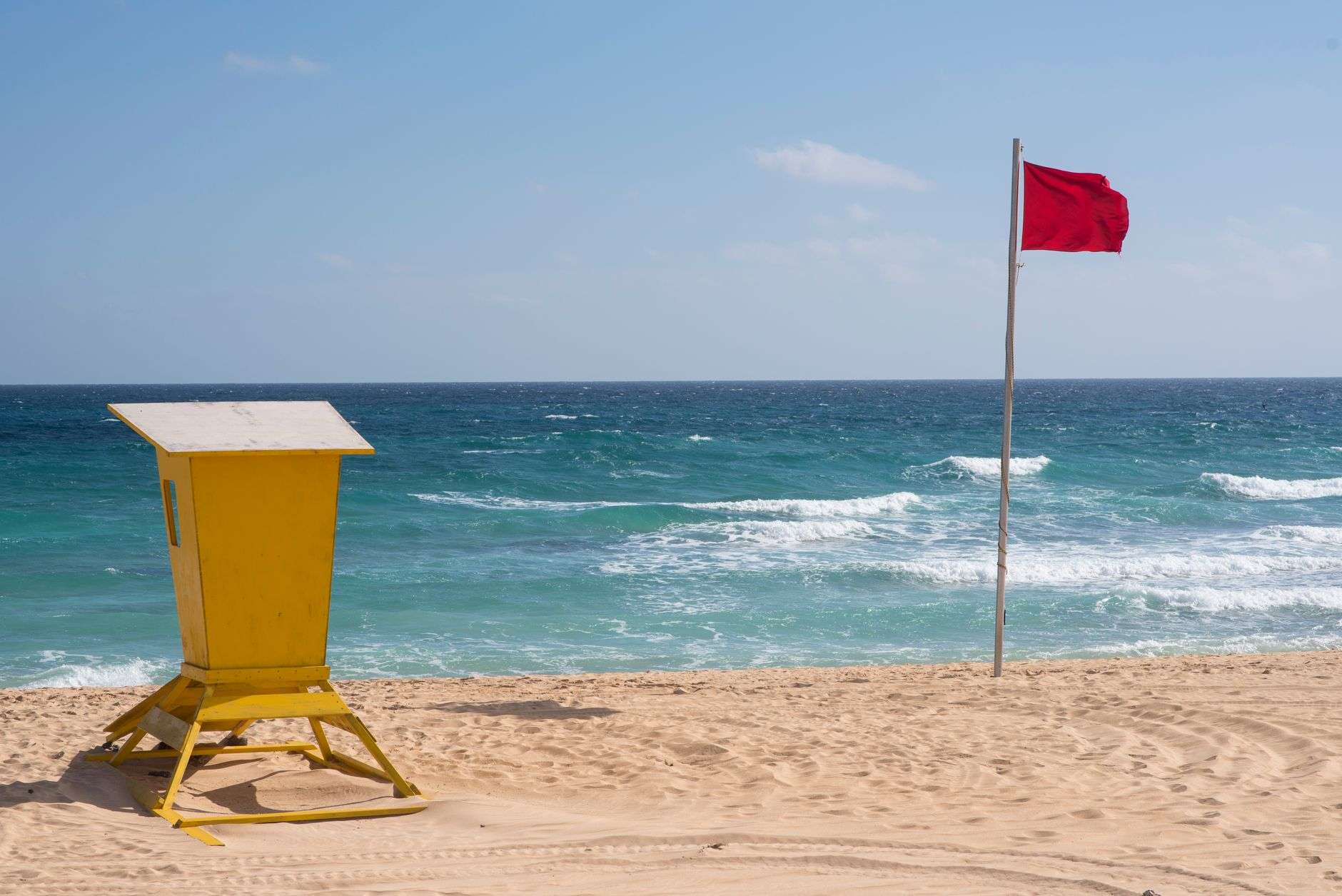
Local beach safety agencies, including Orange Beach’s Fire Department-run Beach Safety Division, use color-coded flag systems to alert visitors to daily water conditions, with double red flags typically signaling that the water is closed to the public due to hazardous conditions. The flag program gives visitors an at-a-glance assessment posted at public beach access points, and safety crews update the flags as conditions change through the day rather than only once each morning.
Residents and visitors planning a trip to the beach are encouraged to check current flag conditions and marine forecasts before entering the water, and to heed guidance from on-duty lifeguards. Lifeguards along the Alabama coast are trained surf rescuers who reposition swimmers away from visible rip channels and can spot a distressed swimmer far sooner than someone on the sand, which is why swimming within sight of a guarded beach remains the single most effective safety decision a visitor can make.
The timing of the weekend statement matters as much as its content. Late-summer weekends draw the year’s biggest beach crowds to the Gulf Coast, and many of those visitors are inland residents making one or two trips to the coast each year — swimmers with little experience reading surf conditions or recognizing the visual signs of a rip current, which include a channel of churning, choppy water, a noticeable difference in water color, or a line of foam and debris moving steadily seaward.
For families staying along the beaches of Mobile and Baldwin counties, safety officials recommend a simple briefing before any trip to the water: check the flags, pick a guarded beach, keep children within arm’s reach, and agree that anyone caught in a current will float, not fight. The message is repeated every summer because it works — the swimmers who understand rip currents almost always survive them.
How to spot a rip current before you swim
Rip currents leave visible signatures that trained observers read from elevated lifeguard stands, but ordinary beachgoers can learn them too. The classic signs include a narrow gap in the incoming wave line where waves are not breaking, water that appears darker or murkier than the surrounding surf because the channel is cut deeper into the sandbar, a rippled or choppy patch where the water around it is smoother, and a trail of foam, seaweed or bubbles extending steadily away from shore rather than washing in with the waves.
The channels tend to sit at fixed points where the sandbar is weakest, often near piers, jetties and rock structures where water is funnelled along the structures and out to sea. That is a central reason safety officials tell swimmers to keep a wide distance from piers and jetties: the same structures that attract fish and photographers also concentrate the strongest seaward flow on the beach.
Conditions change with the tide as well. An incoming tide can temporarily suppress a rip current’s flow while a falling tide can strengthen it, and the strongest currents frequently develop during the couple of hours around low tide when more of the sandbar is exposed and the channel carries the returning water with greater force. Checking the tide tables alongside the surf forecast gives a swimmer a far better picture of the day’s risk than either source alone.
Weather does not need to be dramatic for currents to be dangerous. Some of the deadliest rip current days on the Gulf Coast come under blue skies and light winds offshore, when large long-period swell from a distant storm arrives and breaks with unusual force on the local sandbars. That disconnection between pleasant weather and hazardous water is precisely why the National Weather Service issues rip current statements on a schedule set by surf conditions rather than by what the sky looks like at the beach.
What to do if someone is caught
The survival sequence is the same whether the swimmer is a child or a competitive athlete: stay calm, float, and do not swim against the current. A person floating on their back with their airway above the surface can remain viable indefinitely, while a swimmer sprinting against a current that moves faster than they can burns out within a few minutes. Escaping the channel by swimming parallel to the beach — either direction works — typically takes only a short effort, after which waves will help push the swimmer back to shore.
If escape fails, the swimmer should face the beach, wave one arm and call for help, continuing to float between signals. One arm waving is the recognized distress signal on guarded beaches, and lifeguards scan for it constantly. Bystanders who see a swimmer in trouble should call 911 immediately and, if possible, keep the swimmer in sight while pointing out their location to arriving responders; throwing a flotation device, cooler or surfboard leash can help, but entering the water untrained to attempt a rescue often produces a second victim.
Beach safety divisions along the coast build their staffing and patrol patterns around this rescue chain. In Orange Beach, the fire department’s beach safety program places trained surf rescuers on the city’s busiest beaches during peak season, positions rescue equipment at access points and coordinates with dispatch on water rescues. Gulf Shores operates a comparable program, and both cities adjust staffing to the flag conditions posted each day.
For the stretch of coast covered by the weekend statement, the guidance was consistent from Dauphin Island through the Baldwin County beaches and across the line into the Florida panhandle: swim near a lifeguard, respect the flags, and treat the Gulf with the caution its beauty demands. Rip currents will continue through the summer — but the knowledge of how they work, spread one beach briefing at a time, keeps their danger in check.
Education campaigns along the coast reinforce those habits every season. Hotels and rental properties post rip current safety cards in rooms, cities print the flag meanings on signage at every public access, and lifeguards walk the sand during crowded weeks to answer questions before problems start. Visitors arriving from inland areas often know little about the Gulf’s currents, and a few minutes of orientation at the access point can prevent the rescue call that follows when they learn by surprise.
The rip current statement expired at 6 a.m. Monday, and beachgoers are encouraged to check for updated statements and flag conditions each day before entering the water.