

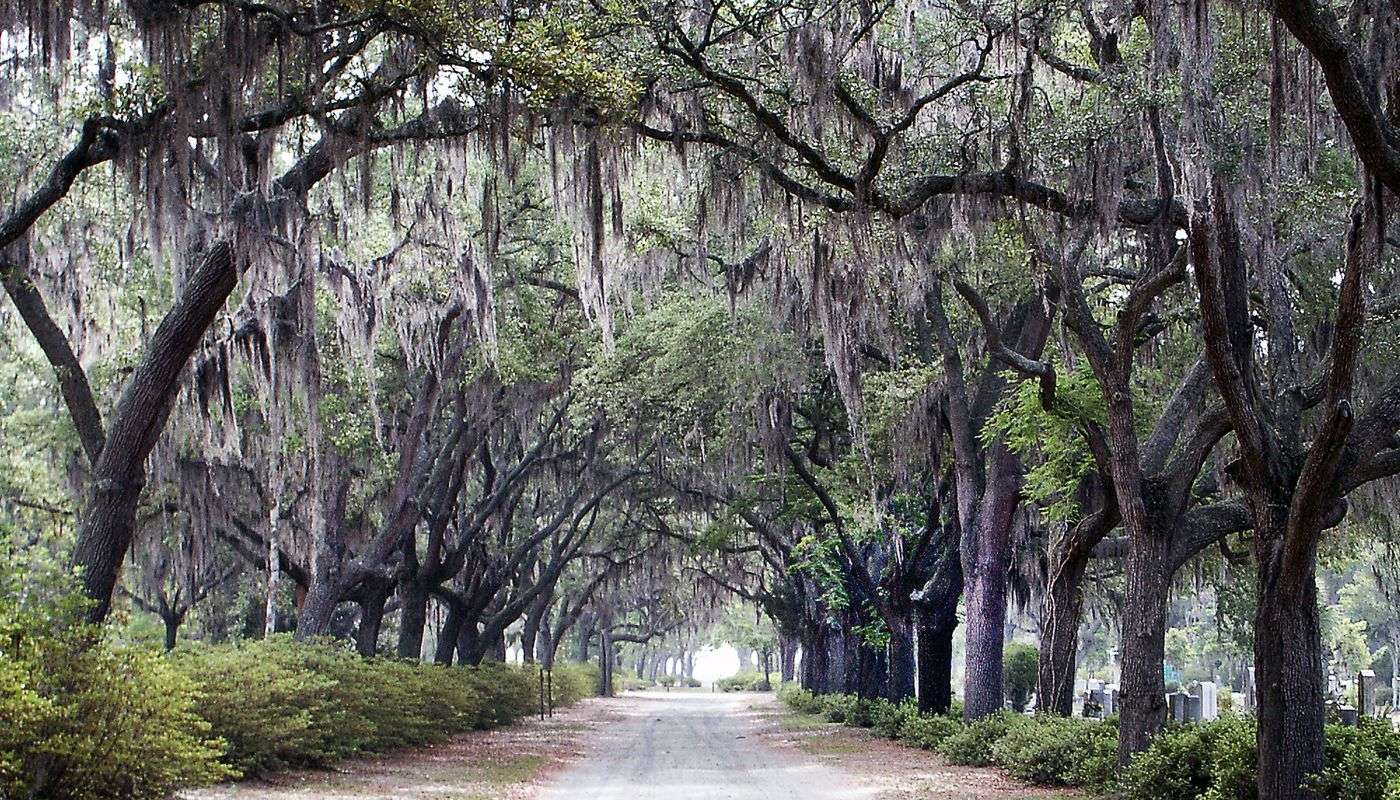
On Saturday, May 8, 2010, a small crowd gathered among the moss-draped oaks and weathered headstones of Mobile’s historic Catholic Cemetery for a morning of poetry, memory and local pride. The occasion was the Mobile stop of the Dead Poets Grand Tour, a sweeping cross-country pilgrimage that carried readers and admirers of American verse to the graves of poets across more than twenty states. At 10 a.m., a group of readers gathered at the grave of Father Abram Ryan — the 19th-century Catholic priest and poet known across the South — to read aloud the work of five writers with deep ties to the Mobile area.
A National Tour With a Local Stop
The Dead Poets Grand Tour was the centerpiece of Dead Poets Remembrance Day, an initiative launched by Maine poet and event organizer Walter Skold to encourage communities around the country to visit and read at the graves of deceased American poets. Skold, who founded what became known as the Dead Poets Society of America, envisioned October 7 — the anniversary of Edgar Allan Poe’s death — as a national day of literary remembrance. To build momentum for the idea, he organized a roughly month-long, multi-state road trip in the spring of 2010 that stopped at dozens of poets’ graves, inviting local readers and, in many cities, sitting state poets laureate to take part in community readings.
According to organizers, the full tour covered about 6,000 miles across 21 states and included readings connected to 13 different state poets laureate, making stops at literary landmarks ranging from small-town cemeteries to institutions like the Poe Museum in Richmond, Virginia. The tour began in Portland, Maine, in late April and wound its way south and west before concluding in Providence, Rhode Island, in late May. Mobile’s stop on May 8 placed the city within a broader, nationwide effort to spotlight American poets whose graves and legacies might otherwise go unnoticed by the traveling public.
Gathering at Father Ryan’s Grave
The Mobile reading was held at the grave of Father Abram Joseph Ryan, a Catholic priest, writer and Confederate-era poet who spent a significant stretch of his ministry in the city. Ryan was born in Maryland in 1838 to Irish Catholic immigrant parents, entered a Vincentian seminary as a teenager, and was ordained a priest in 1860. During the Civil War, historical accounts describe him serving Confederate soldiers in an unofficial chaplain capacity, ministering to troops in Tennessee following the death of his brother and, by some accounts, in the aftermath of major battles including Franklin and Nashville. He was arrested by Union authorities in Nashville in 1862 on suspicion of disloyal speech, an episode that added to his reputation as an outspoken Southern sympathizer.
Ryan’s fame, however, rested chiefly on his poetry. His best-known poem, “The Conquered Banner,” was published in 1865 and became one of the most widely reprinted works of Southern elegiac verse in the years following the war, cementing his reputation as what many called the “Poet-Priest of the South.” He went on to found a literary journal, The Banner of the South, in Augusta, Georgia, and his collected poems remained popular for decades, especially among Southern and Irish-American readers. Ryan served as a parish priest in Mobile for roughly a decade, from 1870 to 1880, work that tied him closely to the city’s Catholic community. He died in 1886 in Louisville, Kentucky, but his remains were returned to Mobile for burial in the Catholic Cemetery, where a large memorial cross and commemorative plaques mark his grave today.
Mobile’s Catholic Cemetery
The Catholic Cemetery itself is one of Mobile’s most significant historic burial grounds. Established in 1848 under Bishop Michael Portier after the Catholic section of the older Church Street Graveyard filled to capacity, the cemetery grew over the following decades through several expansions, eventually encompassing roughly 150 acres and an estimated 18,000 interments. Its oldest section is laid out in a distinctive series of concentric circular rows, a design some historians attribute to local architect Claude Beroujon, while later additions from the late 19th and early 20th centuries follow a more conventional grid pattern. The cemetery is the resting place of numerous figures significant to Mobile and Alabama history, including Confederate naval officer Admiral Raphael Semmes, along with Ryan himself. Long stretches of the cemetery fell into disrepair over the 20th century, but organized restoration efforts that began in the 1980s and continued into the 2000s have worked to preserve its monuments and historical character. The cemetery was listed on the National Register of Historic Places in 1991, recognition of both its age and its role in documenting the city’s Catholic and civic history.
The Poets Read at the Mobile Stop
Five poets with strong Mobile-area connections were honored during the graveside reading, each brought to voice by a different reader. Father Ryan’s own poetry was read by Bob Coleman. Mary McNeill Fenollosa, a novelist and poet born in Wilcox County who was raised in Mobile and wrote several works set in and around the city, was read by Diane Garden. Fenollosa, who published much of her fiction under the pen name Sidney McCall, is remembered for early-20th-century novels including “Truth Dexter” and works set partly in Mobile and Spring Hill; she eventually returned to Baldwin County later in life.
Poet Caroline McCall was read by Sue Walker, who at the time served as Alabama’s Poet Laureate. Walker, a longtime University of South Alabama faculty member, earned her academic degrees from the University of Alabama and Tulane University before joining the university’s English department in 1980. She went on to chair the department, was named the university’s Stokes Distinguished Professor of Creative Writing, and served as Alabama’s Poet Laureate for a term spanning roughly a decade. She is also known in Mobile’s literary community as the founder of the journal Negative Capability and its associated small press, which has published dozens of poetry collections and anthologies over the years.
Vivian Smallwood’s poetry was read by Vivian Brown, and the work of Eugene Walter — perhaps the most colorful literary figure among the five — was read by Charlie Smoke. Eugene Walter, born in Mobile in 1921, was celebrated as a novelist, poet, editor, actor and cook whose restless career took him from wartime cryptography work to Paris, where he became a founding editor of The Paris Review, and later to Rome, where he worked as a translator on films by directors including Federico Fellini and appeared in dozens of films himself. Walter’s novel “The Untidy Pilgrim” won the Lippincott Fiction Prize, and he later published well-regarded works on Southern cooking. He returned to his native Mobile in 1979 and remained a fixture of the city’s arts scene until his death in 1998, and he is still remembered locally as one of the city’s most singular literary personalities.
Presented by USA’s Stokes Center for Creative Writing
The Mobile reading was presented by the Stokes Center for Creative Writing together with the University of South Alabama’s Department of English. University creative writing centers of this kind typically serve as hubs connecting campus writing programs with the broader local literary community, hosting readings, workshops and visiting-writer events that are open to the public as well as students. Pairing a national commemorative tour with a campus-affiliated writing center is a common model for this sort of event: it allows a touring initiative to tap into existing local expertise and audiences, while giving a university program visibility and a chance to showcase regional literary history to residents who might not otherwise attend an academic event.
Graveside literary readings, in general, sit at the intersection of literary appreciation and local history education. They give participants a way to encounter a writer’s work in physical proximity to where that writer is buried, often prompting a fuller conversation about the person’s life and era than a classroom reading alone might. For a city like Mobile, with its multiple historic cemeteries and a roster of nationally recognized writers connected to the area, such events also function as informal walking tours of local literary heritage, introducing newer residents and visitors to figures whose names may be familiar from street signs, buildings or family stories but whose actual work is less widely read today.
A Regional Pattern of Literary Commemoration
Events like the Mobile stop on the Dead Poets Grand Tour fit into a broader, long-running pattern across the Gulf South, where local historical societies, university departments and preservation groups regularly organize public programming tied to regional writers and historic burial grounds. Alabama’s Poet Laureate program itself, which dates back decades and has been held by a series of writers with strong ties to the state’s literary institutions, is one such mechanism for keeping public attention on Alabama poetry and its practitioners, current and historical alike. Cemetery-based programming in particular has grown more common nationally as historic burial grounds seek new ways to engage the public and support preservation funding, often through guided walking tours, lantern-lit evening events, or, as in this case, readings tied to a specific occasion or traveling initiative. For Mobile, whose Catholic Cemetery already draws visitors interested in the city’s 19th-century history and notable burials, a graveside poetry reading offered a low-cost, community-oriented way to draw a bit of extra attention to writers whose connection to the city might otherwise be known mainly to literature scholars and local historians.
Contact and Further Information
At the time of the event, additional information about the Mobile reading was available by contacting Sue Walker directly at the University of South Alabama. Readers interested in the broader Dead Poets Remembrance Day concept, or in visiting other graves of poets with Alabama or Gulf Coast connections, can find additional recorded readings and cemetery information through local historical societies, university English departments, and organizations that maintain records of the state’s literary landmarks. The Catholic Cemetery itself remains open to visitors interested in Mobile’s 19th-century history, and Father Ryan’s grave continues to be one of its most visited sites given his enduring reputation as one of the most widely read poets to have called Mobile home.