

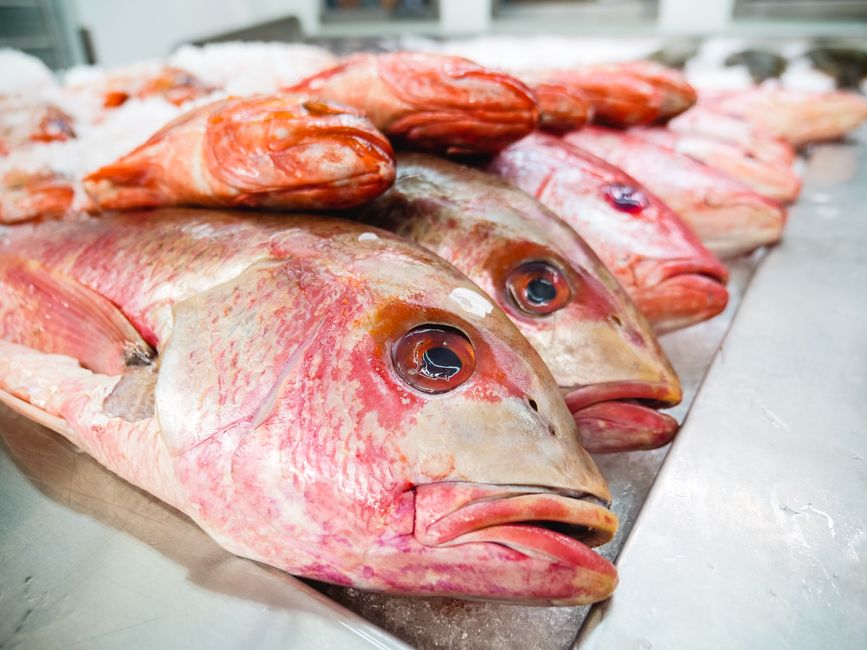
Along the Gulf Coast, the opening of red snapper season arrives each year with the gravitational pull of a holiday — boats serviced, tackle boxes reorganized, weather apps refreshed hourly, and otherwise rational men making decisions no financial adviser would endorse. It is a phenomenon as old as the fishery itself, and it inspires in a certain kind of Southern man a devotion that spouses learn to schedule around.
A season like a secular Christmas: ask anyone who has watched a husband negotiate a wedding date around opening day, or heard a eulogy pause to note that the deceased “held on for one last turkey season.” The sporting calendar on the coast — deer, dove, duck, snapper, and a fall Saturdays religion known as SEC football — runs on a fever that no one raised inland will ever fully understand, and that no one raised here would ever apologize for.
A fever with real paperwork behind it
What makes the snapper season devotion remarkable is that it survives an administrative gauntlet that would exhaust a lesser obsession. Red snapper in the Gulf of Mexico are managed down to the pound, with Alabama’s private-angler quota set by federal managers and monitored by the state. Under state management, which took full effect in 2020 after a series of amendments to the Gulf of Mexico reef fish plan, Alabama anglers enjoy one of the longest snapper seasons on the coast — recent years have run to nearly 200 days — with a two-fish daily bag limit, a 16-inch minimum total length, and a mandatory reef fish endorsement on the license.
The fish themselves are the reward. Red snapper gather over structure — natural ledges and, along the Alabama coast, thousands of artificial reefs deployed deliberately on the sandy Gulf floor, creating oases of habitat that concentrate bait, baitfish, and the snapper that eat them. The reef zones start close to shore and stack out for miles, which is why Orange Beach and Gulf Shores have become synonymous with the species, and why the fleet that runs out of the pass on opening morning resembles a migration of its own.
The armada forms at daylight
Anyone who has seen the first morning of the season out of Orange Beach will recognize the scene: a procession of center consoles, cuddy cabins, and at least one vessel whose seaworthiness exists purely as a matter of faith, all idling toward the pass in a line that would look at home in a maritime parade. The wake chop where the pass meets the Gulf sorts the fleet quickly. So do the motors — every season has its stories of the hand-painted outboard trailing blue smoke, the ski boat pressed into offshore duty against all marine advice, the captain who limped back in with a cooler full of fish and an engine full of grievances.
Mechanics see the season coming the way emergency rooms see a holiday weekend. In the weeks before opening day, the shops fill with boat owners making their case — mine is the most critical repair, my season is the shortest, my family remembers last year’s disappointment — and leaving with comfort, optimism, and occasionally a repaired powerhead. The truly committed have their boats serviced in April; the truly devoted never winterized them in the first place.
Seasickness: the great equalizer
For all the romance, the Gulf does not care about your preparations. Rough days produce a wave of green-faced passengers that no assortment of patches, bracelets, ginger lozenges, or folk remedies can fully calm, and the old saying holds: at first you are so sick you are afraid you will die, and then you are afraid you will not. Charter mates can read the onset from across the deck — the quiet, the fixed stare at the horizon, the sudden philosophical interest in the water’s color.
Veterans develop their own rituals: eat light the night before, stay busy, keep your eyes on the horizon, take your place at the rail with dignity. The uninitiated, meanwhile, discover that nothing a friend suggested at the dock the night before — particularly anything supplied by a buddy with an unregulated home pharmacology practice — has been studied for its effects on an angry inner ear in a four-foot chop over one of Royce’s secret artificial reefs, which of course turned out to be parked beside forty other secret reefs, as secrets on the water always are.
The catch, and the cleaning table
The limit is two per person, a number that has anchored the fishery’s recovery and, incidentally, redefined trip planning: a crew of four has eight fish to show for a tank of fuel and a day’s work, and every one of them will be photographed from the most flattering angle available. The fish that come over the rail are worth it — firm, white-filleted, and the centerpiece of more coastal summer suppers than any other species. Fried, blackened, or grilled with a little butter and lemon, Gulf red snapper is the flavor of June in these parts, and locals defend their favorite recipe with the same intensity they defend their favorite bait.
Then comes the part no one romanticizes: the cleaning table. Every crew has its Cool Breeze — the man who, having contributed a full day of moral support, develops an urgent appointment elsewhere the moment the boat touches the dock, leaving the fillet knives and the wash-down hose to those who will actually eat the fish. The universal salute offered over the shoulder as he walks away is a Gulf Coast tradition as old as the season itself.
Why we keep going back
The honest answer is that snapper season is not really about the fish. It is about the night before at the beach house — the wide-ranging talk that covers deep and shallow subjects in equal measure, the stories that improve with each telling. It is about a coastline that turned a reef program into a family tradition, and a fishery that, after decades of tight federal closures, now gives Alabama anglers a season measured in months rather than days.
The season runs from May into fall under state management, and the boat ramps from Dauphin Island to Orange Beach will tell you exactly when it opens: before dawn, at the fuel dock, in the line for ice. The men in that line will be plotting, planning, and spending irrationally, exactly as the season demands. Some things on the Gulf Coast are simply not negotiable — and one of them, every summer, is two fish per man, caught far enough offshore to earn the story that goes with them.