

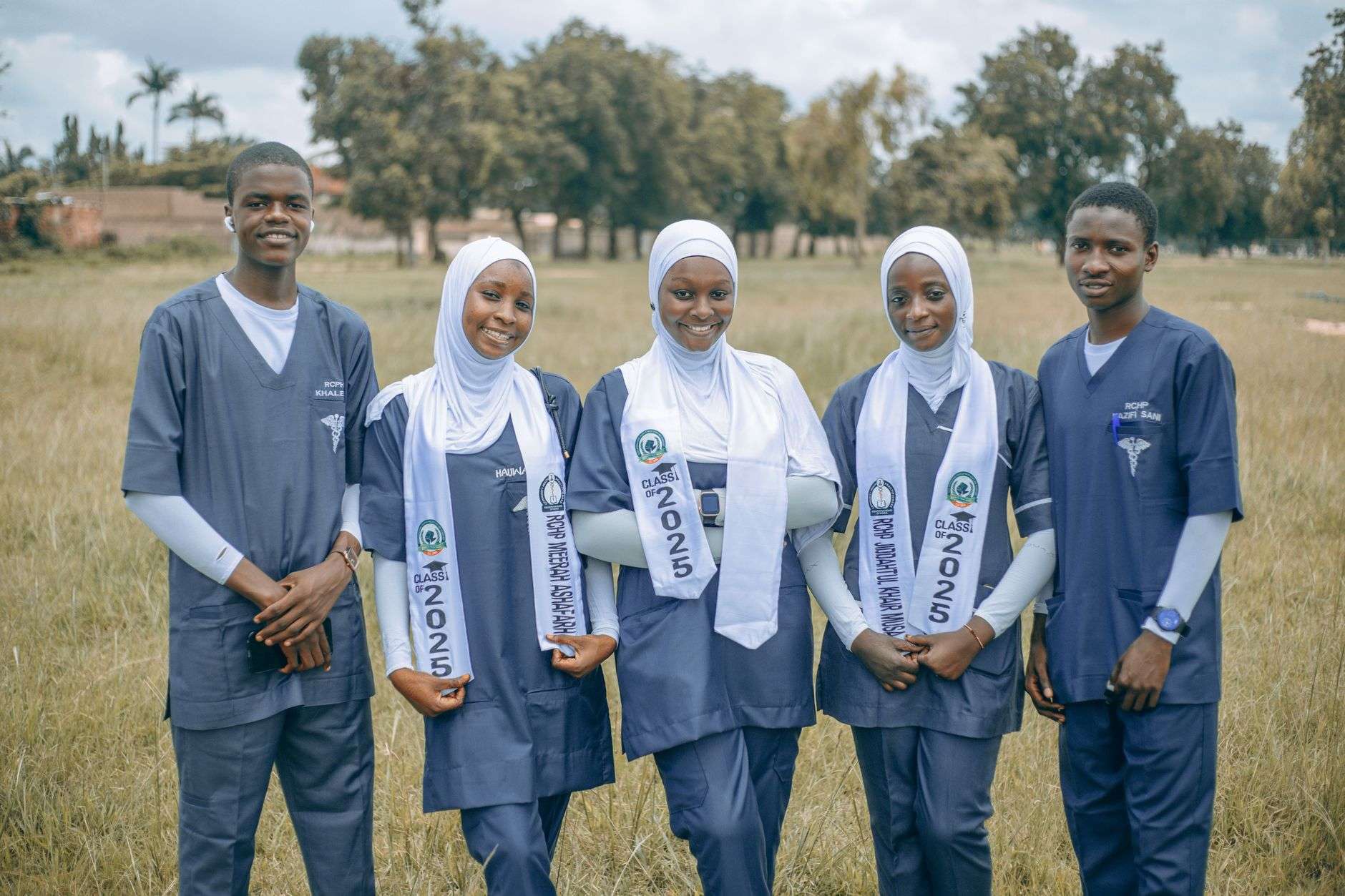
Thirty-six students crossed a meaningful threshold this week as Reid State Community College honored its newest class of practical nursing graduates with a traditional pinning and candle-lighting ceremony in Evergreen. The event marked the formal close of months of rigorous classroom instruction and hands-on clinical training, and the beginning of each graduate’s career at the bedside. For the graduates, their families and the faculty who trained them, the evening carried the weight of a transition — from student to caregiver, from classroom schedule to hospital shift, from learning nursing to practicing it.
A Ceremony Rooted in History
The pinning ceremony is one of nursing’s oldest and most cherished traditions, tracing back to the legacy of Florence Nightingale, the founder of modern nursing. During the Evergreen ceremony, each of the 36 graduates received a nursing pin, a small but symbolic emblem that has long represented competence, compassion and commitment to patient care. Family members, faculty and friends filled the room to watch students receive their pins one by one, a moment that many nursing programs describe as far more personal than a diploma handed out at a large commencement. Where a graduation exercises a school’s formality, a pinning speaks the language of the profession itself.
As part of the ceremony, graduates held lit candles while reciting the practical nursing pledge, a promise to uphold the ethical and professional standards of the field. The flickering candlelight is traditionally meant to represent the passing of knowledge from one generation of nurses to the next, along with each new nurse’s responsibility to carry that light of learning into their care for future patients. The ritual links the class in Evergreen to nurses across the country and across the decades who recited the same pledge and accepted the same obligation.
Traditions like this one serve a practical purpose as well. Nursing is a profession whose daily work can be physically demanding and emotionally heavy, and ceremonies that mark the entrance into it reinforce the identity and standards graduates will need when the work is difficult. Faculty at nursing programs across Alabama often note that the values recited on pinning night — competence, compassion, accountability — are the same values patients and families rely on during their hardest days.
From Classroom to Clinical Practice
Reid State’s practical nursing program prepares students to sit for the National Council Licensure Examination for Practical Nurses, the state licensing exam required before graduates can begin work as Licensed Practical Nurses, or LPNs. The coursework blends classroom instruction in anatomy, pharmacology and patient care principles with supervised clinical rotations in real healthcare settings, giving students direct experience working alongside practicing nurses before they are on their own. That combination is deliberate: the classroom builds the knowledge base, while the clinical rotations test judgment, communication and composure in the environments where LPNs actually work.
For many students in rural Conecuh County and the surrounding area, a practical nursing credential offers a comparatively fast and affordable path into a stable healthcare career. Community college-based programs let students train close to home without the tuition and time commitment of a four-year degree, while still producing a license that carries real weight with employers. In a region where manufacturing and agriculture have historically anchored the economy, nursing has become one of the most dependable routes to a career that cannot be outsourced and follows people wherever they live.
LPNs commonly work in hospitals, nursing homes, physicians’ offices and home health settings, often serving as a critical point of contact for patients in communities where access to care can be limited. In small-town Alabama, the LPN is frequently the staff member patients see most — the one who takes the history, monitors the treatment plan and notices when something changes. Long-term care facilities in particular depend on practical nurses, since the state’s aging population concentrates demand in exactly the kind of facilities that serve rural counties like Conecuh.
Filling a Local Healthcare Need
Community colleges like Reid State play an outsized role in addressing healthcare workforce shortages across small-town and rural Alabama. Rural counties face a persistent challenge: recruiting nurses from major cities is difficult when housing, schools and salaries compete with urban systems, so the most reliable pipeline is homegrown. Nursing programs based in the region help ensure that graduates who train locally are more likely to stay and practice locally, strengthening the pipeline of caregivers available to area hospitals, clinics and long-term care facilities.
The economics of that pipeline are straightforward. Students who grow up in Evergreen or the surrounding communities have family ties, church ties and community ties that keep them close after graduation, and a healthcare credential gives them a professional future in the place they already belong. Each pinning ceremony represents not just an individual milestone but a small but meaningful boost to the local healthcare workforce that families in Evergreen and across Conecuh County depend on. Multiplied across class after class, those boosts are what keep rural clinics staffed and nursing home wings covered.
Evergreen itself sits along the Interstate 65 corridor between Montgomery and Mobile, a location that shapes both the college’s reach and its graduates’ options. Students commute from across Conecuh and neighboring counties to attend classes, and graduates who choose to work locally find healthcare employers within easy driving distance in every direction. Those who later want to advance — toward registered nursing, nursing management or specialized care — carry their practical nursing foundation with them, along with the clinical experience they accrue in rural settings that many urban-trained peers never see.
Looking Ahead
With their pins now in hand and the practical nursing pledge recited, the newest class of Reid State graduates is preparing to sit for licensure and step into their first nursing roles. The period after pinning is a busy one: exam preparation, license applications, job interviews and, for many, the first days on a hospital or long-term care floor where the training becomes real. Instructors often stay in touch with graduates through this stretch, and the program’s reputation with local employers gives each new class a running start.
College officials and instructors have long pointed to ceremonies like this one as a reminder of why the program exists: to train capable, compassionate caregivers who are ready to serve their neighbors from day one. The pin on a graduate’s collar represents hundreds of hours of instruction and supervised practice, but the pledge represents something the hours cannot measure — the standard each nurse commits to uphold when no one is watching. That standard is what nursing education is ultimately in the business of producing.
Reid State Community College continues to offer practical nursing and other healthcare training programs designed to meet the needs of students and employers throughout south Alabama. As healthcare demand grows across the region’s aging rural counties, the role of institutions like Reid State — embedded in the communities they serve, with programs priced and scheduled for working students — only becomes more central. The week’s ceremony in Evergreen was one more class sent into that work, thirty-six nurses at a time, carrying a tradition that began with Florence Nightingale into the hospitals, clinics and care facilities of south Alabama.
The practical nursing license itself carries a defined scope of practice under Alabama law: LPNs work under the direction of registered nurses and physicians, administering medications, monitoring patients, recording vital information and performing the day-to-day care that keeps a ward or a long-term care wing running. It is demanding work that blends technical skill with constant human contact, which is why the habits and attitudes celebrated at the pinning ceremony matter as much as the clinical checklist. Employers across south Alabama know the difference between a graduate who passed the courses and one who absorbed the profession’s standards.
The demand for that combination of skills is not abstract. Healthcare providers across the rural South have struggled for years to fill nursing positions, and the shortage is sharpest in the small hospitals, nursing homes and clinics that serve counties with aging populations. Every graduate who completes a program like Reid State’s and takes a position within the region narrows that gap in a measurable way — a shift covered, a wing staffed, a home health route maintained. The thirty-six students pinned this week represent thirty-six potential answers to that need.
The ceremony also belongs to the families who filled the room. For many students, practical nursing school is balanced against jobs and children, and the pin presented on stage is as much a family achievement as an individual one. Programs like Reid State’s draw students who are already rooted in their communities — working in area businesses, raising families, serving in local churches — which is precisely why the graduates they produce tend to stay. The candle each graduate held represents knowledge passed forward; the pin represents a promise to carry it into practice. Both now travel with the newest class of Licensed Practical Nurses as they leave Evergreen and begin the work the ceremony pointed toward.