

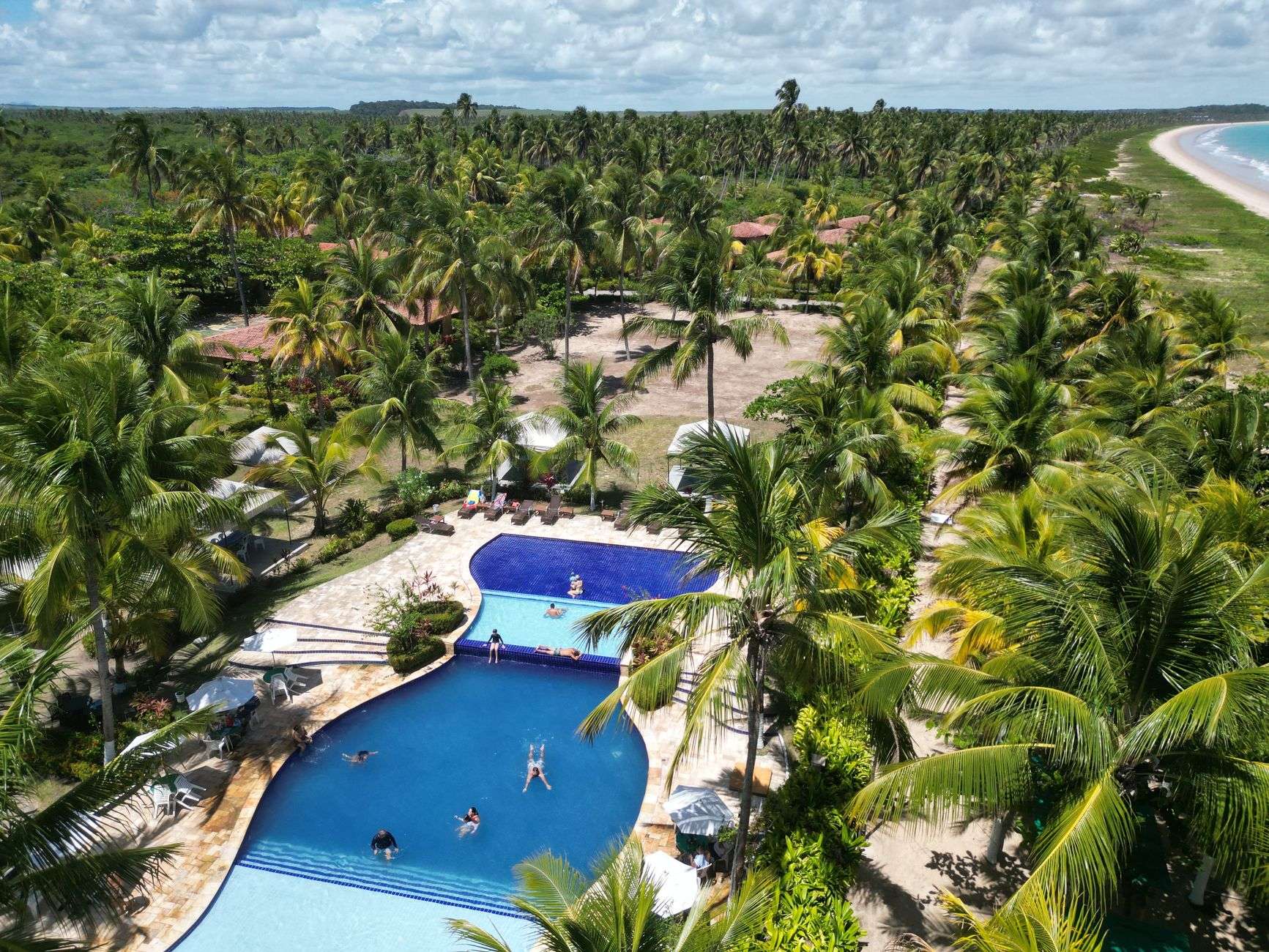
GULF SHORES, Ala. — On a stretch of coastline where high-rise condominiums line much of the beach from Gulf Shores to Perdido Key, The Lodge at Gulf State Park offers something increasingly rare: a hotel where the view in nearly every direction is sand, dunes and open water. An Easter weekend stay there in 2025 made the case that one of Alabama’s best getaways sits inside one of its most treasured state parks, less than an hour’s drive from much of the Mobile Bay area.
Gulf State Park covers roughly 6,150 acres in Gulf Shores, and its beachfront is one of the few places on the Alabama coast where a walker can look down the shoreline and see miles of beach without a wall of towers. That weekend the surf was rough and red flags were flying, but anglers and children still found their way into the waves, and a long walk on the sand in the sun and salty air proved to be the kind of reset that draws so many people back to the coast.
The park itself dates to the late 1930s, making it one of the oldest public places on the Alabama coast. Over the decades it has grown into a mix of beachfront, maritime forest, freshwater lakes and marsh that together preserve a slice of the coast as it looked before resort development reshaped much of the shoreline. Gulf Shores and neighboring Orange Beach promote their 32 miles of white-sand beaches, and the park’s protected frontage is a big part of what gives that stretch its character.
A Lodge Rebuilt After Hurricane Ivan
The current lodge replaced the park’s original lodge, which was built in 1974 and destroyed by Hurricane Ivan in 2004. Ivan came ashore near Gulf Shores in September 2004 and left behind some of the worst damage in the city’s history, and for years afterward the park’s beachfront sat without its signature hotel.
The rebuilt Lodge at Gulf State Park, which opened in 2018, is operated as a Hilton hotel with about 350 rooms and includes a conference center. Much of the financing came from Alabama’s settlements following the 2010 Deepwater Horizon oil spill, when BP’s drilling rig exploded in the Gulf and released oil that reached beaches across the northern Gulf Coast. Directing part of that money toward a public park project tied restoration to recreation and tourism, two pillars of the local economy.
The lodge was part of a larger effort to reimagine the park after the spill. Alongside the hotel, the redevelopment brought new trails, boardwalks, an interpretive center and dune restoration, with the goal of giving residents and visitors more ways to experience the natural landscape rather than simply adding another beachfront building.
Built With Sustainability in Mind
Sustainability is part of the lodge’s design, from resilient building materials meant to stand up to coastal storms to everyday features guests may barely notice. Faucets shut off automatically, lighting is energy efficient and recycling is built into operations. Exterior lighting is filtered to reduce light pollution, an important consideration on a beach where sea turtles nest in summer and where hatchlings can be disoriented by bright artificial light.
The park’s dunes are also getting help. Crews have placed hundreds of discarded Christmas trees along the shoreline, where the branches trap windblown sand and help new dunes build up over time. Healthy dunes act as a natural barrier against storm surge and erosion, and they provide habitat for wildlife, including the endangered Alabama beach mouse.
The Alabama beach mouse, a tiny, sand-colored rodent found only along a narrow band of the Alabama coast, depends on the sea oats and other dune plants for food and shelter. Its survival is closely tied to the health of the dunes, which is one reason the park places so much emphasis on boardwalks and restoration. Visitors can help simply by staying off the dunes and using designated walkovers to reach the beach.
For many visitors, the lodge has become a model for how development can coexist with a natural setting. It feels like a full-service resort without turning its back on the park around it.
Rooms, Pools and Gulf Views
The resort has the amenities travelers expect: a pool with a poolside bar and restaurant, live music and, above all, views of the Gulf from almost every angle. Rooms with balconies look directly over the water. A pair of Adirondack chairs on a balcony overlooking the Gulf is about as good as a hotel room gets on the Alabama coast.
Evenings bring their own rhythm. As the sun drops, guests gather on the pool deck and along the boardwalks to watch the sky change color over the water, and live music drifts across the property. It is the kind of place where the day’s plans rarely extend beyond the beach, the pool and dinner.
The crowd over the holiday weekend was as varied as the activities. Young families filled the pool deck, while honeymooners, couples expecting a baby and retirees strolling hand in hand shared the beach and the boardwalks. It made for excellent people-watching.
Five Restaurants Without Leaving the Property
One of the lodge’s biggest conveniences is dining. With five restaurants on site, it is easy to park the car on arrival and not move it again until checkout.
- Dragonfly is the casual poolside spot, suited to lunch. A smash burger, a chicken Caesar wrap and tropical cocktails made for an easy midday meal.
- Perch is the lodge’s upscale option, known for seafood, steaks and sunsets. Dinner featured seared Gulf grouper with a lemon-dill sauce and sweet tea-glazed scallops, followed by rich desserts.
- Foodcraft, on the lower level, is more geared to families looking for a relaxed meal.
Menus change over time, so guests should check the lodge’s current offerings before a visit.
Trails, Lakes and a Landmark Pier
The lodge is only steps from the park’s extensive trail network. At the time of the 2025 visit, the park offered more than 28 miles of paved hiking and biking trails, known collectively as the Hugh S. Branyon Backcountry Trail, winding through maritime forest, marsh and pine flatwoods. The network has continued to grow; a recent extension toward Fort Morgan Road has pushed the park’s trail system toward 40 miles. The park also includes about 800 acres of freshwater lakes, including Lake Shelby, popular for paddling and fishing.
The Gulf State Park Pier is visible from the lodge and draws a steady stream of anglers and sightseers. The concrete pier stretches about 1,544 feet into the Gulf and reopened after a roughly $13 million repair following damage from Hurricane Sally in 2020. Walking beneath it on the beach gives a sense of its scale; it is massive and built to withstand the storms that regularly test this coastline. Blacktip sharks, Spanish mackerel, king mackerel and pompano are among the species anglers target from the pier, depending on the season.
Birders have their own reasons to visit. Gulf State Park is part of the Alabama Coastal Birding Trail, and the Gulf Coast lies along a major migration route. In spring and fall, songbirds, shorebirds and wading birds pass through or settle in the park’s marshes, lakes and woods, offering good viewing from the trails and boardwalks.
Other park highlights include a nature center, a large campground, and beach pavilions with public access for day visitors, making the park a destination whether or not visitors stay at the lodge.
Tips for Planning a Stay
For readers considering a getaway to The Lodge at Gulf State Park, a few practical notes:
- Book early for spring break, holiday weekends and summer, when demand is highest.
- Learn the beach flag system. A red flag signals high hazard from surf and currents, and double red flags mean the water is closed to the public.
- Bring or rent bikes to explore the trails, and carry water and sun protection, especially in warmer months.
- Respect the dunes by using boardwalks and designated crossovers, and follow the park’s lighting guidance during sea turtle nesting season.
- Consider an off-season visit. Fall and early spring often bring milder temperatures and quieter beaches.
An Easy Getaway Close to Home
For residents of Mobile and the Eastern Shore, the lodge is roughly 45 minutes to an hour away, depending on traffic and starting point, and it compares well with far more distant beach destinations. It combines the comfort of a resort with the wide-open feel of a state park, a combination hard to find elsewhere on the Gulf Coast.
Getting there is straightforward. From Mobile, most travelers take Interstate 10 east across the bay and then head south through Baldwin County on Alabama Highway 59 or the Foley Beach Express toward Gulf Shores. The lodge sits along Beach Boulevard, also known as Highway 182, just east of the center of town, placing it within easy reach of the restaurants and attractions of Gulf Shores and Orange Beach for guests who do decide to venture out.
The ideal day there is simple: sunbathing and swimming, a shower, then drinks and dinner while the sun sets over the water. That weekend, it made for a memorable Easter gift, and a reminder of what Alabama has preserved along its short but treasured coastline.