

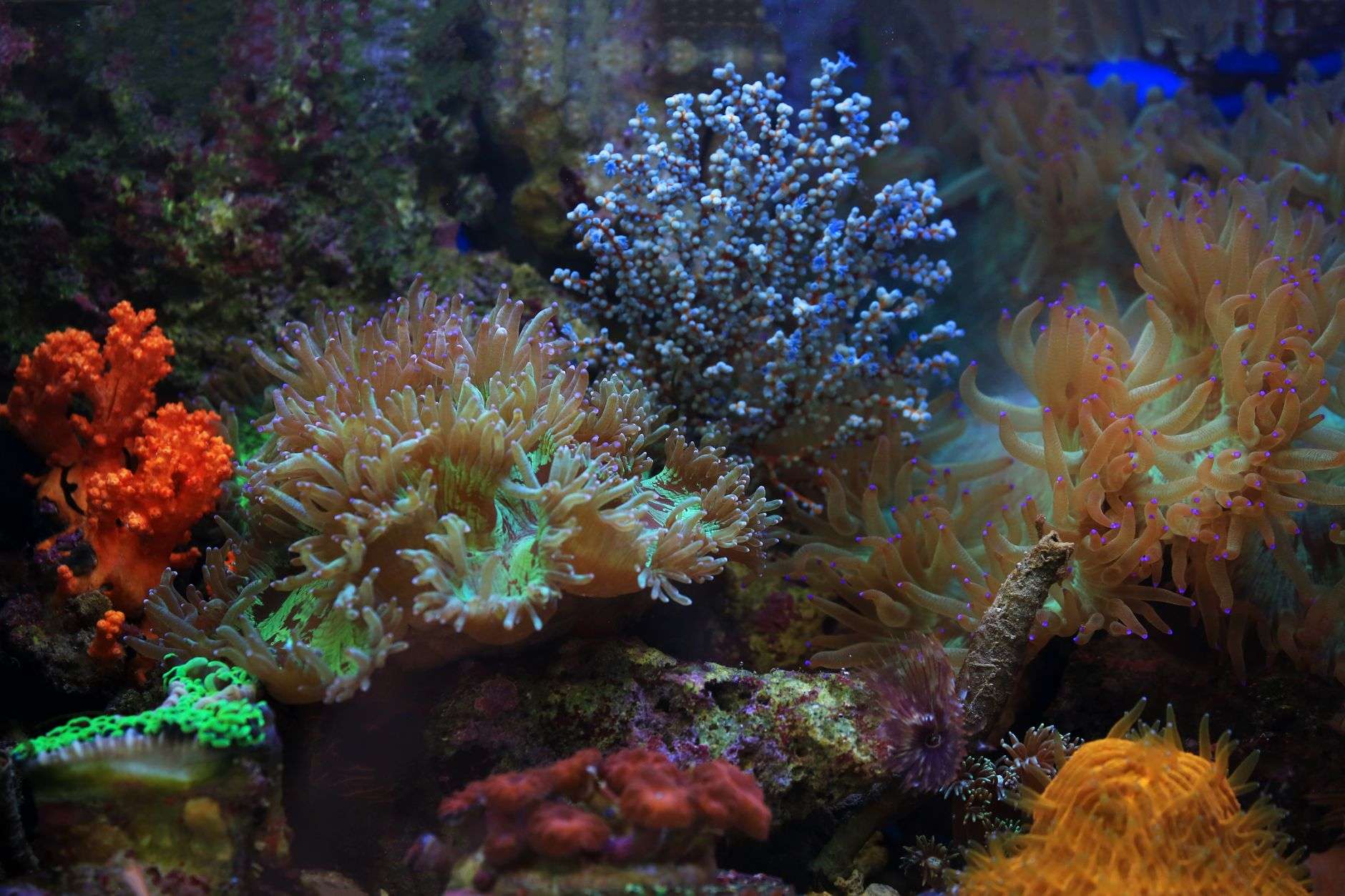
More than 15 years after the Deepwater Horizon disaster, researchers are working to repair one of the Gulf of Mexico’s lesser-known casualties: its deep-water coral habitats. A NOAA-led research team recently completed a restoration mission aboard the NOAA Ship Nancy Foster, planting propagated corals in the Gulf’s “mesophotic” zone, a deep-water region that plays a critical role in the marine food web.
The Disaster Beneath the Surface
The Deepwater Horizon oil spill began on April 20, 2010, when an explosion aboard the drilling rig triggered a blowout that released nearly 4.9 million barrels of oil into the Gulf over 87 days. The spill caused widespread ecological damage, much of it visible along beaches and shorelines, but scientists have long known that some of the worst harm occurred well below the surface, in coral communities that live too deep for sunlight to fully reach but still shallow enough to host complex reef ecosystems.
Those mesophotic ecosystems, often called the “twilight zone” of the ocean, occupy depths where only a fraction of surface light penetrates. Corals there grow slowly, some adding mere millimeters over years, which means a colony killed by oil or dispersants cannot simply regrow on its own within a human lifetime. Damage recorded after the spill included colonies injured or killed across deep reef sites near the wellhead, harm that never made the evening news because almost no one could see it without a research submersible or a remotely operated vehicle.
The Coastal Toll Close to Home
For Gulf Shores and Orange Beach, the spill’s immediate impact was economic as much as environmental. As oiled sand fouled the region’s white beaches, public confidence in the safety of the coastline collapsed, and the tourism and fishing industries that anchor the local economy took a sharp hit. Hotel rooms that would normally fill through the summer of 2010 sat empty as national news coverage showed tarballs washing ashore on the very beaches that anchor Alabama’s coastal economy.
City and tourism officials responded with extensive cleanup efforts, removing oil-contaminated sand and launching supplemental marketing campaigns and community events to draw visitors back. By the summer of 2011, lodging occupancy and retail sales figures in the area had rebounded significantly, a recovery that is often cited as evidence of the resilience of Alabama’s coastal tourism economy. The rebound did not happen by accident: it took sustained spending, repeated assurances about beach safety and a community-wide push to remind travelers that the sugar-white sand had been restored.
The fishing industry faced its own reckoning, with extensive portions of federal waters closed to harvest during the spill and lingering questions about seafood safety that required intensive testing to answer. Charter captains, commercial fishermen and seafood processors across the Alabama Gulf Coast all carried losses from those closures, even in seasons when the fish themselves were unaffected.
Why the Deep Corals Matter
While the visible shoreline healed, the mesophotic coral zone did not recover on its own. These deep-water coral communities anchor a food web that extends up through the fish species that support both commercial and recreational fishing in the Gulf, making their recovery important well beyond the scientific community. Red snapper, grouper and other reef fish depend on structured habitat for shelter, spawning and forage, and deep coral banks provide exactly that structure in regions of the Gulf where the bottom is otherwise open sand and mud.
The health of those habitats eventually registers in places like Orange Beach and Dauphin Island, where recreational anglers launch by the thousands each season and where charter fleets depend on consistent reef fish stocks. A damaged coral community is a damaged nursery and feeding ground, and its decline works its way up the chain to the docks, the boat ramps and the coastal towns that profit from them.
The Restoration Mission
This spring, the NOAA research team used technical diving to reach the damaged sites, carrying propagated corals raised for restoration work and planting them back onto the reef framework. Technical diving at mesophotic depths requires specialized gas mixtures, careful decompression planning and extensive safety support, which is why the missions run from a dedicated research vessel with trained dive teams rather than from conventional dive charters.
The NOAA Ship Nancy Foster, a research vessel operated by NOAA’s fleet, served as the platform for the work, hosting the diving operations, the coral handling stations and the scientific staff needed to document each planting site. Every colony placed on the reef represents years of prior work: corals must be collected or raised, propagated, grown to a viable size, transported in temperature-controlled conditions and then secured to the substrate in a way that gives them a chance to attach and grow.
Planting is only the beginning of the repair. Researchers will return to monitor survival and growth, because restoration in deep water is still experimental in many respects and the Gulf’s mesophotic zone remains one of the least explored parts of American waters. Data from the mission will help scientists understand which species, sizes and attachment methods give restored colonies the best odds, knowledge that shapes every future restoration project in the region.
Paying for the Repair
The restoration work flows from the legal aftermath of the spill. Under the Oil Pollution Act, parties responsible for a spill must compensate the public for natural resource injuries, a process known as natural resource damage assessment. The Deepwater Horizon settlement produced billions of dollars dedicated to Gulf restoration across decades, funding projects that range from oyster reef construction and coastal habitat acquisition in Mobile Bay to the deep-water coral work now underway offshore. Additional funds flow through the RESTORE Act, which dedicates Clean Water Act penalties from the spill to Gulf Coast recovery.
For Alabama’s coastal communities, those programs have meant tangible projects: habitat restoration in the Mobile-Tensaw Delta, beach and dune work, and grants supporting the fishing and tourism businesses that anchor places like Gulf Shores and Orange Beach. The coral missions operate far out of sight of the beachfront, but they belong to the same accounting — repairing the full range of what was injured in 2010, from the shoreline a tourist walks to the reef structure a snapper lives on, hundreds of feet below the surface.
Lessons Carried Forward
Scientists regard the mesophotic zone as both a casualty and a potential refuge. Because these mid-depth reefs lie below most surface disturbances, some researchers have hypothesized that they could serve as sources of larvae to repopulate shallower reefs stressed by warming waters and disease. That possibility gives the restoration work significance beyond making amends for 2010; it is also an investment in the resilience of the entire Gulf ecosystem.
More than fifteen years after the explosion aboard the Deepwater Horizon, the recovery continues on two tracks at once: the visible one along Alabama’s beaches, which proved how quickly a coastal economy can rebound when cleanup and marketing work hand in hand, and the invisible one in the Gulf’s twilight zone, where corals planted from the Nancy Foster will grow at their own slow pace for decades. The 87 days of oil in 2010 took moments to cause and will take generations to fully repair, but each planting season moves the ledger, one colony at a time.
What the Nancy Foster Mission Looked Like
A research mission of this kind runs on precision. Dive teams descend with the propagated corals secured in containers, work at depth to attach each colony to the reef substrate, and ascend through carefully timed decompression stops that can take far longer than the working portion of the dive itself. Support crews aboard the Nancy Foster track every diver, manage the gas supplies and stand ready for emergencies, while scientists record the position, species and condition of every planted coral so that future monitoring trips can find them again.
The pace of such work is measured in colonies rather than acres, which is why the mission’s completion marks a milestone in an effort that will stretch over years. Each successful planting refines the techniques that larger-scale restoration will depend on, and each monitoring return adds to a dataset that barely existed before the spill drew scientific attention to the deep Gulf.
The Long Shadow of April 2010
Eleven workers died in the initial explosion aboard the Deepwater Horizon, and the disaster became the largest marine oil spill in United States history. The 87-day flow of oil from the wellhead, roughly 4.9 million barrels by federal estimates, spread across a vast area of the open Gulf and touched shorelines from Texas to Florida. Along the Alabama coast, the response mobilized boom, skimmers and armies of cleanup workers, and the images of oiled sand became fixed in the memory of a tourism economy that had spent decades building its reputation on sugar-white beaches.
The spill also reshaped how scientists view the deep Gulf. Research expeditions in the years after 2010 documented coral communities damaged near the wellhead, shifted fish populations and sediment contamination on the seafloor, findings that established the scientific basis for the deep-water restoration now being carried out. In a real sense, every technical dive on the Nancy Foster builds on the emergency surveys that followed the blowout.
What It Means for the Alabama Coast
Gulf Shores and Orange Beach rebuilt their visitor economy faster than many predicted in the dark summer of 2010, and the years since have seen record seasons built on the same beaches that once made national headlines for the wrong reasons. That recovery story is now paired with a slower, quieter one playing out offshore: the deliberate rebuilding of the habitats that support the fish, the fishermen and the fishing traditions of the northern Gulf.
For residents of the Alabama coast, the coral work is a reminder that the spill’s full extent was never just what washed ashore. The Gulf’s economy and ecology are stitched together from the beach to the deep reef, and the restoration funded by the spill’s legal settlements treats them as parts of a single whole. The corals planted this spring will grow slowly, most of them far from any human eye, but their survival will register years from now in the abundance of the reefs that draw anglers to Orange Beach, the shrimp and fish that pass through Alabama’s docks, and the health of the ecosystem on which the coast has always depended.