Spartan Super Race to Bring Obstacle Course Racing to Saraland
Saraland is set to host a Spartan Super Race in October, adding an eight-to-ten mile obstacle-course event to the city's 2015 sports calendar.
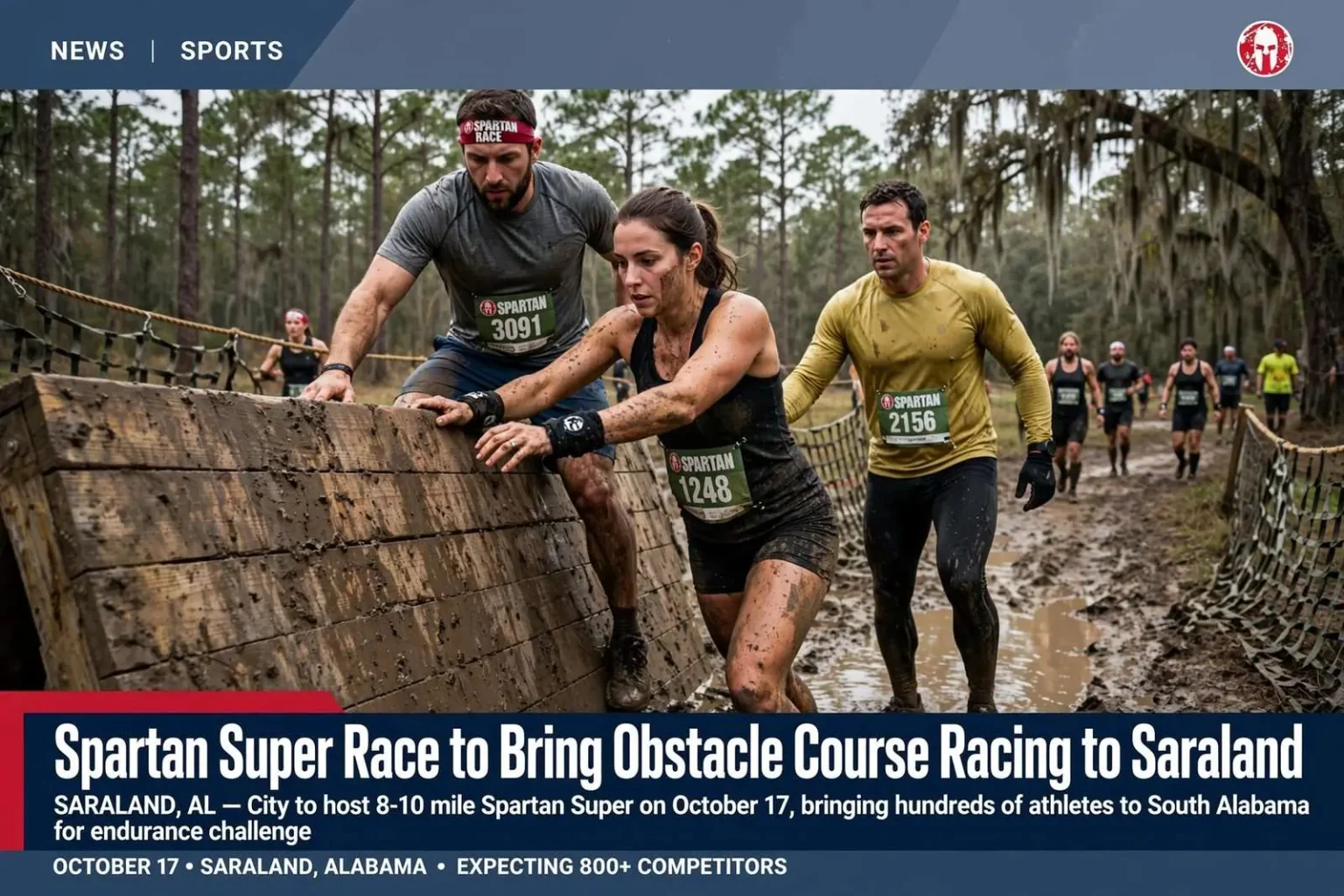
SARALAND, Alabama – Saraland is joining the growing list of Alabama communities hosting a stop on the Spartan Race obstacle-course circuit. The Mobile County city is scheduled to host a Spartan Super Race on October 17, bringing hundreds of competitive and recreational athletes to the area for a single day of racing on a course built to test every kind of physical and mental toughness.
The Super distance is one of several tiers within the broader Spartan Race series, which has built a national following since launching earlier in the decade. Races in the series typically combine trail or off-road running with a string of physical obstacles, ranging from walls and rope climbs to mud pits and carries, designed to test strength, endurance and grit in roughly equal measure. The series’ shorter Sprint events generally cover three to five miles, while the longer Beast distance stretches past twelve, making the Super – usually in the neighborhood of eight to ten miles – the middle challenge of the Spartan lineup and a favorite distance for athletes stepping up from their first race.
The Saraland event is expected to cover between eight and ten miles and include more than 20 obstacles along the course. That combination of distance and obstacles places the Super among the most demanding events of its kind, requiring competitors to balance running fitness with the upper-body strength and grip endurance that obstacles like carries, climbs and crawls demand. Athletes who complete the Sprint, Super and Beast distances in the same racing year earn what the series calls a Trifecta, an achievement that motivates many participants to travel to multiple race sites each season.
Why cities chase these races
For Saraland, landing a stop on a nationally recognized race calendar represents a chance to draw visitors from well beyond Mobile County. Obstacle racing has become one of the fastest-growing niches in endurance sports over the past several years, with events routinely pulling competitors who travel specifically to add a new city or course to their racing résumé. That kind of traffic can translate into hotel stays, restaurant visits and general foot traffic for host communities, which is part of why cities across the country have competed to land these races. For a city like Saraland, positioned along the Interstate 65 corridor just north of Mobile, a race weekend offers a showcase to an audience of active, traveling athletes who might otherwise never have reason to visit.
The format also tends to draw a wide range of participants rather than just elite athletes. Because obstacle races combine a running component with strength-based challenges, many events attract everyone from serious competitors chasing podium finishes to first-time racers looking for a physical challenge alongside friends or coworkers. Team and corporate groups are common at races of this type, since the obstacles reward cooperation as much as individual fitness; walls, carries and balance elements are frequently easier – and more fun – when tackled with help, and the series has leaned into that camaraderie as part of its appeal.
The obstacle racing boom has its roots in a broader shift in American fitness culture over the past decade. Traditional road races still draw large fields, but a generation of athletes raised on training programs, mud runs and competitive fitness has embraced events that blend endurance with varied physical challenges. Spartan Race, founded by endurance athlete Joe De Sena, grew into one of the dominant brands in that space alongside other national series, building a calendar of races that spans the country and, increasingly, the globe. Hosting a date on that calendar puts a community in front of a national audience of racers who plan their seasons around event locations.
Course design is where host cities come in. Obstacle racers prize terrain variety – wooded trails, open fields, water features, hills and mud – and South Alabama’s landscape offers plenty of raw material. Race organizers work with property owners and city officials to stitch together a course that showcases the terrain while keeping safety, parking and spectator access manageable. The details of where the Saraland course will run and which properties it will cross are part of the logistics still being finalized ahead of the October date.
Details still to come
Race organizers and city officials have not yet released a full obstacle list, course map or registration pricing for the Saraland event, though those details typically become available on the race series’ own site as an event date approaches. Athletes interested in competing, along with residents curious about road closures or course routing near race day, will likely see additional logistical information published closer to October. Racers who plan to travel should also keep in mind that obstacle series generally require participants to sign waivers, and many encourage early registration, which often comes with lower pricing than race-week sign-ups.
Residents near the course can expect the usual trappings of a major outdoor event: extra traffic on race morning, temporary parking arrangements, and medical and volunteer staff positioned along the route. Cities that host obstacle races typically coordinate with police and emergency services in advance, and the months between now and October give Saraland time to work through those details with organizers. Spectators, meanwhile, often gather near the obstacle zones, where the wall climbs, rope ascents and mud pits provide the most dramatic viewing.
The October date gives Saraland several months to prepare for an event of this scale, and it adds another entry to a broader pattern this year of South Alabama communities hosting large participatory sporting and fitness events, from downtown road races to themed obstacle courses, as a way to raise their profile and bring outside visitors into the local economy. Communities along the Gulf Coast have discovered that participatory sports tourism – races, rides and tournaments that bring hundreds or thousands of active participants – delivers economic activity without the infrastructure demands of major professional events.
For Saraland’s restaurants, hotels and shops, the race represents an infusion of weekend visitors at the start of the fall season, when South Alabama’s cooler weather makes outdoor events most attractive. For the athletes, it offers a chance to test themselves on Gulf Coast terrain that few in the Spartan circuit have seen. And for the city, October 17 is a date on the national race calendar – a small but visible marker that Saraland intends to compete for its share of the region’s growing sports tourism market.
Training for a Super-distance event is a project in itself, and the months before October will find local gyms and running groups preparing members for the challenge. Coaches in the obstacle racing community typically recommend a blend of trail running, strength work and grip-specific training, since the Super’s eight-to-ten-mile distance punishes athletes who train only one dimension of fitness. Carries and climbs demand a strong back and forearms, while the running segments reward aerobic endurance, and the mud and uneven footing add a stability component that treadmill training cannot replicate.
First-time obstacle racers make up a meaningful share of most fields, and the series has built its reputation partly on being welcoming to them. Waves of racers are released throughout the day, with competitive heats early and open heats afterward where walking the course, skipping obstacles or accepting a penalty lap are all part of the experience. That structure lets a corporate team or a group of friends complete the same course as the elite athletes chasing qualification points, which is a large part of why the events have spread so quickly by word of mouth.
The region’s sports tourism momentum
Saraland’s addition to the calendar also reflects the region’s growing infrastructure for outdoor events. South Alabama’s mild fall weather, ample green space and proximity to the beaches and the interstate system make it a natural host region for events that draw participants from across the Southeast. Mobile and Baldwin County communities have each landed marquee participatory events in recent years, and the experience those cities have accumulated – in permitting, traffic control, volunteer recruitment and vendor services – lowers the barrier for neighboring cities like Saraland to follow.
The timing matters for the city as well. October marks the start of the season when outdoor activity on the Gulf Coast surges, and a marquee event early in the month positions Saraland to capture visitors who might extend their stays into weekend trips along the I-65 corridor. The city’s retail and dining establishments, from the shops and restaurants along Highway 43 to the commercial growth near the interstate exchanges, stand to see the most direct benefit from race-day traffic.
For the athletes themselves, the Saraland Super offers something rarer: a course most of the national field has never raced. Obstacle racers often describe unfamiliar terrain as the great equalizer, since local knowledge and course familiarity count for little on a brand-new layout. Whatever the Saraland course turns out to include among its 20-plus obstacles, October 17 will give hundreds of competitors a first look – and give the city a place on the map of one of America’s fastest-growing sports.