

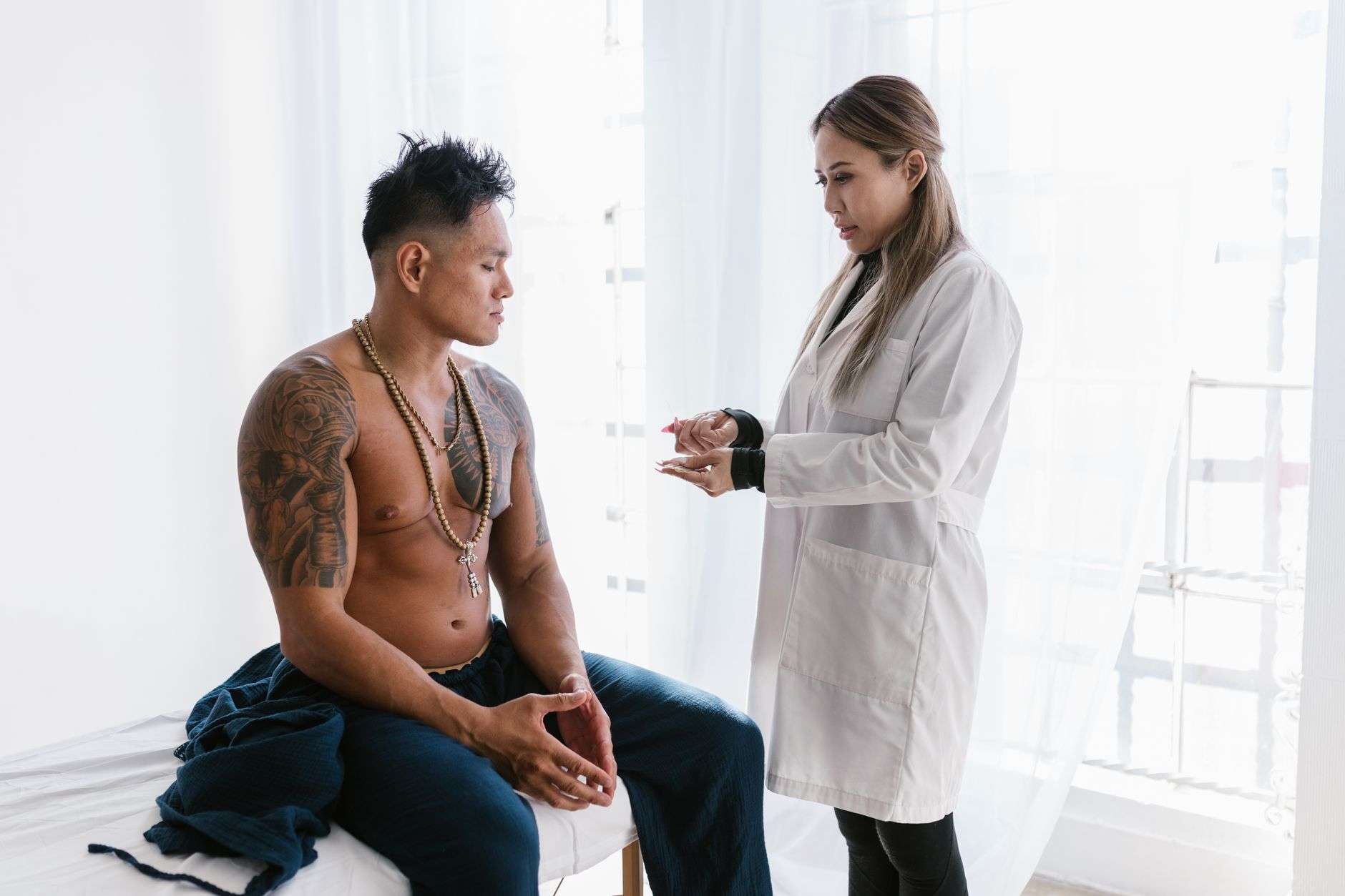
USA Health has welcomed a new specialist to its urology team, expanding access in Mobile to advanced treatment for men’s sexual health and fertility concerns. Dr. Nicholas A. Deebel, a fellowship-trained urologist, has joined USA Health University Urology and will also serve as an assistant professor of urology at the Frederick P. Whiddon College of Medicine at the University of South Alabama.
The addition strengthens a growing subspecialty within the region’s largest academic health system, giving South Alabama residents access to a level of andrology and reproductive urology expertise that historically has required travel to larger metropolitan centers.
The dual clinical and academic role matters as much as the credentials. A physician who teaches at the Whiddon College of Medicine trains the region’s future urologists while treating patients, and academic appointments of this kind are how a health system builds a subspecialty that persists beyond any single hire — the surgical techniques, the referral network and the research base all take root in the same department.
A Focus on Men’s Sexual Health and Fertility
Dr. Deebel’s practice centers on conditions that many men are reluctant to discuss but that affect quality of life and family planning alike. His clinical focus includes erectile dysfunction, Peyronie’s disease, male infertility, and vasectomy reversal. He is also trained in advanced sperm-retrieval techniques, including microsurgical testicular sperm extraction and microsurgical vasectomy reversal, procedures that can open the door to biological parenthood for couples who might otherwise have limited options.
The conditions he treats are more common than most patients assume. Erectile dysfunction affects a substantial share of men over 50 and is often the first visible sign of vascular disease, which makes urology a gateway to broader cardiovascular evaluation. Peyronie’s disease — the development of fibrous scar tissue in the penis, causing curvature and discomfort — affects a meaningful percentage of middle-aged men and has both surgical and non-surgical treatment paths that depend on how far the condition has progressed.
Male infertility is the missing partner in about half of couples struggling to conceive, a fact that surprises many patients who assume fertility care is primarily a women’s health field. Microsurgical sperm retrieval, the technique Deebel brings to Mobile, can extract usable sperm even from men with severe blockages or prior failed attempts, allowing couples to pursue in vitro fertilization without traveling to New Orleans, Birmingham or Atlanta for the urologic side of their care.
Notably, Dr. Deebel holds the AMS 700 Center of Excellence designation for inflatable penile prosthesis surgery, a distinction awarded to a select group of surgeons nationwide. According to USA Health, the designation places him among the top 10 percent of urologic surgeons in the country performing that procedure, a credential that should reassure patients seeking this specialized treatment close to home rather than out of state.
The AMS 700 is an inflatable implant considered the standard surgical option for men whose erectile dysfunction does not respond to medication or other treatments. Center of Excellence status is earned through surgical volume and outcomes data, and it signals to patients and referring physicians alike that the surgeon performs the procedure regularly enough to maintain both skill and low complication rates — a meaningful distinction in a procedure where experience correlates directly with results.
Building a Prostate Cancer Survivorship Program
Beyond his individual practice, Dr. Deebel plans to collaborate with USA Health’s reproductive endocrinology specialists and the Mitchell Cancer Institute to launch a prostate cancer survivorship program. The initiative is designed to help men who have completed prostate cancer treatment manage two of its most common long-term side effects: loss of urinary continence and sexual dysfunction.
Coordinated survivorship care of this kind is increasingly recognized as an essential complement to cancer treatment, addressing quality-of-life issues that persist long after a patient’s cancer has been treated.
Prostate cancer is the most common cancer among American men after skin cancer, and because most diagnoses now occur at earlier, more treatable stages, the population of survivors is large and growing. A man who completes successful treatment may still face years of managing incontinence or sexual dysfunction, and those aftereffects — treatable though they usually are — often go unaddressed when care ends the day the last oncology appointment does. A structured survivorship program pairs those patients with the specialists who treat exactly those problems.
Pairing urology with the Mitchell Cancer Institute and reproductive endocrinology also reflects how survivorship care is practiced at leading academic centers: oncologists, urologists and fertility specialists work from the same plan rather than referring patients among themselves in separate silos. For Gulf Coast patients, it means the follow-up care after prostate cancer can be coordinated within one health system instead of scattered across the region.
Training and Academic Background
Dr. Deebel earned his medical degree from Virginia Commonwealth University before completing his urology residency at Wake Forest University, where he served as chief resident. He went on to complete a specialized fellowship in andrology and male infertility at Northwestern University’s Feinberg School of Medicine, one of the nation’s leading training programs in that field.
The training path matters to patients because andrology is a narrow field. Fewer than a handful of fellowship programs in male infertility and sexual medicine operate at that level nationally, and surgeons who complete them bring microsurgical techniques that most general urology residencies do not teach. Chief residency at Wake Forest, a program with a long urology tradition, and fellowship at Northwestern place his training among the strongest tracks available in the specialty.
He has authored more than 60 peer-reviewed publications over the course of his career and holds memberships in the American Urological Association, the American Society for Reproductive Medicine, and other professional organizations, reflecting an active role in advancing research and clinical standards in his specialty.
A publication record of that size signals an active research life alongside clinical work, and it is part of what an academic department expects of a faculty hire. The American Urological Association is the specialty’s national professional home, and the American Society for Reproductive Medicine connects the physicians across specialties who treat infertility — urologists, reproductive endocrinologists and embryologists — through shared standards and research.
What It Means for Local Patients
Men’s health issues such as infertility and erectile dysfunction often go untreated because of stigma or a lack of nearby specialists equipped to address them. By bringing a physician with this specific combination of surgical and reproductive expertise to Mobile, USA Health is positioning University Urology as a regional destination for men seeking discreet, comprehensive care without leaving South Alabama.
The travel burden is real for patients who need this level of care. Before a hire of this kind, a man in Mobile or Baldwin County needing microsurgical sperm retrieval or penile prosthesis surgery might drive hours to a major metro center — adding cost, missed work and stress to an already sensitive course of treatment. Bringing the fellowship-trained surgeon to the region keeps that entire course of care, including follow-up visits and revisions if needed, within the local health system.
New and existing patients can schedule an appointment with Dr. Deebel at USA Health University Urology by calling 251-660-5930, or through the Mapp Family Campus location. As with any new specialist, patients are encouraged to ask their referring physician or call the practice directly to confirm insurance coverage and appointment availability.
For referring physicians across the Gulf Coast, the arrival of a fellowship-trained andrologist changes the referral map. Family medicine doctors and general urologists who previously sent complex male infertility or prosthesis cases out of the region can now route them within USA Health, and the academic appointment means those referrals feed the teaching program that trains the Whiddon College of Medicine’s students and residents.
USA Health University Urology sits within the health system’s academic medical campus, where the University of South Alabama’s teaching hospital, the Mitchell Cancer Institute and the specialty clinics operate in close proximity. That geography is what makes a survivorship program practical: a prostate cancer patient finishing treatment at the cancer institute can be walked into urology for the continence and sexual health follow-up that used to require a separate referral letter and a separate trip across town.
The fertility side of the practice also connects to the region’s broader health care needs. Couples who have struggled with infertility often begin with an OB-GYN or a reproductive endocrinology clinic, and the male evaluation — a semen analysis, a hormonal workup, a physical exam — is frequently overlooked in the initial workup despite how often the male partner contributes to the problem. A urologist trained in male infertility working alongside reproductive endocrinologists means couples get both sides of the evaluation under one roof, often shortening the path to a diagnosis and a treatment plan.
Vasectomy reversal, another of Deebel’s listed services, serves a related patient population: men who had a vasectomy in a previous relationship and now want children in a new one. The procedure is microsurgery by nature, rejoining the vas deferens under an operating microscope, and success rates track closely with the surgeon’s experience — one more example of why subspecialty volume matters in this field.
His microsurgical training also covers testicular sperm extraction for men whose infertility stems from blockages, prior surgeries or genetic conditions. Combined with IVF performed by reproductive endocrinology partners, the technique makes biological fatherhood possible for patients who a generation ago had no options at all.
The recruitment itself says something about the region’s medical trajectory. South Alabama’s academic health system has spent years expanding its subspecialty depth — recruiting physicians in fields that once required patients to travel to Birmingham, New Orleans or Pensacola — and each addition reduces the outmigration of care, and of the health care spending that follows it, from the Gulf Coast.
For patients, the practical starting point is the same as with any specialist: a referral or a direct call to the practice, a review of insurance coverage, and an initial consultation at University Urology’s offices at the Mapp Family Campus. Men who have been managing erectile dysfunction, curvature, infertility or the aftereffects of prostate cancer treatment now have a fellowship-trained option much closer to home — and, for the first time in the region, one whose practice is built entirely around those problems.