A Mobile Veteran’s Daily Struggle: Homeless, in College, Fighting for Benefits
A homeless Mobile veteran balances online college classes, a VA benefits dispute, and shelter curfew rules during one revealing day downtown.
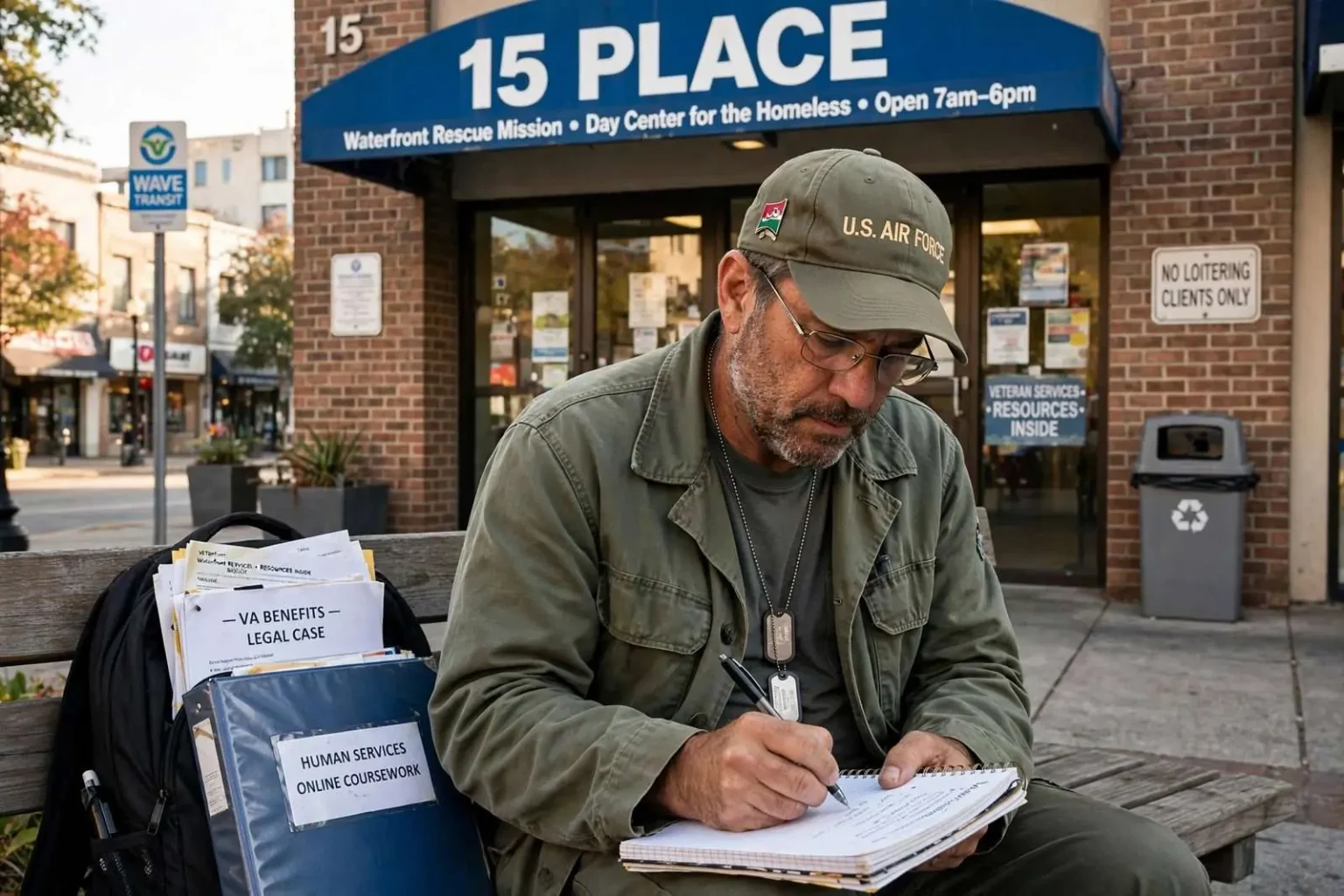
On a warm Tuesday morning in early October, a 44-year-old Air Force veteran named Frederick “Rick” Bush sat on a bench outside 15 Place, a downtown Mobile day center for the homeless, mapping out the hours ahead. His plan for the day was simple but urgent: get to the Ben May Public Library before an online class deadline, and try again to untangle a legal problem that has kept his veterans benefits frozen for years.
Bush had been without stable housing for about four weeks when his day was documented, one of an estimated one in four people served by the Waterfront Rescue Mission who are military veterans, according to the mission’s leadership. He served in the U.S. Air Force from 1989 to 1993, including during the Persian Gulf War, working as a firefighter before an injury and hearing loss from flight-line duty ended his service. Raised in Houston, he is divorced and has two teenage sons who live with their mother in Mobile County.
His path to homelessness was shaped by a criminal record from an armed robbery conviction in another state decades ago and a more recent struggle with addiction to alcohol and drugs, from which he says he has been in recovery since 2012. An outstanding extradition warrant tied to that old case, which he insists was improperly issued, has repeatedly interrupted the VA disability benefits he depends on.
Rather than dwell on the setbacks, Bush is working toward a human services degree through an online program, hoping to eventually start a nonprofit modeled on the VA’s own extended-stay support for veterans. On the day he was followed, he split his morning between the Waterfront Rescue Mission’s dining hall, a Department of Veterans Affairs clinic on Springhill Avenue, and a public computer at the library downtown, riding WAVE Transit buses between stops.
At the VA clinic, he was told the specialist who handles veterans’ legal problems worked only part time and wasn’t in that day, an all-too-familiar runaround for a system he says has bounced him between offices as far away as Mississippi and Idaho. Back at the mission, staff explained the tiered system that governs how long homeless guests can stay: shorter stints for those simply seeking work, longer stays for veterans pursuing government housing, but only if they can commit to nightly curfews and routine drug and alcohol testing. Bush said that structure, meant to help him, actually conflicts with the flexibility his coursework demands.
By midday he was back at the mission’s dining hall, known locally as the “Walmart Kitchen” for its corporate sponsor, eating lunch alongside dozens of other guests before returning to the library to squeeze in more homework. He has slept some nights at Father Ryan Memorial Park when no other option was available, and says his mother, who lives on Leroy Stevens Road in west Mobile, would take him in if he asked, but he is reluctant to lean on her.
For Bush, progress means finishing his degree, clearing his legal record, and eventually turning his own experience into help for the next veteran who ends up on Mobile’s streets.
How veterans’ housing aid works
The government housing Bush and other veterans at the mission are pursuing often comes through HUD-VASH, a joint program of the U.S. Department of Housing and Urban Development and the Department of Veterans Affairs. It pairs a HUD Housing Choice Voucher, which helps pay rent for a private apartment, with case management and clinical services provided through the VA.