

For Fairhope potter Zach Sierke, a piece of pottery is never just an object. It is a record of a place: the creek bank where the clay was dug, the trees that fed the fire, the weather during the firing and the generations of Eastern Shore potters who worked the same veins of clay long before him. “So much of what I do is about a sense of place,” he said.
Sierke has become well known around Mobile Bay for his creative pottery, the massive wood-fired kiln he built by hand and his deep knowledge of the native clays of Baldwin County. His work sits at the meeting point of art, chemistry, geology and local history, and it offers a window into a chapter of the Eastern Shore’s past that many residents never learned about.
A College Class That Changed Everything
A Fairhope native, Sierke found clay during his second semester at Eckerd College in St. Petersburg, Florida, a small liberal arts school on a waterfront campus along Tampa Bay. “The campus is right on the water on a peninsula into Tampa Bay with 1500 students; it was a good fit for me. I took a ceramics class, and everything just clicked,” he said.
What drew him in was the way ceramics combines so many disciplines at once. “Ceramics is creative, hands-on, reaches back to human history, and is technical with tons of science involved. An understanding of chemistry opened up for me and changed how I saw the world,” he said.
Finding a Family Kiln on Cowpen Creek
Clay was already part of Sierke’s family story. His great-grandfather was a potter in the 1800s, and jugs he had made were kept around the house when Zach was growing up. His grandmother told stories about her father’s work. Eventually, Sierke located his great-grandfather’s kiln site on Cowpen Creek, near Clay City in Baldwin County.
“I dug clay from that site, took it back to college to test it, and developed an obsession with clay and ceramics, especially about local clay found on the Eastern Shore of Mobile Bay. This gave me a meaningful relationship with local lore and the community,” he said.
He went further, digging from veins that historically supplied area potters and hauling truckloads back to school, “as much as I could carry for testing,” he said. The deeper he dug, the more he realized how widespread the craft had once been. “Half the population of the Eastern Shore was involved in pottery and ceramics. So many families in this area have ties back to folk potters.”
The Forgotten Pottery Industry of Mobile Bay
Folk pottery is a broad term for work made by potters without formal academic training, often passed down within families and communities. On the Eastern Shore, it was once an important industry. The area had everything early potters needed: abundant veins of clay with a range of properties, plenty of wood to fire kilns, water access for moving materials and the Port of Mobile, which allowed finished goods to be shipped widely.
Mobile Bay stoneware filled essential roles in daily life. Before refrigeration and inexpensive manufactured containers, households depended on sturdy ceramic vessels for cooking, food storage and serving. Clay was also formed into bricks for buildings, and knowing how to prepare and fire the various local clays was valuable practical knowledge.
According to Sierke, jug makers and potters began arriving from Europe in the 1700s. The first artisans from France settled in the Fly Creek area near Ecor Rouge. “Several French families really set a precedent on the Eastern Shore,” he said. His own family’s pottery roots trace to England and to work near Clay City. After the Civil War, he said, potters flooded into the area.
Ecor Rouge, French for “red bluff,” is one of the most striking natural landmarks on Mobile Bay. The bluff near Montrose rises high above the water, and its colorful layers of clay and sand are a visible reminder of the geology that made the Eastern Shore so attractive to potters in the first place.
Building an Anagama Kiln
Today, Sierke has carved out a niche as a teacher of wild clay and wild materials, meaning clays and minerals gathered directly from the landscape rather than purchased in processed form. He says new discoveries motivate him even more than the finished pottery.
The centerpiece of his work is a wood-fired anagama kiln he built himself. The anagama is a single-chamber tunnel kiln with ancient roots in East Asia and is closely associated with Japanese ceramics. Sierke describes his as one of just a few of its kind in the world today. The project began when a local company offered him two semi-truckloads of industrial-grade refractory brick, the heat-resistant brick used to line furnaces and kilns. He designed the kiln and spent years building it exactly the way he wanted.
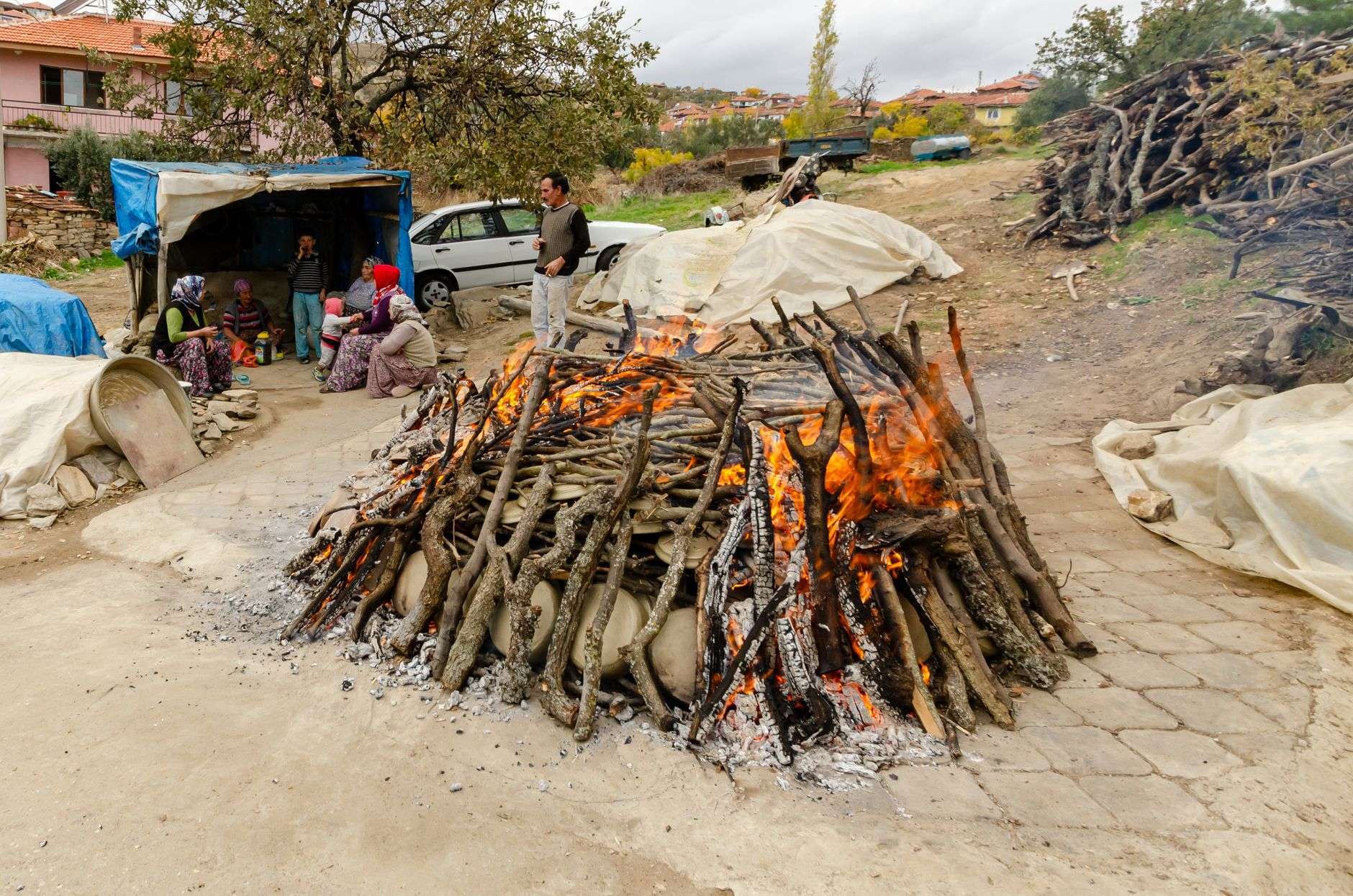
An anagama works very differently from an electric or gas kiln. In a conventional kiln, potters apply glazes and fire them under controlled, consistent conditions. In a wood-fired anagama, the fire itself creates much of the surface. As wood burns, its ash drifts through the chamber, settles on the pots and melts into a natural glaze at high temperatures. “Ash is the molten minerals the tree has pulled from the soil. Each kind of tree pulls out different minerals and produces a different glaze finish,” Sierke said. “Each clay has a different reaction to the wood-fired kiln, and each wood used to fire the kiln produces mineral-rich ash the tree absorbed during its growth.”
In this process, he says, Mother Nature is the boss.
Two Weeks of Fire, Two Weeks of Waiting
Every decision in an anagama firing shapes the result: how the wood is loaded, where each piece is placed, which clays are used. “I’m always surprised,” Sierke said. In his first few years, he estimates he lost about 80 percent of his work to cracks, drips and other flaws. “There is always new stuff to discover. Each firing is different and keeps me hungry for the next firing.”
It took four or five years to get the kiln performing the way he wanted. “I have it dialed in pretty well now,” he said. Placement is a science of its own. “There is so much to consider; windward or leeward positioning, placing pieces upright or on their side. The loading sets up the patterns that will show up on the piece. Halos, warm tones, wet clay creates cool tones,” he said.
Sierke fires the kiln about once a year, and the event has become a gathering. People travel from around the country to take part and bring their own work to be fired. The timeline is demanding:
- About one week to load and position pieces so each receives the right heat and ash.
- About one week of firing, with a team tending the kiln around the clock.
- About two weeks of cooling before the finished work can be removed.
The firing crew includes hobby potters, students and professionals who lack access to wood-fired kilns, along with experienced wood-firers. “It’s an amazing hands-on technical process. There’s nothing like it. These firings resonate with folks in a surprising way,” he said.
The Science of Eastern Shore Clay
Sierke explains that the clay found along the Eastern Shore is unusually pure and easy to reach, which is what originally drew potters to the area. Clays found along rivers and creeks vary in consistency and can contain iron, sulfur and salt. Local examples include Ecor Rouge clay and blue clay. He also contrasts the region’s clays with others, noting that kaolin clay has geological origins in the Appalachian Mountains, while bentonite clay has volcanic origins.
He sources clay from about half a dozen veins that were used a century ago. “To get consistent results, you must know where and what to expect. You have to marry the wood to the clay. Some wood ash melts at slightly different temperatures. Two clays fired right next to each other may look radically different,” he said.
A Coffee Mug as a Work of Art
For Sierke, the finished work tells a story about where it was made. He sees special meaning in functional pieces. “It’s the accumulation of human energy that taps into the primal spirit of human civilization. When considered art, a coffee mug has a greater relationship impact than a piece of art on the wall. It’s something that brings you pleasure and comfort every day as you wake and greet the day,” he said.
“Getting into that intimate, quiet space with my work, it’s an honor to do that. We live in an unusual area. I want people to gain a deeper relationship with the place they live. Opening the door to the history of humanity, geology, and all the forces that support our existence is what I hope to do with my work.”
Recognition, Teaching and Where to Find His Work
Sierke was a featured artist in Journey Proud, a 2018 Alabama Public Television documentary about pottery and kilns in Alabama. In it, he walks viewers through preparing, firing and cooling the anagama and visits Ecor Rouge, where he gathers much of his clay. He has also received several significant grants and awards from the Alabama State Council on the Arts and from Denmark’s national arts foundation, support that has helped him teach and collaborate with potters and students locally and internationally.
He teaches pottery year-round at the Eastern Shore Art Center in Fairhope, guiding students along their own paths in clay. His pottery, including his earthen coffee mugs, can be purchased at his workshop by appointment through his Facebook or Instagram page, Zach Sierke Pottery, and his work is sold at museums and galleries around the coastal area.
For anyone curious about the Eastern Shore’s hidden history, a Sierke piece offers a tangible connection to it: clay from the same ground that generations of local potters dug, shaped and fired, transformed once more by wood, ash and fire.