

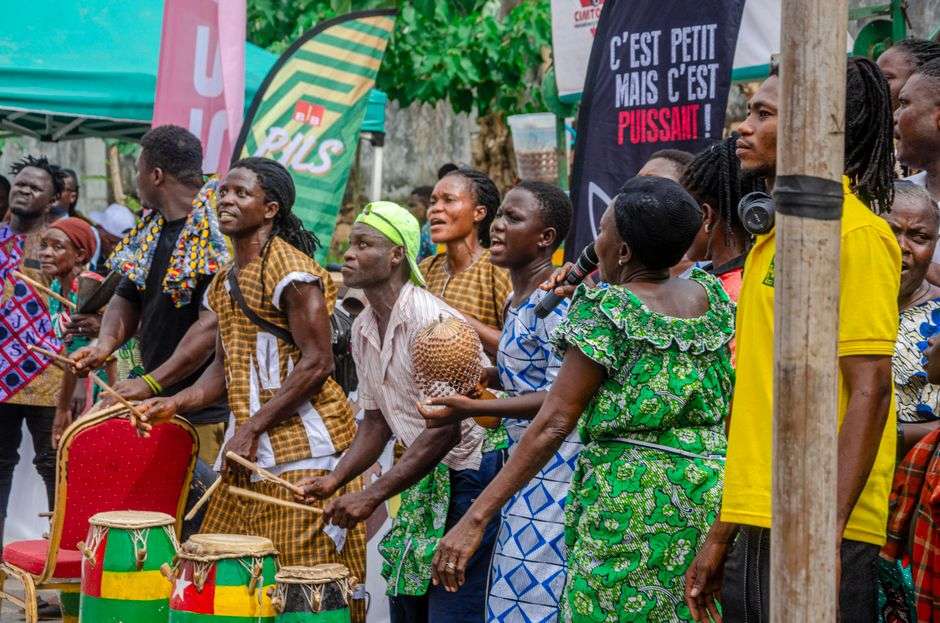
MOBILE COUNTY, Ala. — Africatown came alive this weekend as Culture Fest 2026 filled the Africatown Heritage House, the Robert Hope Community Center and Mobile County Training School with music, dance, storytelling, art and lectures celebrating African American history and heritage.
“This was a huge success,” said Africatown Heritage House Manager Jessica Fairley. “This is something that the community really yearns for.”
The festival’s activities were organized around “Clotilda: The Exhibition at the Africatown Heritage House,” and included lectures, storytelling, live entertainment and artwork spread across multiple venues. Organizers said the goal was to give people of all ages, and especially young people preparing to head back to school, a chance to connect with the history and culture of the community before the new school year begins.
Elders and the next generation
“We have MAMGA here, one of the oldest African American Mardi Gras associations, teaching kids who they are,” Fairley said. “We have some of the elders who have older organizations that have been around for years and years.”
That pairing of generations was deliberate. The elders who anchor Africatown’s fraternal, civic and Carnival organizations carried decades of institutional memory into the weekend, while the children who attended — many of them weeks away from returning to classrooms — got a hands-on introduction to the history textbooks can only summarize. Dance, drumming and food rounded out the celebration, with vendors and community groups filling the grounds at each venue.
A second year for INNERGY
Tyra Jackson Ike-Asogwa, founder of the Mobile-based dance group INNERGY Inc., said her group returned for a second year of performing at the festival.
“This is our second time performing with Culture Fest, and it’s so awesome to see how big this thing has gotten, to see the Culture Heritage House in action, to see all of the amazing talent, to see all of the vendors who are here,” Ike-Asogwa said. “I’m just so blessed and fortunate to be a part of the growth of this amazing program.”
INNERGY’s performances brought one of the festival’s loudest crowds of the weekend, with young dancers drawing cheers from an audience that packed in around the performance space. Ike-Asogwa said the growth she has witnessed between the group’s two Culture Fest appearances mirrors the momentum the community’s cultural institutions have built in recent years.
Lessons to carry back to school
Fairley said she was especially glad to see young people take part before returning to the classroom.
“This was a chance for them to learn about their culture and take that with them into the classroom,” she said. “That’s what I wanted, so I am so happy and just thrilled with the turnout of this event.”
Organizers timed the festival around the end of summer deliberately, placing the celebration in the final stretch before Mobile County students head back, so that the history lessons woven through the weekend’s lectures and storytelling could travel with them into the school year.
The story of Africatown
The community just north of downtown Mobile — known historically as Plateau, and today as Africatown — occupies a singular place in American history. Its founders were among the more than 100 West African captives smuggled into Mobile aboard the Clotilda in 1860, on what became the last known voyage of a slave ship to the United States, decades after the international slave trade had been outlawed. After emancipation, many of those survivors pooled their wages, bought land and built a community of their own, determined to preserve their languages, traditions and independence.
That founding story shapes nearly everything in the neighborhood today, from the church cemeteries where the Clotilda survivors are buried to the street names and family lines that trace directly back to the original settlers. The community was added to the National Register of Historic Places, and generations of descendants have worked to keep its story in front of both visitors and their own children.
The Clotilda exhibition
The exhibition that anchored Culture Fest 2026 tells that story in full. Built around the documented history of the Clotilda — the ship’s final voyage, the decades of searching for its wreck, and its discovery in the Mobile-Tensaw River Delta — the exhibition connects artifacts and archival records to the lives of the people who survived the crossing and built the community that followed.
Since opening at the Africatown Heritage House, the exhibition has drawn visitors from across the country and around the world, bringing a steady stream of tourists, researchers and school groups to a neighborhood that had long felt overlooked. For local residents, the house has become something more intimate: a place where their own family histories are treated as central to the American story rather than peripheral to it.
Three venues, one weekend
Spreading Culture Fest across three sites gave the weekend both range and rhythm. The Heritage House anchored the historical programming, with the exhibition drawing visitors through its displays. The Robert Hope Community Center, a longtime hub for neighborhood gatherings, hosted many of the performances and family activities. Mobile County Training School — a historic school that has educated generations of Africatown students — provided space for the lectures and storytelling sessions that connected the community’s past to its present.
The multi-venue layout turned the festival into a walking tour of the community itself, sending attendees past the historic homes, churches and landmarks that make Africatown’s geography part of its story.
MAMGA’s place in the celebration
The participation of MAMGA — the Mobile Area Mardi Gras Association, one of the oldest African American Carnival organizations in the country — connected Culture Fest to another pillar of Mobile’s Black cultural life. MAMGA has organized the city’s Colored Carnival tradition for generations, crowning royalty, staging parades and maintaining social organizations that date back more than a century.
Having MAMGA members work directly with children at the festival, as Fairley described, gave young attendees a living link between the community’s historic institutions and the Carnival traditions they may one day carry forward. For the elders involved, the weekend offered a chance to pass along what decades of membership have meant — discipline, service and pride in institutions the community built for itself.
Arts and culture as community investment
Festivals like Culture Fest do more than fill a summer weekend. Community leaders in Africatown have long argued that cultural tourism and cultural programming are among the neighborhood’s strongest levers for renewal, drawing outside dollars while reinforcing local identity. Each year of growth in attendance, vendors and performers strengthens the case that the community’s heritage is an asset worth investing in — and each young person who attends carries the story outward.
The festival’s growth between its first two years, which performers like Ike-Asogwa witnessed firsthand, suggests the model is taking hold. More vendors, larger crowds and expanded programming across three venues marked this year’s edition as the biggest yet in the event’s short history, organizers indicated.
What’s next for Culture Fest
With the 2026 edition in the books, organizers say the focus now shifts to building on the momentum — deepening the school partnerships that brought young people into the weekend, expanding the lecture series around the Clotilda exhibition, and continuing the collaborations with groups like INNERGY and MAMGA that gave the festival its texture.
Fairley’s closing assessment summed up the weekend for a community that has spent decades fighting to have its history recognized: the festival succeeded because it gave people what they had been waiting for. For the children heading back to school with new knowledge of who they are and where their community comes from, Culture Fest 2026 did exactly what its organizers hoped.
A weekend of performance and fellowship
Beyond the lectures and exhibition tours, the weekend’s soundtrack came from the stage. Drumming ensembles set the pace for much of the programming, with rhythms that connected the community’s West African roots to the musical traditions that grew from them along the Gulf Coast. Dance performances, led by INNERGY’s young dancers, drew some of the largest crowds of the festival, and the food and vendor areas gave families a place to gather between sessions.
The festival’s organizers spread storytelling sessions across the weekend as well, inviting elders to share recollections and community history in their own voices. Those sessions — less formal than the lectures but no less instructive — gave attendees a chance to ask questions and hear the kind of detail that never makes it into written accounts.
Why the back-to-school timing matters
Placing Culture Fest in the last days of summer was a strategic choice by organizers who wanted the festival’s lessons to land at the moment students were most receptive. Children who spent the weekend hearing about the Clotilda, watching their peers perform and meeting the elders of their community returned to classrooms with a foundation that history lessons can build on rather than start from scratch.
Fairley’s emphasis on that goal — giving young people a chance to learn about their culture before the school year began — reflected a broader effort among Africatown’s institutions to make the community’s heritage a living part of children’s education rather than a chapter they encounter late and briefly. Teachers and parents attending the weekend said the timing could not have been better.
As the festival closed out, the community’s attention turned to carrying the weekend’s energy forward — into classrooms, into the exhibition’s visitor numbers and into planning for a festival that has now twice proven it gives the community what it yearns for.