MONTGOMERY, Ala. — A veteran Mobile lawmaker used a legislative committee meeting last week to deliver a blunt assessment of Alabama Department of Transportation Director John Cooper, saying he is eager for the longtime highway chief to leave office as a new governor prepares to take over in January.
The comments came as legislators took up a $3 million engineering agreement that ALDOT had submitted for review. The state senator chairing the meeting placed that contract on hold. The criticism added a pointed final chapter to a long-running dispute between the lawmaker and the department’s leadership.
What This Means for Mobile and Baldwin Drivers
For residents of southwest Alabama, the direction of ALDOT matters in very practical ways. The department is responsible for the state highway system, including the interstates and U.S. and state routes that carry daily commuter, freight and tourist traffic through Mobile and Baldwin counties. Decisions made in Montgomery about which projects move forward, how quickly, and under what contracts affect road conditions, congestion and safety on the routes local drivers use every day.
The leadership change also arrives as the Mobile area tracks several major transportation efforts. Among them is the long-planned Interstate 10 Mobile River Bridge and Bayway project, one of the largest highway undertakings in the region’s history, along with widening and safety projects on busy corridors in Baldwin County. A new director will inherit responsibility for those programs and for the working relationships with local officials who have pushed for them.
Criticism During Contract Review
As the committee took up the engineering contract, the Mobile lawmaker turned the discussion to the department’s leadership. He said he did not know Cooper’s final day on the job but made clear it could not come soon enough for him. He described Cooper’s time in charge as harsh and his performance as very poor, and said he was looking forward to seeing the director retire.
The remarks did not change the outcome for the contract itself, which was held by the senator presiding over the meeting. Holding a contract delays it while lawmakers seek more information, and it does not by itself cancel the agreement.
A Dispute That Dates Back Years
The exchange was not the first time the lawmaker has clashed with Cooper. In 2023, he used his position on the committee to hold all ALDOT contracts for 45 days. At the time, he said the move stemmed from a letter he had sent Cooper that went unanswered. The letter asked about road projects that Cooper had canceled during the administration of former Gov. Robert Bentley.
In explaining that hold, the lawmaker said he considered his question a legitimate one and accused the director of acting out of spite. He argued that the canceled projects had cost Alabama taxpayers many millions of dollars and said he wanted to know where those projects stood.
He eventually lifted the hold after he received answers he considered sufficient. The episode nonetheless showed how a single member of the contract review committee can use the review process to press an agency for information.
Cooper’s Tenure at ALDOT
Cooper has served as transportation director since January 2011, when he joined the cabinet of then-Gov. Robert Bentley. He remained in the post under Gov. Kay Ivey, and his roughly 16 years in the job make him the longest-serving leader in ALDOT’s history.
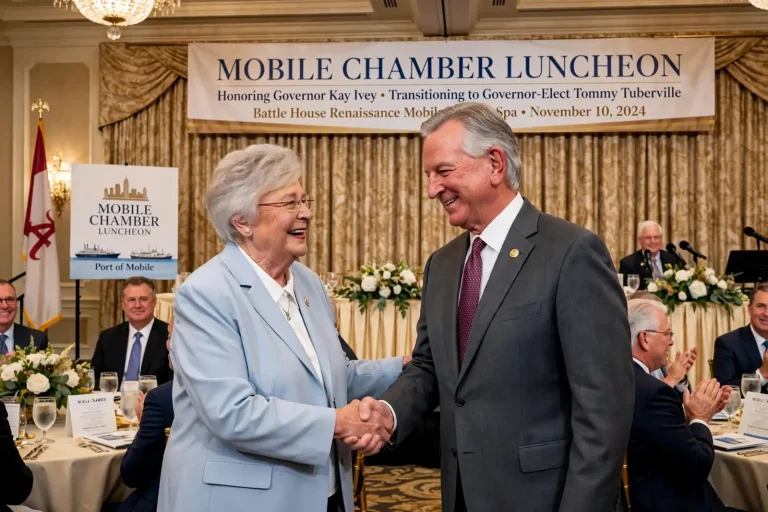
He is expected to formally retire when Governor-elect Tommy Tuberville is sworn in this January. The transportation director in Alabama is appointed by the governor and serves as a member of the governor’s cabinet, so the incoming administration will choose his successor.
Over that tenure, the department has managed a wide range of work across the state, from routine resurfacing and bridge replacement to major interstate projects. In 2019, the Legislature approved the Rebuild Alabama Act, which raised the state’s gasoline and diesel taxes to fund road and bridge construction and maintenance. That law gave ALDOT a larger and steadier stream of money for construction and also created new opportunities for lawmakers to scrutinize how the department sets its priorities.
The same law also directs a portion of the new fuel tax revenue to counties and cities for their own road and bridge needs. That local share means county commissions and city councils across southwest Alabama, along with the state, have a direct stake in how transportation dollars are planned and spent, and it has made ALDOT’s decisions a frequent topic for local officials and their legislators.
What the Transportation Director Does
The director of ALDOT oversees one of the largest agencies in state government. The job includes managing thousands of employees, a budget built from state fuel taxes and federal highway funds, and a statewide program of construction and maintenance. The director also sets priorities for which projects move ahead and represents the department before the governor, the Legislature and federal transportation officials.
Because a large share of highway money comes from federal programs, the department works closely with the Federal Highway Administration, which must sign off on many federally funded projects. ALDOT also coordinates with regional planning bodies in urban areas, such as the metropolitan planning organizations that serve the Mobile area and Baldwin County’s Eastern Shore. Those groups help decide which local road projects are put forward for funding.
How Road Projects Get Planned
Major highway work in Alabama typically moves through several stages before construction begins. Projects are identified in long-range plans, then listed in a short-term program of funded work, which for federally funded projects is known as the State Transportation Improvement Program. Urban areas maintain their own lists that feed into that statewide program.
Once a project is funded, the department or its consultants complete engineering design, environmental review and right-of-way purchases. Only after those steps is construction put out for bids. Canceling or delaying a project at any of those stages can affect costs, since design work may need to be redone and construction prices can rise over time. That reality helps explain why lawmakers pay close attention when projects in their districts are stopped or postponed.
How Legislative Contract Review Works
Alabama law sends many state agency contracts for professional services, including engineering and consulting agreements, to a legislative oversight committee before they take effect. The committee is made up of members of the House and Senate, and it reviews the agreements in public session.
During those reviews, agency representatives explain what the contract is for, how much it will cost and why the work is needed. Committee members can ask questions and can place a hold on a contract, which delays it for up to 45 days. The hold is advisory in nature: once it expires, or if the governor chooses to move forward, the contract can still proceed.
Because the meetings are one of the few regular public settings where lawmakers can question agency officials face to face, they often become a venue for broader disputes over policy, spending and communication, as happened at last week’s meeting.
Why Engineering Contracts Matter
Engineering firms play a central role in highway work. State transportation agencies commonly hire outside consultants for design, environmental studies, surveying, inspection and construction oversight, especially on large or specialized projects. Those contracts help determine how quickly projects move from planning to construction.
A hold on one contract does not usually stop work across the department, but delays can push back individual project schedules. The specific project tied to the $3 million engineering agreement was not identified, and the contract’s future will depend on whether it returns to the committee or proceeds once the hold period ends.
A Transition at the Top
The coming change in administration means ALDOT will soon have its first new director in more than a decade and a half. Choosing Cooper’s successor will fall to the incoming administration, and it remains to be seen how the next director will approach the issues that have drawn criticism from lawmakers during Cooper’s tenure.
For legislators who have sparred with the department, the transition offers a chance to reset that relationship. For local governments and residents in southwest Alabama, it raises questions about how a new leader will approach regional priorities, from major bridge and interstate projects to smaller safety improvements on local state routes.
Oversight Beyond the Committee Room
Contract review is only one way legislators keep watch over state agencies. Lawmakers also question department leaders during budget hearings, send formal letters requesting information, and can pass legislation that changes how agencies operate. Members who represent fast-growing areas often press transportation officials on behalf of constituents frustrated by traffic, road conditions or long-delayed projects.
Tension between legislators and agency heads is not unusual in state government, particularly when it involves long-serving appointees who serve under more than one governor. Public criticism in a committee setting, however, tends to draw attention because it signals how some lawmakers hope the next administration will handle the agency.
What Happens Next
The $3 million engineering contract remains on hold for now. Cooper is expected to stay in his post until the governorship changes hands in January, after which a new transportation director will take over the department.
Residents who want to follow ALDOT projects in their area can find project information, traffic alerts and public meeting notices through the department, and can share their views with their own legislators, who review the department’s contracts and budget.