

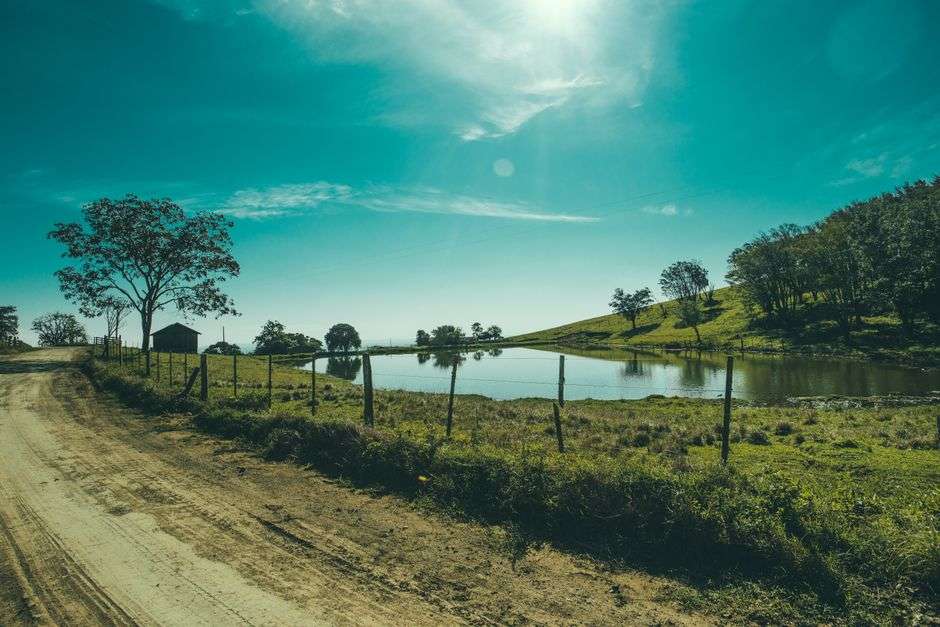
BALDWIN COUNTY, Ala. — An Eastern Shore church ministry is expanding into a new phase of outreach aimed at men struggling with addiction, homelessness and incarceration, many of whom have no family left to turn to. Pastor Chuck Chavis of Lifeline Ministries has been overseeing construction on a more than 17-acre rural site in central Baldwin County, where three large crosses overlook a quiet lake near the location of the ministry’s newest project, Lifeline Discipleship Homes.
The setting is deliberately removed from the bustle of U.S. 98 and the growth corridors of Fairhope, Daphne and Spanish Fort. Central Baldwin County has seen subdivision after subdivision rise along its state highways in recent years, but pockets of rural land remain where ministries and civic groups have quietly built some of the region’s most ambitious outreach projects. Chavis said the acreage gives the ministry room to grow and gives the men who will one day live there a place apart from the environments that fed their struggles.
“We are looking for the person who is really sick and tired of being sick and tired,” Chavis said. The new building is an extension of Lifeline Ministries’ existing work in Fairhope, which focuses on outreach to people dealing with addiction, homelessness and incarceration.
A Ministry Rooted on the Eastern Shore
Lifeline Ministries has spent years working the streets of Fairhope, a community better known for its flower-lined avenues and tourist trade than for visible poverty. Yet along the Eastern Shore, as across Baldwin County, homelessness and addiction are often hidden rather than absent — men sleeping in cars, cycling through county jail cells, or drifting between temporary couches and camps along Mobile Bay. Ministries like Lifeline fill gaps that government programs and clinical treatment centers do not always reach, particularly for people who have burned through family support and formal services alike.
The Discipleship Homes program is centered specifically on helping men with addiction, and the facility, still under construction, is designed to eventually house up to a dozen residents. That scale is intentional. Rather than operating a large dormitory-style shelter, the ministry is building a residential setting small enough that staff and volunteers can know each man individually — his history, his triggers, his progress — the way a family would.
The Greenhouse Model of Recovery
Chavis compares the concept to a greenhouse, an image that captures both the shelter and the limits of what the program can do. “The whole goal of a greenhouse is actually to feed them and strengthen them and make them strong enough so that, not that they live in that greenhouse, but you can take them out of that greenhouse, place them back in the environment that God had made them to live in so that they can survive,” Chavis said.
The analogy reflects a widely held conviction among faith-based recovery providers on the Gulf Coast: temporary protection is not the end goal, restoration is. In a greenhouse, delicate plants are nurtured under controlled conditions until they are hardy enough for open ground. In the same way, the Discipleship Homes are meant to be a season of stability — food, shelter, Scripture, structure and accountability — before a man returns to work, family and community life in Baldwin County or wherever he settles.
Programs of this kind typically pair residential living with daily routine: work responsibilities, study, worship and mentoring from men further along in recovery. The measure of success is not how long a resident stays, but whether he can hold a job, reconcile with family and remain sober after the program ends.
Funded Entirely by Donation
The program will be entirely donation-funded and rooted in faith-based recovery. That financial model is common among Gulf Coast ministries, which rely on church partners, individual donors and in-kind gifts of labor and materials rather than government contracts. It also keeps the door open to men who arrive with nothing — no income, no insurance and no family able to help cover the cost of treatment.
“We want to be a family to those who never had a family,” Chavis said. “And we want to pull beside men. We want to help men to become godly fathers. We want them to become godly husbands and godly men.”
That emphasis on fatherhood and family reflects a theme recovery workers across the region raise again and again: addiction rarely destroys only the person using. It frays marriages, distances parents from children and leaves a generation of young people growing up with an empty chair at the table. By aiming its language squarely at fathers and husbands, the ministry is targeting the roles many of its future residents feel they have most failed at — and the ones that, once restored, do the most to break cycles of relapse and abandonment.
A Pastor Who Has Walked the Same Road
Chavis, who had his own encounters with the law nearly two decades ago, said his personal experience shapes the ministry’s approach. He is far from alone among Alabama recovery leaders; a striking share of the men and women who run faith-based programs along the Gulf Coast came to the work after their own arrests, addictions or stretches behind bars, and they treat that history as a credential no seminary can confer.
“When I was sitting in jail, I opened up the word of God and I started building a personal relationship with Jesus Christ,” he said. “So I stand here as evidence that the gospel changes lives. And the word of God will transform your life.”
For the men the program hopes to reach, that testimony serves a practical purpose. Many have been through court dates, probation appointments and treatment intakes where they felt processed rather than known. A leader who can say he once sat where they sit — in a cell, out of options, out of trust — tends to earn a hearing that brochures and intake forms cannot. It also sets expectations: the ministry’s staff are not presenting themselves as rescuers looking down, but as fellow travelers pointing back at a road they have walked.
Why Baldwin County Needs Such a Place
The need for recovery housing in Baldwin County has grown alongside the county’s population, which has made it one of the fastest-growing counties in Alabama. Growth has brought construction jobs, service jobs and prosperity to the Eastern Shore, but it has also been accompanied by the opioid and methamphetamine crises that have touched every Alabama county. Rural and suburban areas often lack the dense network of halfway houses and treatment providers found in cities, meaning men leaving jail or detox in Baldwin County may have few local options and are forced to travel to Mobile or farther for structured housing.
Local law enforcement and court officials have long noted the revolving door that results: men arrested on drug or theft charges related to their addiction serve their time, return to the same addresses and the same influences, and are arrested again. Recovery homes that require accountability — attendance, sobriety, participation — are one of the few interventions shown to interrupt that cycle, and churches across the county have increasingly stepped in to provide them where public funding does not.
Looking Toward January
Organizers hope to begin housing residents in January, when the facility is slated to open. Between now and then, the work is construction and preparation: finishing the building, furnishing the rooms, lining up volunteers and spreading word through Fairhope churches, the county jail and the Eastern Shore’s network of outreach workers that a place is coming for men ready to change.
Chavis’s message to those men is direct, and it is the same one he offers from the pulpit and from the construction site. The program is not for people who merely want a bed; it is for people who have reached the end of themselves and are ready to rebuild from the inside out.
For families across Baldwin County who have watched a son, brother or father cycle through addiction, jail and the streets, the opening of the Discipleship Homes offers something they say is often in short supply: a local option with a spiritual foundation, close enough to home that visits and reintegration remain possible, and structured enough to offer real accountability rather than another temporary fix.
How the Community Can Help
Those interested in learning more or supporting the ministry can write to P.O. Box 1451, Point Clear, AL 36564. Because the work is donation-funded, supporters can help in familiar ways — financial gifts, building materials, furnishings, meals and volunteer labor — in the months between now and the January opening, and in the ongoing costs of feeding and housing residents afterward.
Churches and civic groups along the Eastern Shore have historically supplied much of the labor for projects of this kind, and the ministry’s leadership has indicated that the remaining work will proceed as contributions allow. For a project that began with a vision on rural acreage and a pastor’s conviction, the final measure will come months after the doors open — in whether the men who enter the greenhouse leave it strong enough to live where they were planted.
In the meantime, construction continues on the quiet central Baldwin County site, where the three crosses overlooking the lake stand as a daily sign of the ministry’s intent. If the January target holds, a dozen men who began the year with nowhere to turn will end it with a roof, a routine, a church family — and, in the ministry’s hope, a new life rooted in faith rather than addiction.