Former Faith Academy Teacher Arrested on Sex Abuse Charges
A 33-year-old former Faith Academy teacher was arrested and charged after an investigation into a relationship with a teenage student.
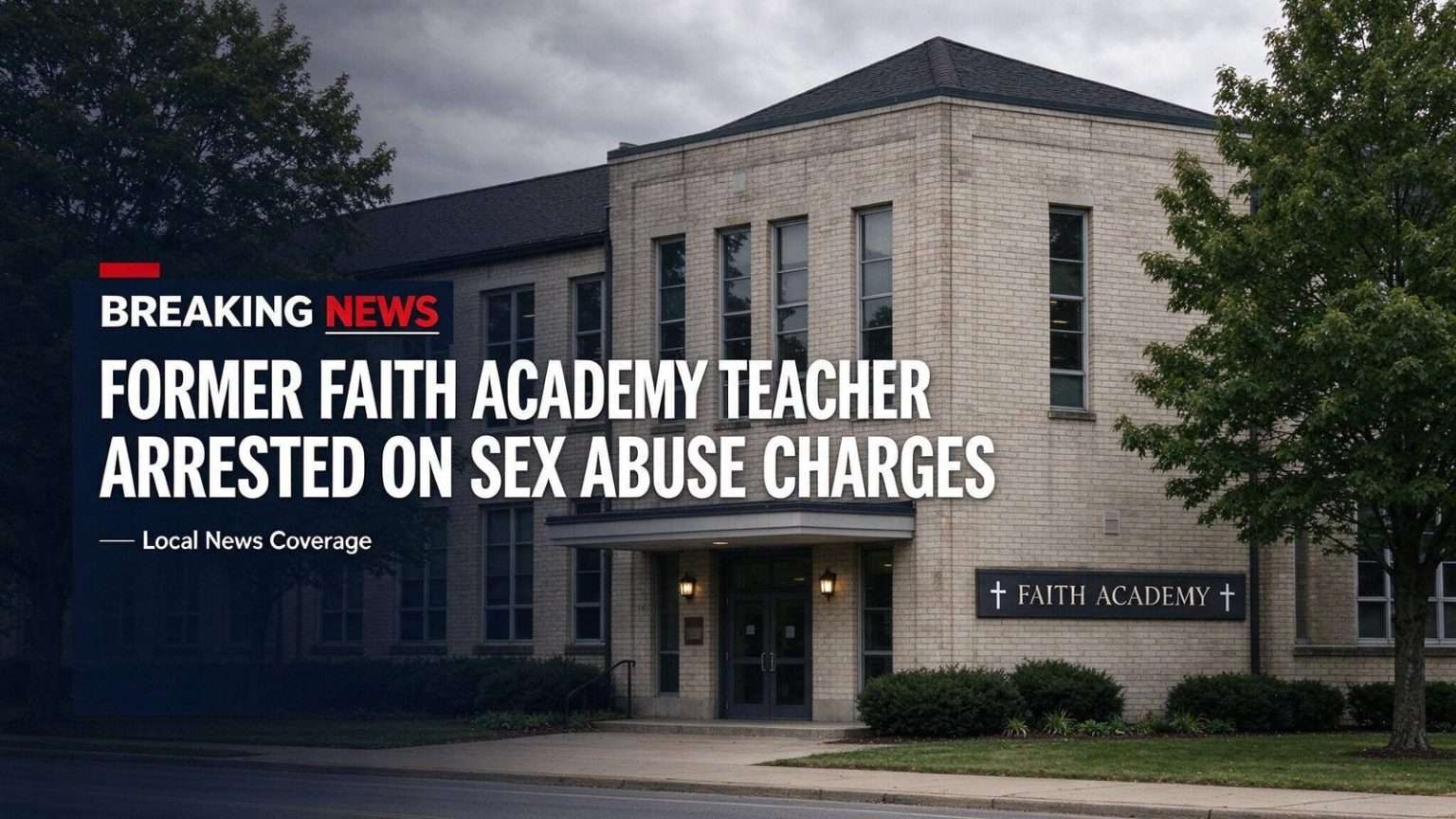
A former teacher at Faith Academy in Mobile County was arrested after an investigation into allegations that she had a sexual relationship with a student, according to the Mobile County Sheriff’s Office. Deputies took 33-year-old Christina Busby into custody on two counts of a school employee engaging in a sexual act with a student under the age of 19. The arrest closes the investigative chapter of a case that began not with a school report but with an anonymous tip, and it opens a court process that will play out in Mobile County’s district and circuit courts in the months ahead.
Busby was no longer employed at Faith Academy at the time of her arrest, the sheriff’s office said. The timing of her departure from the school and the circumstances that led to it have not been publicly detailed, and the school has not described what, if anything, it reported or reviewed internally once it became aware of the concerns that eventually reached investigators.
Investigators said the case began after a tip was submitted to the Mobile County Sheriff’s Office crime tips line in late August. The tip line — a standing channel that allows residents to report suspected criminal activity by phone or online, anonymously if they choose — has become one of the department’s most productive investigative entry points. In this case, a single submission set in motion the background work, interviews and digital evidence review that deputies say substantiated the allegations against a former classroom teacher.
Detectives determined that Busby had sexual contact with a 17-year-old student on at least two occasions in the Wilmer area, both of which occurred earlier in the year, according to the sheriff’s office. Wilmer is a rural community in the western reaches of Mobile County, near the Mississippi line, far from the school campus — a detail that has figured in similar cases across the state, where contact between school employees and students tends to occur away from school property and outside school hours, beyond the immediate reach of campus supervision.
Authorities said the relationship came to light after the teenager’s mother discovered text messages between the two. The discovery underscores a pattern that investigators and child-safety advocates have pointed to repeatedly in cases involving school employees: digital communication is frequently the thread that unravels the relationship. Private messaging between a student and a teacher leaves a record that parents can find, and in Mobile County it was a parent’s vigilance — not any report from the school — that first surfaced the evidence.
The Arrest and the Charges
At the time of the alleged contact, the student was not enrolled in one of Busby’s classes but was still attending Faith Academy, deputies said. The distinction matters legally as well as practically: Alabama law does not confine the offense of a school employee engaging in a sexual act with a student to a teacher’s own classroom. Any student at the school, enrolled in the employee’s classes or not, falls under the statute’s protection, a recognition of the authority and trust a school employee holds over the entire student body.
The charges themselves — two counts of a school employee engaging in a sexual act with a student under the age of 19 — are felonies under Alabama law, and each count corresponds to a separate alleged encounter. Prosecutors treat the age gap between a school employee and a student, and the employee’s position of authority, as aggravating features that the law builds directly into the offense: consent is not a defense where the law presumes a student cannot meaningfully consent to a person who grades, disciplines or supervises them.
Busby was booked into Mobile County Metro Jail on the two felony counts. Jail records showed no previous arrests on her record. A clean record at booking means the case will be her first encounter with the criminal justice system as a defendant, a fact that typically shapes the early stages of the process — from the assignment of counsel to the terms discussed at the first hearings. Booking at the Metro Jail, the county’s primary intake facility on the edge of downtown Mobile, sets the case on the standard track for felony defendants in the county.
She was scheduled to appear before a district court judge for a bond hearing days after her arrest. The bond hearing is where a judge weighs the seriousness of the charges, the defendant’s ties to the community and any risk factors before setting the conditions of release pending trial. In cases involving allegations of sexual misconduct with a minor-age student, judges commonly consider no-contact conditions covering the alleged victim and, in some cases, restrictions on any contact with minors connected to the defendant’s former employment.
Faith Academy, a private Christian school in the Mobile area, has not publicly detailed what, if any, internal review followed Busby’s departure from the school. Private schools in Alabama operate outside the direct personnel authority of the county board of education, which means their handling of employee separations — including whether a resignation precedes an arrest, and what is communicated to parents — rests with the school’s own administration and board. That structural difference has drawn attention in cases like this one, where the public record of how a school responded is thinner than it would be for a public school system.
Sheriff’s office representatives said the investigation was prompted entirely by the community tip line rather than a report from the school itself. That fact stands out to investigators and child-safety advocates alike. Alabama law imposes mandatory reporting obligations on school employees who suspect abuse or misconduct involving students, and institutions are expected to act on credible concerns. A case that begins with an anonymous tip rather than an institutional report raises the question of who at the school knew what, and when — a question the active investigation may yet address.
What Alabama Law Requires
Cases involving school employees and students carry strict reporting requirements under Alabama law, and law enforcement officials have said they take such tips seriously given the position of trust teachers hold over students in their care. Mandatory reporting statutes in the state require school personnel — teachers, administrators, counselors and support staff alike — to report suspected abuse or neglect to authorities, and failures to report can themselves carry legal consequences. The framework reflects a legislative judgment that adults working in schools are the front line of child protection, and that silence is not neutrality.
The Mobile County Sheriff’s Office said the investigation into the circumstances surrounding the case remained active following Busby’s arrest. An active investigation means detectives have not closed the file: they may conduct additional interviews, examine additional digital evidence, or identify additional conduct that could result in further charges. It also means details of the case remain limited to what investigators have released, and subsequent developments — from the outcome of the bond hearing to any decision by the Mobile County District Attorney’s Office on how the case will be prosecuted — will unfold on the court calendar rather than in the initial arrest report.
The path from here is a familiar one for felony cases in Mobile County. After the district court bond hearing and preliminary proceedings, cases of this kind are presented to a grand jury, which decides whether the evidence supports an indictment and transfer to circuit court for trial. Along the way, prosecutors will evaluate the digital evidence that first surfaced the relationship — the text messages the teenager’s mother discovered — alongside witness statements and the timeline detectives assembled from the late August tip through the two alleged encounters earlier in the year.
For Faith Academy families, the case lands in a community that has watched similar prosecutions across Alabama in recent years. School employee misconduct cases tend to prompt two parallel conversations: one about the individual defendant, and one about institutional response — whether schools report promptly, how they communicate with parents, and what screening and supervision measures are in place. The Mobile County Sheriff’s Office has emphasized that its case exists because one parent examined a phone and one anonymous caller used the tip line, a reminder that in these cases the system’s first responders are often family members and neighbors rather than institutions.
The tip line itself is worth noting for Mobile County residents. The sheriff’s office maintains the channel for exactly this kind of report — suspected criminal conduct, including offenses against children, that residents may hesitate to report to a deputy in person. Tips can be submitted anonymously, and investigators say the volume and quality of submissions have made the line a routine starting point for cases that end in felony arrests. In this case, the chain ran from a parent’s discovery, to an anonymous submission, to detective work, to two felony counts and a booking photo at the Metro Jail.
The student at the center of the case is 17, which places the alleged conduct squarely within the statute the charges were filed under, whatever the eventual outcome in court. Advocates for students note that the aftermath of such cases — for the young person involved, for classmates who knew both parties, and for families deciding whom to trust at school — extends well beyond the courtroom, and schools that handle them transparently tend to recover community confidence faster than those that do not.
What remains to be seen is how the rest of the process plays out: the bond determination, the grand jury’s decision, and whether the active investigation adds anything to the account detectives have already made public. The Mobile County Sheriff’s Office has not said whether additional interviews are pending or whether the school has since cooperated with the inquiry. What is established on the record so far is the sequence of events: a mother checking a phone, a tip to the crime line in late August, detective work that confirmed at least two encounters in the Wilmer area, and an arrest on two felony counts of a former teacher now answering to a district court judge.