

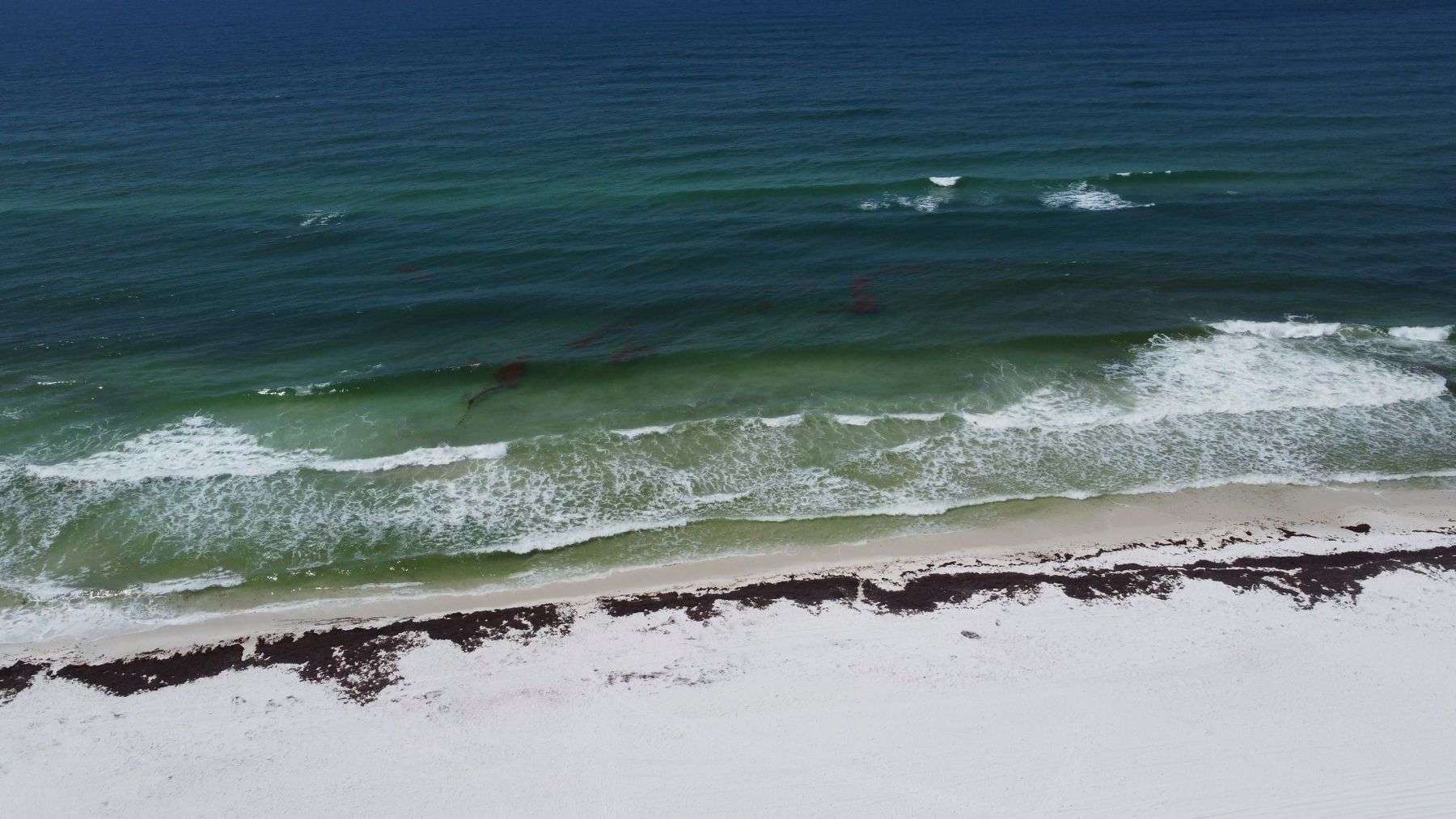
Six weeks after the Deepwater Horizon drilling rig exploded roughly 50 miles off the Louisiana coast, the slow-motion disaster it unleashed has reached the edge of Alabama’s shoreline, and communities around Mobile Bay are living in a strange limbo. Beaches from Dauphin Island to Gulf Shores remain open. Restaurants are serving. Tourism boards are still running their summer promotions. But an undercurrent of anxiety runs through the coast as oil sheen and tar balls have begun washing up in patches, and no one on the ground can say with confidence what the next few weeks will bring.
The uncertainty is as much a part of the story as the oil itself. Unlike a hurricane, whose landfall and aftermath follow a familiar and fairly predictable arc, an offshore oil spill of this scale unfolds unevenly — depending on wind, current, temperature and sheer luck, some days bring clean beaches and others bring a fresh line of tar along the wrack line. For residents whose incomes depend on a predictable summer season, that unpredictability has become its own kind of hardship.
Baykeeper Urges Residents to Document the Coast
Casi Callaway, executive director of Mobile Baykeeper, has become one of the most visible local voices tracking the spill’s approach to Alabama waters. Callaway has been urging volunteers across the Mobile Bay watershed to get out on the water and the shoreline to photograph and record the condition of local beaches, marshes and wildlife before oil arrives in force — creating a baseline record that can later be used to measure damage and, she says, to hold responsible parties accountable for repairing it.
That kind of citizen documentation has become a familiar tool in environmental response work over the past several decades, particularly after large industrial accidents where the party responsible for cleanup and damages is also the party funding much of the assessment process. Baseline photographs, water samples and wildlife counts gathered by residents and nonprofit groups can serve as an independent check on official damage assessments, giving local communities a seat at the table when compensation and restoration plans are eventually negotiated.
Callaway has also described facing pushback after speaking publicly about tar balls discovered near Dauphin Island. Speaking candidly about pollution reaching a barrier island community that depends heavily on tourism carries real tension: acknowledging the problem is necessary for public safety and environmental accountability, but it also risks feeding a narrative that could scare away the very visitors whose spending keeps local restaurants, charter boats and rental properties afloat. That tension between transparency and economic self-interest has played out in coastal communities before, whenever pollution events collide with tourism-dependent economies, and it appears to be playing out again along the Alabama coast this summer.
Tar Balls and the Realities of Oil Spill Debris
Tar balls — small, sticky clumps of weathered oil that separate from a larger slick as it moves across open water — are often the first visible sign that a spill has reached a stretch of coastline, even before a continuous sheen appears. According to information published by the National Oceanic and Atmospheric Administration, tar balls form as lighter, more volatile compounds in crude oil evaporate and the remaining heavier compounds weather and clump, sometimes traveling far from the source of a spill before washing ashore. Their appearance can vary widely, from small pebble-sized deposits to larger mats, and they can wash in and out with tides and currents over an extended period, which is part of why oil spill cleanup on affected beaches is rarely a single, one-time event.
For a barrier island community like Dauphin Island — a roughly 14-mile-long strip of sand at the mouth of Mobile Bay that has long served as both a working fishing community and a beach tourism destination — even sporadic tar ball reports can be enough to unsettle visitors booking summer vacations. The island’s economy, like much of coastal Alabama, rests on a narrow seasonal window, and disruptions during peak summer months can have an outsized effect on annual revenue for small businesses that depend on a few good months to carry them through the rest of the year.
Claims Begin to Mount Among Businesses and Fishermen
As uncertainty around the spill’s trajectory has grown, businesses and commercial fishermen along the Alabama coast have begun filing claims for lost income, seeking compensation for the economic disruption caused by the spill even in areas that have not yet seen significant oiling. Commercial and charter fishing operations, seafood processors, and tourism-dependent businesses have all reported slower business in the weeks since the April 20 explosion, driven both by actual restrictions on fishing grounds farther offshore and by a broader wave of hesitation among travelers and consumers uncertain about the safety and availability of Gulf seafood and beaches.
That pattern was echoed away from the immediate coastline as well. Jeanine Stewart of Burris’ Farmers Market in Loxley, well inland in Baldwin County, said sales at the market fell sharply in the weeks immediately following the rig explosion, before beginning to show signs of recovery. Her experience is a reminder that the spill’s economic reach has extended beyond the beachfront itself, rippling into the broader agricultural and retail economy of South Alabama as consumer confidence and travel patterns shifted in response to the unfolding disaster.
How Oil Spill Damage Claims Typically Work
Following a major spill, the party found responsible is generally required, under federal law including the Oil Pollution Act of 1990, to compensate individuals and businesses for a range of documented losses, including lost income, property damage and cleanup costs. In the initial phase after a spill, the responsible party typically stands up its own claims process, fielding applications directly from affected individuals and businesses, before any broader third-party or government-administered claims process is put in place. Documentation — including tax records, receipts, and other evidence of historical income or expenses — is generally central to substantiating a claim, which is part of why organizations like Mobile Baykeeper have emphasized the importance of building a thorough public record early, while conditions and losses are still fresh and easy to verify.
For a disaster on the scale of the Deepwater Horizon spill, with economic effects rippling across multiple states and industries, claims processes have historically taken months or years to fully resolve, and have often evolved over time as the scope of damage becomes clearer. Residents and business owners navigating a claims process are typically advised to keep detailed records, retain receipts and documentation of losses, and stay in contact with local extension offices, chambers of commerce or legal aid resources that can help them understand their rights and options.
About Mobile Baykeeper
Mobile Baykeeper is a Mobile-based environmental advocacy nonprofit focused on protecting water quality and natural resources throughout the Mobile Bay watershed, which drains a large portion of Alabama and parts of neighboring states into the bay and ultimately the Gulf of Mexico. The organization is part of the international Waterkeeper Alliance network, a model of local, community-based environmental monitoring and advocacy groups that has grown across the country and around the world since the 1990s, each focused on protecting a specific waterway or watershed through a combination of citizen monitoring, public education and legal advocacy.
Organizations like Mobile Baykeeper typically play several roles during an environmental crisis: monitoring water and shoreline conditions, translating technical information for the public, organizing volunteer efforts, and pressing for accountability from both industry and regulators. In the weeks since the Deepwater Horizon explosion, that kind of local monitoring capacity has taken on particular importance for coastal Alabama communities trying to understand what is happening in their own backyards, often faster than official channels can confirm.
Dauphin Island’s Place on the Alabama Coast
Dauphin Island sits at the mouth of Mobile Bay, connected to the mainland by a bridge and, historically, by a ferry route across the bay to Fort Morgan on the eastern shore. The island has long balanced its identity as a working fishing community with its role as a family beach destination, home to public beaches, a bird sanctuary that draws birdwatchers during spring migration, and the Dauphin Island Sea Lab, a marine science research and education consortium that has studied Gulf ecosystems for decades. That research infrastructure has made the island something of a natural vantage point for tracking environmental change along the Alabama coast, including, this summer, the arrival of oil from the Deepwater Horizon spill.
The island’s exposure to the open Gulf also makes it one of the first points along the Alabama coastline likely to show visible effects from an offshore slick, which is part of why reports of tar balls there in recent weeks have drawn outsized attention relative to the island’s small year-round population.
What Residents Can Do
Coastal residents and visitors are generally advised, in the midst of an unfolding spill, to avoid direct contact with visible oil or tar balls on the beach and to report sightings to local authorities or environmental hotlines rather than attempting cleanup themselves, both for personal safety and to preserve evidence for damage assessment. Volunteers interested in contributing to citizen monitoring efforts, such as those Mobile Baykeeper has organized, are typically encouraged to work through an established organization rather than independently, both for safety and so that the data collected is gathered consistently and can be used effectively later.
For now, life along Mobile Bay continues in the same uneasy rhythm that has settled over much of the northern Gulf Coast this spring and summer: beaches open, boats on the water, businesses doing what they can to hold on — all under the shadow of a spill whose full reach into Alabama waters remained, as of early June, still very much unknown.