

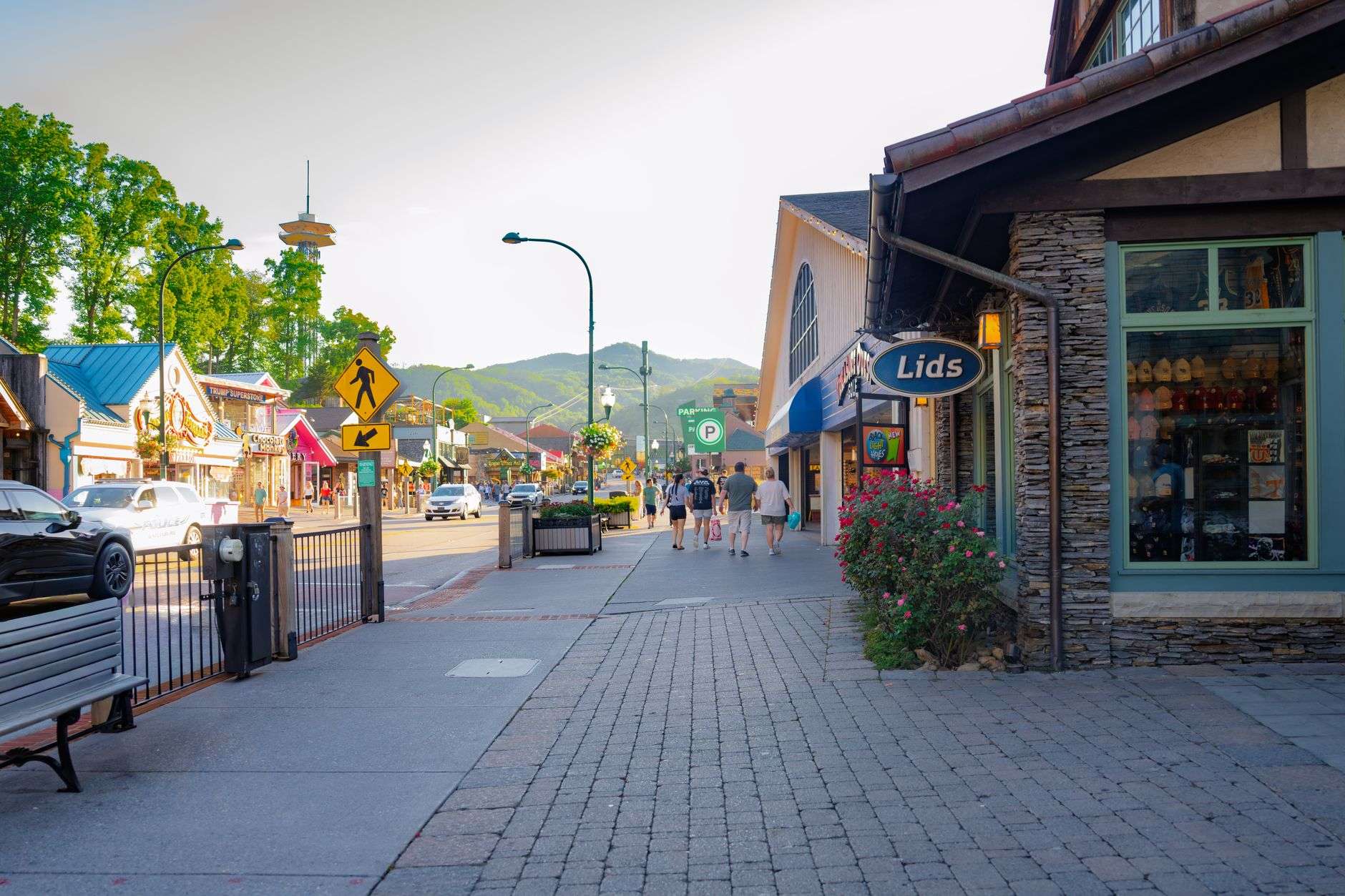
GULF SHORES, Ala. — The Gulf Shores City Council opened a public hearing Monday afternoon on proposed changes to the city’s Walking Area Overlay District, a set of amendments that would widen the overlay’s boundaries in both directions and rewrite the rules governing how older, nonconforming buildings inside it may be repaired.
The regular meeting was set for 4 p.m. in the council chambers at Gulf Shores City Hall.
As drafted, the text and map amendments would push the overlay boundary west to West 6th Street and east to the middle of the block between East 3rd Street and East 4th Street, bringing in specific Business Tourist properties zoned BT-1, BT-3 and BT-4. The same package updates the guidelines for repairing nonconforming structures within overlay districts.
Together, those two pieces address the two questions property owners in the district most often bring to City Hall: who is inside the line, and what can be done with a building that predates the current rules.
What an Overlay District Does
An overlay district is a second layer of zoning laid on top of the base zoning that already applies to a parcel. The base district — in this case Business Tourist classifications such as BT-1, BT-3 and BT-4 — still governs what uses are permitted. The overlay adds requirements, or relaxes them, for a defined geographic area where the city wants a different physical result than the base zoning alone would produce.
Cities use overlays because a single zoning category applied citywide cannot account for the particular character of a few blocks. A walking area overlay, as the name suggests, is typically aimed at producing a pedestrian-oriented environment: building placement, setbacks, parking arrangement, sidewalk treatment and the way a structure meets the street all matter more in a district people are expected to walk through than in one they are expected to drive to.
The practical significance of a boundary amendment is straightforward. A parcel brought inside the overlay becomes subject to the overlay’s standards on top of whatever its base zoning already required. A parcel left outside is governed by base zoning alone. That is why map amendments to overlay districts draw attention from owners whose property sits near the proposed line.
Nonconforming Structures, and Why the Rules Matter
The second half of the amendment package concerns nonconforming structures, a term of art in zoning law. A nonconforming structure is a building that was lawful when it was built but that no longer complies with the zoning rules now in force — because it sits too close to a property line under current setbacks, exceeds a height or coverage limit adopted later, or otherwise falls outside standards that were written after it went up.
Such buildings are generally allowed to remain. What zoning ordinances restrict is how far they can be extended, altered or rebuilt, on the theory that a nonconformity should be gradually brought into compliance rather than perpetuated indefinitely. The sharpest version of that question arises after storm damage: if a nonconforming structure is substantially damaged, may the owner repair it as it was, or must the replacement meet current standards?
On the Alabama coast, that is not an abstract question. Setback rules, elevation requirements and construction standards have all tightened over the decades, and a great many older beachfront and near-beach buildings would not be permitted today in the form they currently stand. Clear repair guidelines give owners, contractors and city staff a common answer before a permit application is filed rather than after.
Airport Grants Return to the Agenda
Also before the council are three airport agreements previously reported by South Alabama News. The council reviewed the package at its Sept. 8 work session, and this newspaper covered it on Sept. 9 under the headline “Gulf Shores weighs $2.4 million in FAA airport grants and a plan to double water plant capacity.”
The three Federal Aviation Administration grants total $2,458,953 for Jack Edwards National Airport and would support Phase 4 passenger boarding ramps and additional terminal work tied to the ongoing passenger terminal construction. The grants require a matching contribution from the Airport Authority; no city general fund money is committed to them.
Permits for a Busy September and October
Three public assembly and event permits were on the agenda, two of them for the same Saturday.
- Alabama Coastal Cleanup — a public assembly permit request for the annual volunteer beach cleanup on Sept. 19, 2026, centered at the Public Beach West parking area.
- Fall Art Festival — approval for the Gulf Coast Arts Alliance outdoor market on Sept. 19, 2026, at 116 East 24th Avenue.
- Skippin & Sippin Phun Walk — a permit application for the annual charity walk hosted at LuLu’s on Oct. 24, 2026, supporting local cancer assistance programs.
Event permits are a routine but consequential part of a coastal city’s council calendar. A public assembly permit is the mechanism by which a city reviews traffic control, parking, sanitation, public safety staffing and beach access for a gathering that will occupy public space, and it is the point at which conditions can be attached before the event occurs rather than after complaints arrive.
The Alabama Coastal Cleanup permit is for the 39th year of an effort that began in 1987. The Alabama Department of Conservation and Natural Resources’ State Lands Division coordinates the cleanup with Alabama People Against a Littered State, and it runs from 8 a.m. to noon across 33 zones in Baldwin, Mobile and Escambia counties as part of the International Coastal Cleanup. Organizers say more than 115,000 volunteers have removed roughly 900 tons of marine debris since the program started. Zone captains supply grabbers, trash and recycling bags and gloves; registration details are posted at AlabamaCoastalCleanup.com.
Resolutions and City Business
The remainder of the agenda covered contracts, sponsorships and housekeeping:
- Safe Harbor Animal Coalition — an amended exchange of services agreement providing up to $10,000 annually to support trap, neuter and return feline welfare programs.
- Zydeco & Crawfish Festival — a sponsorship agreement with the Waterway Village Merchants Association allocating $46,000 plus in-kind city services for the 2027 event.
- Oak Place property withdrawal — official notification that the applicant has withdrawn the pre-zoning request for 18789 Oak Road West.
- 2027 municipal court dates — a resolution establishing the official calendar for court plea and trial dockets throughout 2027.
- Recognitions — presentations introducing the new Junior City Council cohort and honoring the Gulf Shores Fire Rescue Lifeguard of the Month for August 2026.
The trap, neuter and return agreement funds a specific approach to managing free-roaming cat populations: animals are humanely trapped, sterilized, vaccinated and returned to the location where they were found, with the goal of reducing the colony’s size over time without euthanasia. Cities that fund such programs typically do so through contracts with nonprofit partners rather than through animal control staffing.
The Zydeco & Crawfish Festival sponsorship continues a discussion South Alabama News covered on Sept. 5, when the council first weighed the $46,000 commitment to revive the festival in 2027 through the Waterway Village Merchants Association. Gulf Shores also opened applications for the 2026-2027 Junior City Council in August; Monday’s presentation introduces the students selected.
What a Pre-Zoning Withdrawal Means
The Oak Place item is procedural but worth explaining. Pre-zoning is the process by which a municipality assigns a zoning classification to property that lies outside its corporate limits but within its planning jurisdiction, in anticipation of possible future annexation. Establishing the classification in advance tells everyone — the owner, neighbors and the city — what the property could be used for if it were ever brought inside the city.
Because the applicant withdrew the request for 18789 Oak Road West, no council action on the classification is required. The item appears on the agenda as a notification so that the withdrawal is recorded in the public record and the application is formally closed.
Setting the Court Calendar a Year Ahead
Adopting the 2027 municipal court calendar in September 2026 sounds like a formality, and in the main it is. But municipal courts in a tourism-driven city handle a substantial volume of traffic citations, ordinance violations and misdemeanor cases, and fixing plea and trial dockets well in advance lets the court, the city prosecutor, defense attorneys and law enforcement schedule around known dates. It also gives defendants certainty about when they are expected to appear.
What Happens Next
Public hearings exist to gather comment before a vote, and the overlay district amendments are the item on which residents and property owners have the most direct stake. Anyone whose parcel falls near the proposed western boundary at West 6th Street or the eastern boundary mid-block between East 3rd and East 4th streets has a concrete interest in whether the line moves.
Gulf Shores posts agendas, staff reports and meeting materials through its agenda center, and regular council meetings are open to the public at City Hall. Items approved Monday take effect according to their own terms; ordinance amendments arising from the public hearing follow the city’s standard adoption and publication process.