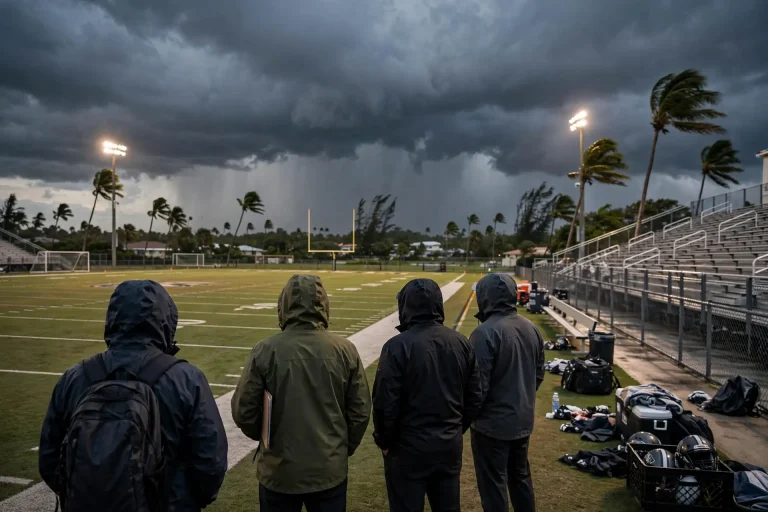
Hurricane Sally leaves widespread damage, thousands without power across Northwest Florida
Hurricane Sally left widespread damage and flooding across Pensacola and Northwest Florida, with more than 200,000 customers still without power.
PENSACOLA, Fla. — Widespread damage stretched across Pensacola, Escambia County and other parts of Northwest Florida after Hurricane Sally made landfall Wednesday morning. Dozens of streets flooded, including Main Street, though the water has since receded. Trees were down on homes and streets throughout the area, and the storm left one of the region’s largest power outages on record in its wake.
Sally’s slow crawl toward the northern Gulf Coast was the defining feature of the storm. Moving at a pace that gave its rain bands hour after hour to pound the same neighborhoods, the hurricane pushed a surge of water into Pensacola Bay and dumped rain totals measured in feet rather than inches in places. By the time the center came ashore near the Alabama-Florida line, the damage across the Panhandle was extensive: inundated streets, downed trees, torn-away roofs and hundreds of thousands of customers without electricity.
The flooding hit downtown Pensacola hard. Main Street, which runs along the edge of the downtown district near the waterfront, was among the dozens of streets that took on water. In the hours after landfall, crews and residents watched the water gradually pull back, leaving behind the debris, mud and downed limbs that come with a significant coastal flood event.
A Roof Lands on a Family Home
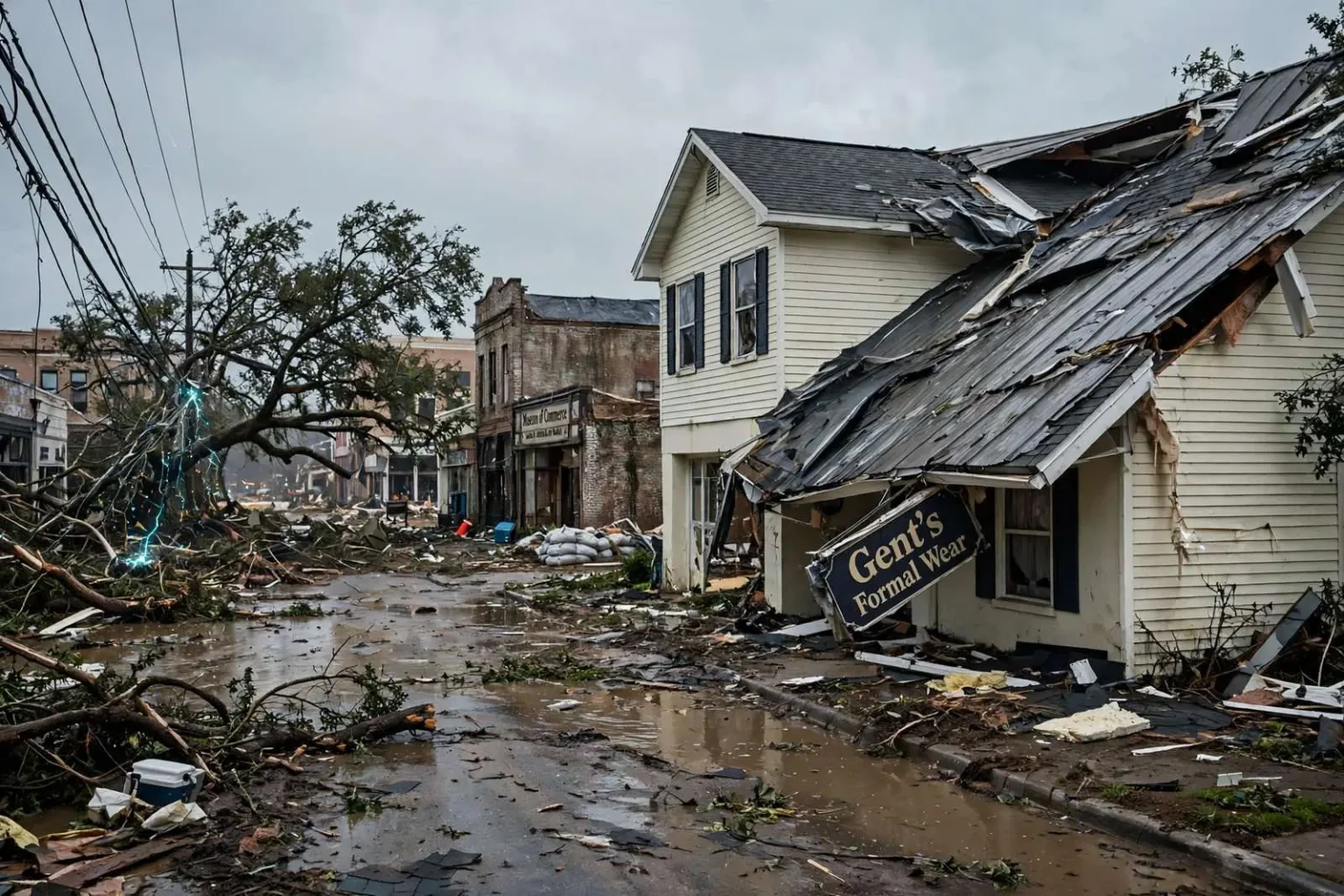
Among the most striking scenes was the roof of Gent’s Formal Wear at North Alcaniz Street and Wright Street, which appeared to peel back and land next door, covering a two-story home. Inside were Danielle Foster, her husband Brandon and their three-week-old baby.
“The entire house shook,” Danielle said. “It felt kinda like an earthquake for a brief couple of seconds.”
Foster said the roof never touched their vehicles, and their house appeared to suffer only minor damage that caused a small leak. The family emerged from the storm shaken but safe, a reminder of how narrow the margins can be when hurricane-force winds tear building materials loose in established neighborhoods where homes and businesses stand close together.
“It was over pretty quick,” she said. “The scariest part though was just these power lines because they were still live and would spark green and blue. I thought the house might go up in flames.”
The sparking lines the Fosters described were a hazard repeated across the storm zone. Downed power lines tangled with trees and debris left dangerous conditions on block after block, and utility officials pleaded with residents to treat every fallen line as energized while repair crews worked their way through the damage.
Downtown Businesses Take the Hit
A few blocks toward downtown, the roof was ripped from the Museum of Commerce, one of the historic structures in the Pensacola Historic District. Nearby, water got inside The Ruby Slipper, some salons and The Garden, a covered outdoor area with food trucks that has become a gathering spot in the downtown entertainment corridor.
Emergency declarations had been issued in advance on both sides of the state line, with schools closed, flights canceled and shelters opened as the storm’s track firmed up. Officials repeatedly warned that the greatest danger from a system like Sally often comes not from the wind alone but from the water — surge along the coast, rising creeks and bayous inland, and streets that become impassable well before the worst of the weather arrives.
“We’ve got about a foot of water throughout the entire thing,” landlord Michael Carro said. “We’re very fortunate the Airstreams behind me are all elevated so as soon as we get power and gas, we’ll be able to fire those restaurants back up and start serving tacos and empanadas right away.”
Carro’s assessment captured the mixed picture facing downtown property owners after the storm: water intrusion, roof damage and cleanup on one hand, but structures that survived and businesses positioned to reopen relatively quickly on the other. The elevated Airstream food trailers he described were spared the worst of the flooding, an example of how design choices made long before a storm can determine which businesses ride one out and which do not.
For a downtown district built on foot traffic, festivals and waterfront tourism, the days after a hurricane are measured in how fast the lights come back on. Carro said the moment calls for neighbors helping neighbors.
“This is where you come out of your homes and you really buckle down. That’s the silver lining of any type of event like this is we come together as a community,” he said.
Power Outages in the Hundreds of Thousands
The scale of the electrical damage was enormous. Gulf Power reported that of 153,000 total customers in Escambia County, 146,830 were still without electricity — a figure meaning that virtually the entire customer base in the county was in the dark in the storm’s immediate aftermath. The outages stretched across residential neighborhoods, commercial corridors and critical infrastructure alike.
Neighboring counties fared little better. In Santa Rosa County, 54,400 were without power, and in Okaloosa County, 26,660 customers were in the dark. Combined, the figures across Northwest Florida ran well past 200,000 customers, and utility crews from across the region began mobilizing for what everyone understood would be a restoration effort measured in days and weeks, not hours.
The sheer breadth of the outage complicated nearly every other recovery task. Gas stations without power could not pump fuel, traffic signals sat dark at major intersections, and businesses that escaped structural damage still could not reopen until electricity returned. Restoration crews prioritize lines that restore the most customers first, which means outlying and heavily damaged pockets can wait the longest.
Why Sally Was So Damaging
Hurricane Sally was the kind of storm Gulf Coast residents have learned to fear as much for its speed as its strength. Slow-moving tropical systems drop enormous volumes of rain on the same areas for extended periods, and Sally’s crawl gave Escambia and Santa Rosa counties a flooding event on top of the wind damage. Streets that drain in ordinary summer downpours were overwhelmed, and low-lying areas near the bay and its tributaries stayed flooded even after the rain ended.
The storm’s path also put the brunt of its right-hand side — typically the strongest winds and surge — over the Pensacola area. Communities from Pensacola Beach to downtown saw the combined effects of surge, waves and wind-driven rain, while the barrier islands took a sustained beating that left boats, docks and beach infrastructure damaged across the sound.
The Recovery Ahead
In the days after landfall, the priorities for Escambia County and its neighbors were consistent: restore power, clear the roads of trees and debris, assess structural damage, and get schools and essential services running again. With more than 95 percent of Gulf Power’s Escambia County customers out at once, the utility’s restoration map became the closest thing the region had to a recovery timeline, and residents tracked it the way they had tracked the storm itself.
Emergency management officials urged residents to document damage for insurance purposes, avoid damaged structures, and be wary of hazards that linger after the wind stops — standing water hiding dangers, weakened trees and limbs, energized lines, and generators run too close to homes. Carbon monoxide from improper generator use is a recurring cause of post-storm deaths across the Gulf Coast, and officials repeated the warning as thousands of households ran portable generators in the dark.
The cleanup in downtown Pensacola told the broader story of the recovery. Historic buildings like the Museum of Commerce faced the slow work of structural assessment and repair, restaurants and salons pumped out water and tore out wet flooring, and crews hauled away limbs and roofing debris block by block. Neighbors organized check-ins on elderly residents, shared generators, and cleared driveways for one another — the mutual aid that Carro described as the silver lining of the event.
For the Foster family on North Alcaniz Street, the storm’s aftermath was a smaller version of the same picture: a roof that belonged to the business next door draped over their home, a leak to patch, and a story to tell about the night a three-week-old baby slept through the worst of it. The region around them began the longer job of putting Northwest Florida back together, one power line, one storefront and one street at a time.
Sally’s landfall will be studied alongside other Gulf storms for how much damage a storm can do at landfall strength when it refuses to speed up. For Pensacola, Escambia County and the communities across Northwest Florida still counting the costs, the immediate focus was the same as it has always been after a hurricane: help the neighbors, restore the power, reopen the businesses, and rebuild.
Boat owners across the area spent the days after the storm assessing damage at marinas and along the shorelines of Pensacola Bay and Santa Rosa Sound, where surge and wind had scattered vessels, torn docks loose and pushed debris into the shallows.