

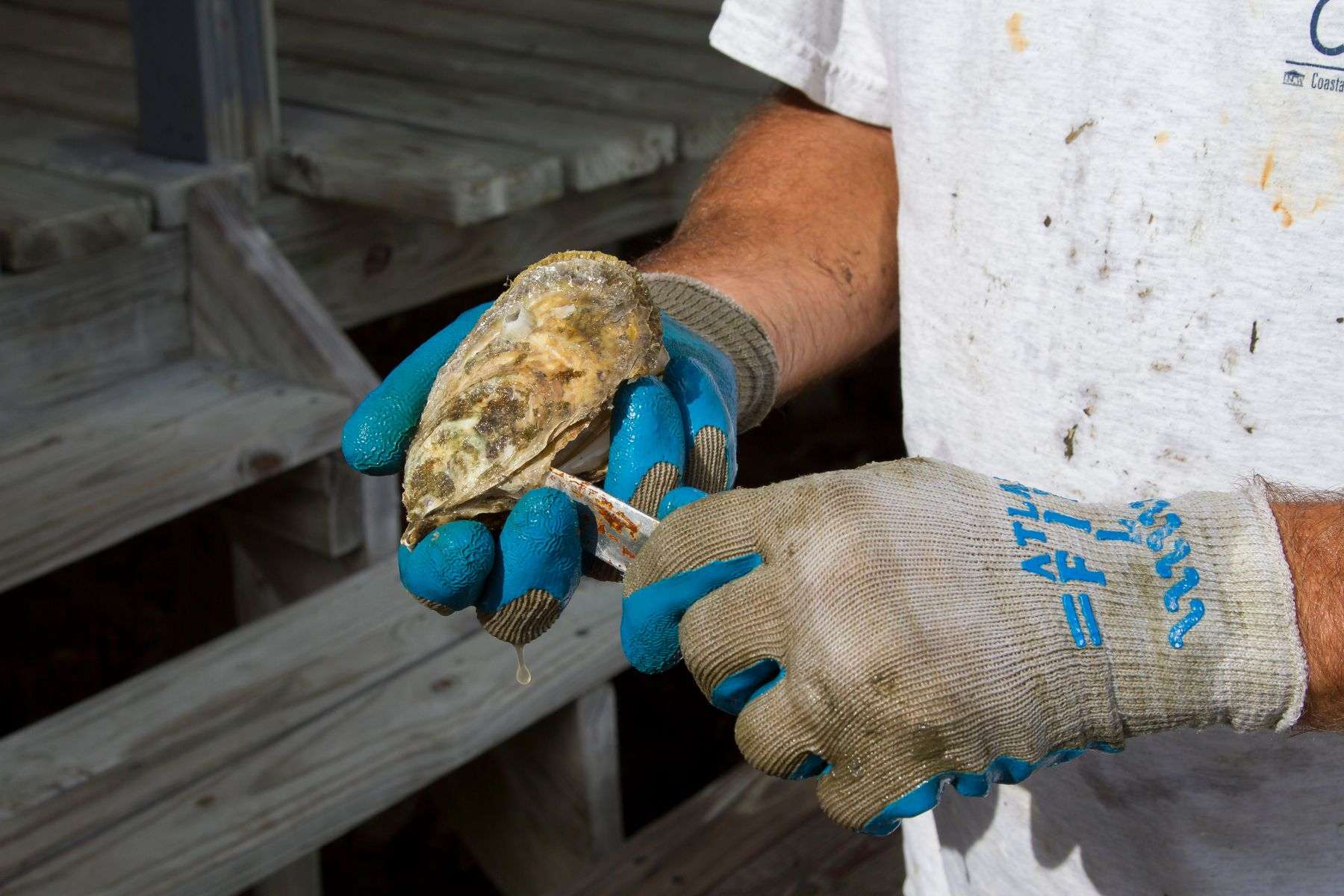
When the Deepwater Horizon rig exploded roughly 50 miles off the Louisiana coast on April 20, 2010, killing 11 workers and triggering the largest marine oil spill in U.S. history, the shockwaves reached far beyond the Gulf of Mexico. By early June, as oil continued to spread across the water and tar had already been confirmed on shorelines in all five Gulf states, the crisis had become international news — and one small, generations-old seafood company in Baldwin County found itself cited as an example of what the disaster meant for the people who make their living from the water.
Bon Secour Fisheries, the century-old oyster and seafood business based in the unincorporated Baldwin County community of Bon Secour, was among the operations that international press coverage turned to that spring as reporters looked past the images of oiled pelicans and blackened marshes to ask a quieter question: what happens to the working families and small businesses whose entire livelihood depends on Gulf waters staying clean, and on customers believing they are?
A Spill Felt Before the Oil Arrived
According to John Ray Nelson of Bon Secour Fisheries, the damage to the business did not wait for oil to physically reach every affected water body. The company felt the effects of both the spill itself and the broader wave of public anxiety about conditions along the coast — a distinction that seafood industry observers say became one of the defining, and most frustrating, features of the disaster’s economic toll.
That pattern was consistent with what federal fisheries regulators and economists would go on to document throughout the disaster: perception damage often outran physical contamination. Because petroleum plumes and surface slicks moved unpredictably with wind and current, and because scientific testing of seafood safety took time to complete and communicate, many consumers and buyers around the country simply avoided Gulf seafood and coastal tourism destinations altogether, regardless of whether a specific batch of oysters, shrimp or fish had ever been near oil. For a company like Bon Secour Fisheries, which sells to wholesale and retail customers well beyond the Gulf Coast, a national dip in confidence could hurt as much as a local closure.
How the Closures Actually Worked
The federal government’s response to the spill included an escalating series of fishing closures managed by the National Oceanic and Atmospheric Administration, in coordination with state agencies including the Alabama Department of Conservation and Natural Resources. NOAA implemented its first closures in federal Gulf waters on April 28, 2010, just eight days after the explosion, closing areas believed to be at risk of contamination to commercial and recreational fishing alike. As the spill continued and its extent became clearer, those closures expanded steadily. By June 21, 2010, closed federal waters covered roughly 37 percent of the Gulf of Mexico’s total area — an enormous swath of ocean placed off-limits to the fleets, processors and dock operations that depend on it.
Closures were not simply drawn and left in place; NOAA worked to reopen areas as testing confirmed they were free of oil and contamination, a process that required both visual surveys and laboratory analysis of seafood samples for compounds associated with crude oil. That system of closing first and reopening only after verified testing was designed to protect consumers, but it also meant fishermen, oyster harvesters and shrimpers had no way to predict from one week to the next which grounds they would be allowed to work. For businesses built around long-standing relationships with buyers who expect a steady, reliable supply, that uncertainty complicated planning in ways that went beyond the direct loss of harvest.
Alabama’s own waters, including Mobile Bay and the oyster reefs near Bon Secour and Bayou La Batre, were watched especially closely that spring and summer, both because of their proximity to the spill site and because of Alabama’s long history as a working Gulf Coast fishing state. Oystermen along Alabama’s coast rely on public and private reefs in and around Mississippi Sound, Mobile Bay and the barrier island passes, harvesting grounds that had already weathered hurricanes, freshwater intrusion and disease pressures in the years before 2010.
A Fourth-Generation Family Business
Bon Secour Fisheries traces its roots back to 1892, when Danish immigrant Frank Nelson began a small oyster harvesting operation in the Bon Secour area, drawn like generations of settlers before him to the rich estuarine waters where Mobile Bay meets the Gulf. What started as a modest local enterprise expanded in the 1920s to include shrimp, and grew further after World War II as demand for Gulf shrimp and oysters accelerated across the country. By 2010, the company had been passed down through four generations of the Nelson family, evolving from a small dockside operation into a major regional supplier of fresh and frozen Gulf seafood serving customers across the Southeast and the country.
That kind of multigenerational continuity is common among the seafood houses that line Alabama’s Gulf Coast, from Bayou La Batre to Bon Secour, where family names on packing houses and boats often go back a century or more. It is also part of why an event like the Deepwater Horizon spill carried weight beyond a single bad season’s numbers. For families whose businesses had survived depressions, world wars, hurricanes and market swings over four generations, a sustained loss of consumer confidence in Gulf seafood threatened something less easily rebuilt than a damaged reef: a reputation and a customer base built over decades.
International Attention on a Local Industry
As the spill dragged on through the spring of 2010 without a permanent fix in sight — efforts to cap the well using containment domes in early May and a “top kill” procedure in late May both failed to stop the flow — international media organizations sent correspondents to the Gulf Coast to document its human and economic toll. Coverage extended well beyond U.S. outlets. British publications, including The Economist, examined how the disaster was reshaping communities along Alabama, Mississippi, Louisiana and Florida’s coastlines, and small operators like Bon Secour Fisheries offered a tangible, human-scale illustration of what national and international headlines about a “massive oil spill” actually meant on the ground: real families weighing how long their businesses could withstand both a physical disruption to their harvesting grounds and a public relations crisis they had no hand in creating.
That international framing mattered for a region whose seafood industry has long depended on markets and reputations that extend well past its own shoreline. Alabama’s Gulf oysters, shrimp and finfish are shipped to restaurants, grocers and distributors around the country, and increasingly the world, which means a story about environmental contamination in Baldwin County can shape purchasing decisions in cities that will never see the Gulf firsthand.
Tourism Felt the Same Pressure
The seafood industry was not alone in absorbing the spill’s indirect costs. Coastal Alabama’s tourism economy, concentrated along Baldwin County’s beaches in Gulf Shores and Orange Beach, faced a parallel version of the same problem: visitors canceled or postponed trips based on news coverage and images of oil, sometimes well before any oil had reached a particular beach, and sometimes in areas that never saw significant oiling at all. Local and state officials spent much of 2010 trying to reassure travelers that specific beaches remained clean and open even as coverage of the spill continued to dominate national news, an effort that mirrored the seafood industry’s challenge of separating the geography of actual contamination from the geography of public perception.
For a county where seafood harvesting, seafood processing and tourism are deeply intertwined parts of the same coastal economy, a hit to one sector rarely stayed contained to that sector alone. Restaurants that serve local oysters, hotels that market a “working waterfront” experience to visitors, and processors that supply both local restaurants and national distributors all had a stake in how quickly, and how convincingly, the coast could demonstrate its waters and its seafood were safe.
The Broader Economic Stakes
The Gulf of Mexico has historically supplied a substantial share of the nation’s domestic seafood harvest, with Louisiana, Alabama, Mississippi, Texas and Florida together forming one of the country’s most productive commercial fishing regions. Oysters in particular hold outsized cultural and economic importance along this stretch of coast, supporting not just harvesters but shuckers, processors, distributors, restaurants and festivals built around the local catch. Any disruption to that supply chain, whether from a closure, a storm or a public health scare, tends to ripple outward through wages, tax revenue and the smaller businesses that depend on a steady flow of both seafood and seafood-related tourism.
Federal and state agencies that oversee fisheries generally structure their response to contamination events, whether an oil spill, a harmful algal bloom or a bacterial outbreak, around the same basic principle: close suspect waters first, test thoroughly, and reopen only when data confirms safety. That precautionary approach is designed to protect public health and, in the long run, protect the industry’s credibility. But as Bon Secour Fisheries’ experience in the spring and early summer of 2010 illustrated, the same caution that keeps consumers safe can also mean an extended stretch where a business’s fortunes are driven less by what is actually happening in the water than by what people believe is happening in the water.
A Community Built Around the Water
Bon Secour itself sits at the mouth of the Bon Secour River near where it empties into Mobile Bay and the Gulf, a small unincorporated community whose identity has long been tied to the fisheries that share its name. The area’s oyster reefs, marshes and bay waters have supported harvesting families for well over a century, and the name “Bon Secour” — French for “safe harbor” — has long carried a certain resonance for a community whose fortunes rise and fall with the health of its waters.
As the spring of 2010 gave way to summer, with closures still expanding and the well still flowing, families like the Nelsons and businesses across Baldwin County’s working waterfront faced a stretch of genuine uncertainty. What was clear even then was that the region’s oyster and seafood industry, built over generations on the reliability of its waters, had been handed a test unlike any in its history — one being watched not just in Bon Secour or Bayou La Batre, but by readers and consumers far beyond Alabama’s coastline.