

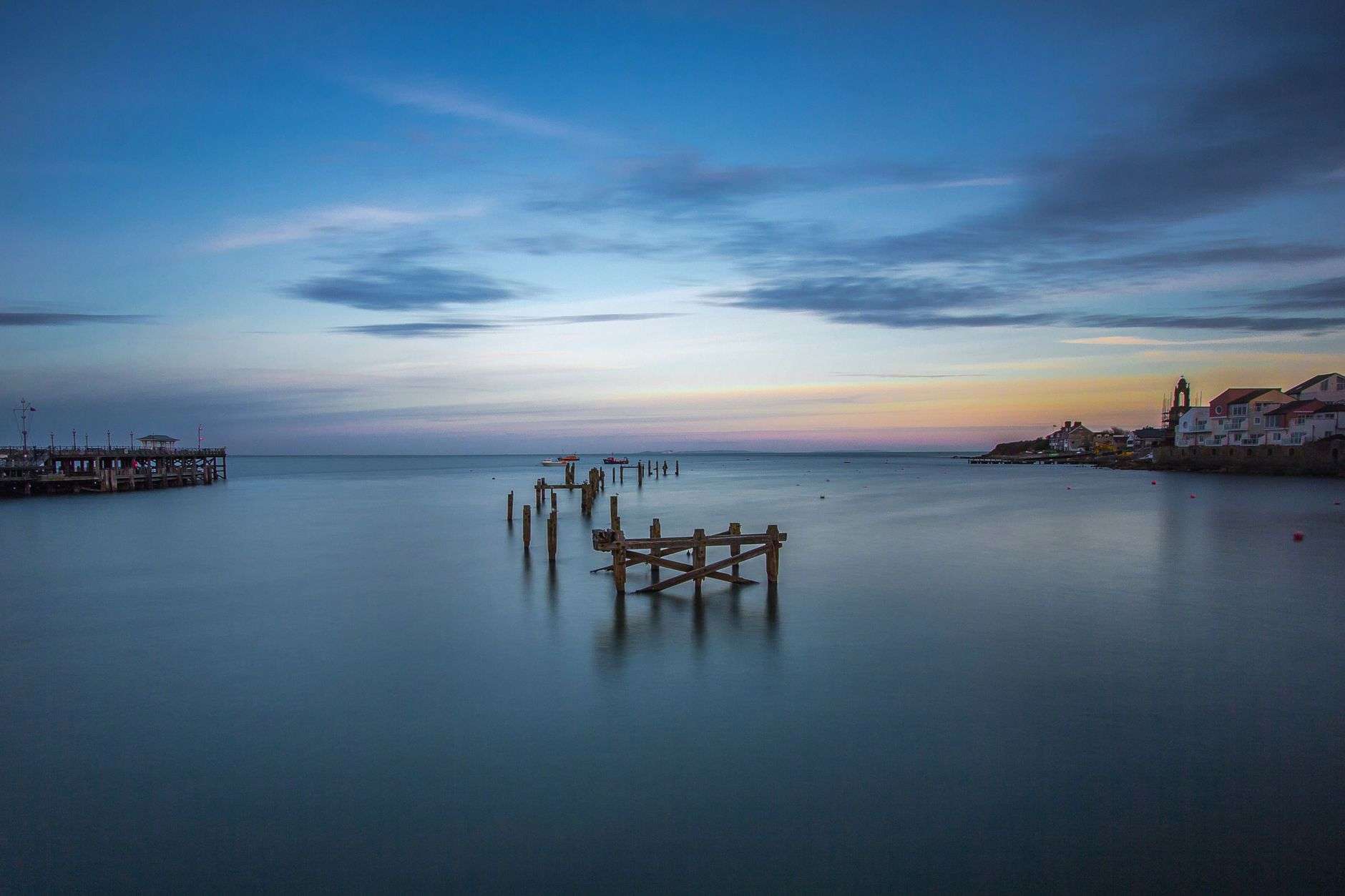
When William Strickland talks about Mobile Bay, he borrows a line from his old football coach. “If you want to be good, you don’t have a lot of choices because it takes what it takes,” Nick Saban used to say. Strickland, the Mobile Baykeeper executive director since June 2022, applies the same philosophy to one of the most biologically rich and heavily pressured estuaries in the country: the problems are serious, the fixes are known, and success will require sustained effort from everyone.
In a February 2024 interview, Strickland laid out his background, the challenges facing coastal Alabama’s waters, and the four priorities he believes would bring Mobile Bay back to health. His message, delivered with an engineer’s precision and a coach’s optimism, is ultimately one of hope.
A New Leader for a Longtime Watchdog
Mobile Baykeeper was founded in 1997 and is part of the international Waterkeeper Alliance, a network of organizations that serve as advocates and monitors for specific bodies of water. For more than two decades, the group was closely identified with Casi Callaway, its longtime executive director, who stepped away in 2021 to take on a newly created chief resilience officer role.
Strickland took the helm the following year. Before long, he was making the rounds to community groups across the region, including a presentation to the Point Clear Property Owners, explaining where the organization was headed.
From Tuscaloosa to the Crimson Tide
A Tuscaloosa native, Strickland played quarterback at Northridge High School and switched to receiver when he was recruited as part of Nick Saban’s second freshman class at the University of Alabama. “During my football experience, I learned a lot about leadership from Nick Saban,” he said.
He earned a civil engineering degree with a minor in environmental engineering from Alabama. His love of the outdoors, though, came from his grandfather, Bill Strickland, an avid turkey hunter who took him hunting and fishing in Sumter County in West Alabama.
“He was very involved in the Wild Turkey Federation. He was a big conservationist. He told us that we shouldn’t eat the fish we caught because of what the people had done upstream,” Strickland said. “I learned to be thoughtful about what we do to affect our neighbors.”
A Winding Road to Mobile
After college, Strickland worked for an environmental consulting company on industrial projects. Two years in, he was disillusioned. “The projects I was involved in were sometimes contentious, and we were charged with overseeing that the minimum requirements were met, and no more. I decided it wasn’t for me and took a year off and did a summer in Europe. I shifted my focus to faith-based work in South Asia: India, Bangladesh, Nepal, and more.”
He later joined Mission ONE, based in Phoenix, Arizona, working on community development and cross-cultural partnerships with locally led church organizations in Africa, Asia and the Middle East. “The communities we worked with had the answers about best practices to build clean water wells. We were there to help facilitate resources and get as much done as possible.”
Life in Phoenix offered rock climbing, whitewater rafting on the Colorado River and fly fishing. Along the way, Strickland earned a master’s degree in theology; his longest paper was on stewardship and living in harmony with the rest of creation.
Then came two turning points: the COVID-19 pandemic and his grandfather’s death. Wanting to be closer to home, he saw the opening at Mobile Baykeeper. “I moved here for this job and started in June 2022.”
What Makes Mobile Bay Special, and Vulnerable
Strickland describes the stakes in stark terms. “The Mobile River Delta has the fourth largest volume of water flowing in the United States. That’s huge. We are also one of the most biologically diverse places in the world.”
The Mobile-Tensaw Delta, where the Mobile and Tensaw rivers and their distributaries fan out above the bay, is often called America’s Amazon. The watershed that drains into Mobile Bay covers much of Alabama and parts of Mississippi, Georgia and Tennessee, and the region is renowned for its diversity of freshwater fish, turtles, mussels, crayfish and plants.
“Yet we have more industrial input of known toxics than most places in our nation,” he said. “That plus sediment, sewage, and nutrient pollution put a lot of pressure on our ecosystems and eventually human health.”
When he took the job, Strickland said, the organization needed to articulate its core values. “We wanted to focus on the biggest issues and opportunities, and we needed to focus on the future.” Mobile Baykeeper, he said, strives to be scientifically accurate and culturally relevant. “There are no easy wins, but we do have answers to successfully protect, preserve, and restore, especially clean water, for future generations.”
The Science of Nutrients, Seagrass and Oysters
One of Strickland’s central concerns is nutrient pollution, largely nitrogen and phosphorus from sources such as fertilizer runoff, wastewater and stormwater. “As it stands, you can put as many nutrients as you want into the water,” he said, noting that Alabama has zero nutrient criteria. “Nutrients create the algae blooms that can suck oxygen out of the water and prevent seagrasses from growing. Without vegetation there is nothing to stabilize sediment, thus destroying natural oyster beds that filter the water and keep it clean. This is also the natural fisheries habitat.”
That chain reaction is well documented in estuaries around the world. Excess nutrients feed algae; the algae cloud the water and, when they die and decompose, consume dissolved oxygen, sometimes producing low-oxygen zones harmful to fish and shellfish. Seagrass loses the sunlight it needs, and without its roots holding sediment in place, the water grows murkier still. Oysters, which can filter large volumes of water, struggle when their reefs are smothered.
Can the damage be reversed? “Absolutely!” Strickland said, pointing to Tampa Bay, where seagrass recovered after the business community came together to fix the problem. “Seagrass is an answer to clear water and abundant sea life.”
He also cites historian Jack Davis’s Pulitzer Prize-winning book The Gulf. “People used to live in harmony with the land,” Strickland said. “If we’ve done as much damage to our environment in a generation, we can undo it in a generation.”
Regulation and Accountability
Strickland does not mince words about state policy. He said Alabama has the least regulation and the highest pollution rates among its neighboring states. “We are 30 years behind. Our State regulations are well below the Federal recommendation for toxics, nutrients, and development practices. We need much better wetland protection and enforcement of sewage overflows.”
He was sympathetic to the Alabama Department of Environmental Management, the state’s environmental regulator. “They are underfunded and overworked. Alabama is often the least-funded environmental agency per capita in the United States. Elected officials direct the people who are responsible. Instead of working for the common good, it seems they are working to benefit the few. We must hold our public officials accountable.”
Under the federal Clean Water Act, states set water quality standards and issue discharge permits, subject to Environmental Protection Agency oversight. That framework gives state agencies and legislatures considerable say over how strictly pollutants such as nutrients are regulated, which is why advocacy groups focus so much attention at the state level.
Four Priorities for a Healthier Bay
Asked what needs to happen, Strickland listed four things:
- Decrease sedimentation in Mobile Bay to promote clean water and healthier fisheries.
- Stop allowing toxics to enter waterways, which makes it unsafe to swim and fish.
- Decrease the nutrients that create algae blooms that prevent seagrasses from growing.
- Stop sewage spills and overflows that contaminate the water and the fish people eat.
“If we do all that, we will start to see the health of the water come back. It’s a process of trial and error. Right now we aren’t even allowed to try.”
The organization has been building capacity to pursue those goals. “By investing in our field research team, we’ve selected about a dozen important projects to address. Our 2023 budget doubled, and we’ve more than tripled our private donations,” he said. “We are seeing people coming to the table that want to see this situation fixed. They are ready for a change. It’s encouraging.”
Defining Success and Getting Involved
For Strickland, the finish line is simple. “We will know we are successful when no one has to ask if it’s safe to swim or if the fish are safe to eat.” He believes living shorelines can return within the next 15 years. “People are ready for a change. My friends who hunt in the Delta feel that way. If you want healthy water, we can do something about it, but it takes what it takes.”
His advice for residents is practical: “Make small choices every day. Educate yourself. Give us, and organizations like us your support. Make your voice heard. Finally, get involved and write or call your public officials and let them know that this is not okay.”
“If we want our children and grandchildren to inherit healthy waters,” he said, “we don’t have a lot of choices because it is going to take what it will take.”