

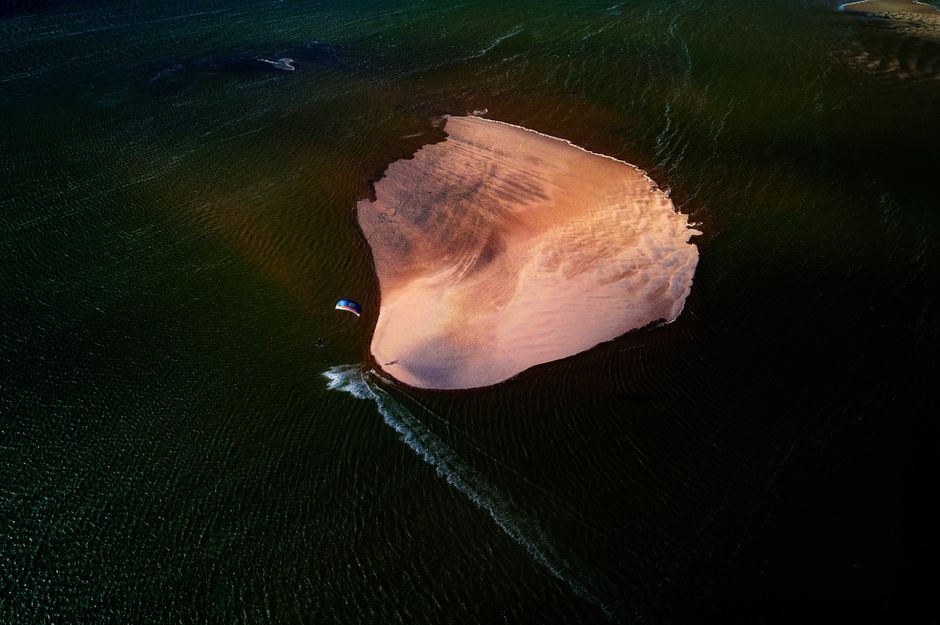
Little Dauphin Island, the small barrier island that shields Dauphin Island’s eastern end and one of its most important boat ramps, will get a $13 million restoration paid for with National Fish and Wildlife Foundation grants — and with sand dredged from the very ship channel that keeps the Port of Mobile open.
Mobile County commissioners learned of the award following their Tuesday meeting, and a press release issued Wednesday detailed a project that will rebuild roughly 130 acres of degraded beach and dune habitat using material dredged from the Mobile Harbor Ship Channel Operation and Maintenance Project. Instead of being piped offshore or sprayed into the bay, the dredged sand will be put to work rebuilding an island that storms have been slowly erasing.
Two Grants, One Project
The $13 million comes through two separate grants administered by the National Fish and Wildlife Foundation. The larger share — $10 million — comes from the Gulf Environmental Benefit Fund, established with money from the settlement of the 2010 Deepwater Horizon oil spill to pay for restoration projects across the Gulf states. The remaining $3 million comes from the Coastal Resilience Fund, which Congress created to help coastal communities recover from and prepare for storms, with Hurricane Michael’s 2018 devastation among the catalysts for its creation.
Layering two funding sources is common in large restoration work, and it reflects the reality that barrier island projects are expensive, technically demanding and rarely eligible for a single revenue stream. The grants fund the construction; the material itself comes from the Army Corps of Engineers’ routine dredging of the Mobile Harbor shipping channel, which has to be cleared continually to keep the 50-foot-deep channel open for the massive cargo vessels that call on the port.
Why Little Dauphin Island Matters
Little Dauphin Island sits just north of Dauphin Island’s East End Beach, and though it appears on maps as little more than a sliver, it does an outsized amount of work for the coast. According to the press release, the island protects more than 800 acres of estuarine habitat — the mixing zones where freshwater meets saltwater and where much of the Gulf Coast’s marine life begins.
Those habitats support migratory birds, shorebirds, fish and other coastal wildlife, including the federally protected piping plover, a shorebird whose Gulf Coast stopovers are closely monitored by biologists. Part of the island is also protected within the Bon Secour National Wildlife Refuge.
The island is also critical infrastructure of a different kind. It preserves an important navigation channel used by commercial, charter and recreational boaters, and it guards local infrastructure including the Billy Goat Hole boat ramps and the nearby navigation channel. As the island erodes under repeated storm damage, all of that protection thins out — leaving Dauphin Island more exposed to wave energy and storm surge, and boaters with a less reliable passage to the Gulf.
“Little Dauphin Island is much more than a barrier island. It protects critical habitat and preserves an important navigation channel for commercial, charter, and recreational boaters, supporting the local economy by providing more direct access to the Gulf,” District 3 Commissioner Randall Dueitt said in a statement. “This project demonstrates how environmental restoration and economic development can work hand in hand through strong partnerships and beneficial use of dredged material.”
Beneficial Use, in Practice
The project is a showcase for a concept that has become the defining argument in Alabama’s dredging debates: beneficial use. Rather than treating material dredged from the ship channel as waste to be discarded, beneficial use projects put that sand and sediment to work rebuilding shorelines, marshes and islands.
Restoration of the coastline has become a focal point for the Mobile County Commission, which has partnered with the U.S. Army Corps of Engineers to route material from federal navigation projects into restoration work. For the Corps, which must find somewhere to put the millions of cubic yards it dredges, and for the coast, which needs the sediment, the partnership answers two problems at once.
“Healthy barrier islands are a first line of defense for Alabama’s coast, and Little Dauphin Island plays an important role in protecting Alabama’s coastal ecosystems while supporting boating, fisheries and recreation,” Alabama Department of Conservation and Natural Resources Commissioner Chris Blankenship said in a statement. “ADCNR has been advocating with NFWF, Mobile County and the Corps of Engineers on this project for several years. When state, federal and local partners work together to achieve a shared goal, large-scale projects like this that no one entity can accomplish alone are possible.”
What the Island Protects
Dauphin Island’s mayor, Jeff Collier, framed the project in terms of community continuity. “Little Dauphin Island is part of what makes this community so special. Restoring it helps protect the place we call home while preserving our coast for future generations,” he said in a statement.
Barrier islands absorb wave energy before it reaches the mainland, and every acre of dune and beach they lose transfers that energy to the sheltered waters, marshes and homes behind them. For Dauphin Island — a community that has rebuilt repeatedly after hurricanes — the difference between a healthy Little Dauphin Island and an eroded one is measured in storm damage and in the durability of the estuaries that sustain the island’s fishing economy.
Restoration work of this scale also carries ecological benefits beyond erosion control. Rebuilt beaches and dunes give shorebirds nesting and foraging habitat that has been shrinking along the northern Gulf Coast, and the reconnected island complex can help estuarine grasses and shallows recover in the waters the island shelters.
What Comes Next
The restoration will proceed with the county working alongside the Corps of Engineers and the grant administrators, with dredged material from the ship channel forming the building blocks of the new beach and dune profile. Similar beneficial use projects, including earlier work along Dauphin Island’s shoreline, have demonstrated the technique; the challenge in past efforts has often been funding and logistics rather than engineering.
With $13 million committed and a sediment source identified, Little Dauphin Island’s rebuild moves from concept to project — an example of what the region’s leaders hope will become standard practice for every cubic yard pulled from the Mobile Harbor channel.