

More than 75 years after he was reported killed in one of the coldest, deadliest battles of the Korean War, an Alabama soldier is finally coming home. U.S. Army Pfc. Joseph “Dile” Chancery, born in Brewton and raised in rural Escambia County, will be laid to rest with full military honors on August 8 in the small community of Lottie, near Atmore, after federal scientists confirmed his identity through modern forensic testing.
The Defense POW/MIA Accounting Agency announced on March 24, 2026, that it had positively identified Chancery’s remains, closing a case that had stretched across three-quarters of a century. Chancery was one of twelve children born to George Leonard Chancery and Martha Jane Posten Chancery on June 26, 1930, growing up alongside seven brothers and four sisters in the countryside outside Brewton. He entered the Army from Alabama and was assigned to Battery A, 57th Field Artillery Battalion, 7th Infantry Division.
On November 28, 1950, Chancery’s unit came under overwhelming attack from Chinese forces near the Chosin Reservoir in North Korea, one of the most brutal engagements of the entire war. Soldiers from Batteries A and B fought in hand-to-hand combat in sub-zero temperatures to keep their artillery positions from being overrun. Chancery was reported killed in the fighting, but because his body could not be recovered from the battlefield, the Army was left with no choice but to classify him as missing in action.
His case sat unresolved for decades even after 1954’s Operation GLORY, when the opposing sides exchanged thousands of remains recovered from the Korean War. American investigators received sets of unidentified remains they could not match to Chancery or hundreds of other missing service members using the forensic tools of the era. In 1956, 848 sets of those unidentified remains, including what would later prove to be Chancery’s, were interred at the National Memorial Cemetery of the Pacific in Honolulu, known widely as the Punchbowl.
The case finally moved forward in 2021, when DPAA’s Korean War Disinterment Project exhumed a set of remains from the Punchbowl for renewed forensic examination. Using DNA analysis, anthropological study, dental comparison and corroborating historical records, agency scientists were able to confirm what the family had hoped for generations: the remains were those of Pfc. Joseph Dile Chancery. Two of his siblings had given DNA samples years earlier, believing science would eventually make identification possible, and their willingness to participate proved decisive in closing the case.
Michael J. Mee, chief of identifications for the Army’s Past Conflict Repatriations Branch at Fort Knox, Kentucky, said Chancery’s case fits into a larger, ongoing mission. “Since 1982, the remains of over 450 Americans killed in the Korean War have been identified and returned for burial with full military honors. Under 7,500 Americans are still unaccounted-for from the Korean War, including 144 sons from Alabama,” Mee said. “It’s wonderful that PFC Joseph ‘Dile’ Chancery, missing since 28 November 1950, will be buried on Saturday, 8 August, in the rural community of Lottie, near Atmore, Alabama.”
Among the family’s most treasured keepsakes is a letter dated December 6, 1952, from Pfc. Isreal Samuels, who served with Chancery in Battery A. Writing to the family from Fort Benning, Georgia, Samuels offered one of the only firsthand accounts they would ever receive of Dile’s final moments: “We were in the same Btry, and he was a good soldier. I hate to tell you this but he was killed at the Chosin Res. in North Korea. I was with him at the time of his death, that is all there is no more to tell. If you feel like writing to me I will answer all letters.”
Every one of Chancery’s brothers and sisters passed away before his identification was confirmed, including his youngest surviving sibling, Edward Lamar Chancery, who died in November 2025. Still, the family’s faith in his eventual return never wavered. “For generations, our family prayed that Dile would come home,” said Leaster Chancery Kelly, a niece. “While none of his brothers or sisters lived to see this day, they never lost faith that America would find him. After more than 75 years, that promise was finally fulfilled. My father, Marvin Chancery, waited his entire life hoping his brother would come home. I know he would be proud that America kept its promise.”
Before his burial, Chancery’s family will be presented with his Purple Heart during a community ceremony hosted by the Bay Area Veterans Commission and the South Alabama Veterans Council on Friday, August 7, at the Daphne Civic Center. That event, part of a broader “Saluting Our Nation’s Purple Heart Recipients” ceremony that will also honor dozens of other combat-wounded veterans, is open to the public. Col. Steve Carey, USAF (Ret.), president of the Bay Area Veterans Commission, said presenting Chancery’s medal to his family carries special weight. “It is an honor to present Pfc. Chancery’s Purple Heart to his family,” Carey said. “In addition to honoring Pfc. Chancery, we will recognize approximately 40 other Purple Heart recipients. We encourage the public to attend—especially young people—so they can witness firsthand the sacrifices made by the men and women who have defended our nation’s freedom.”
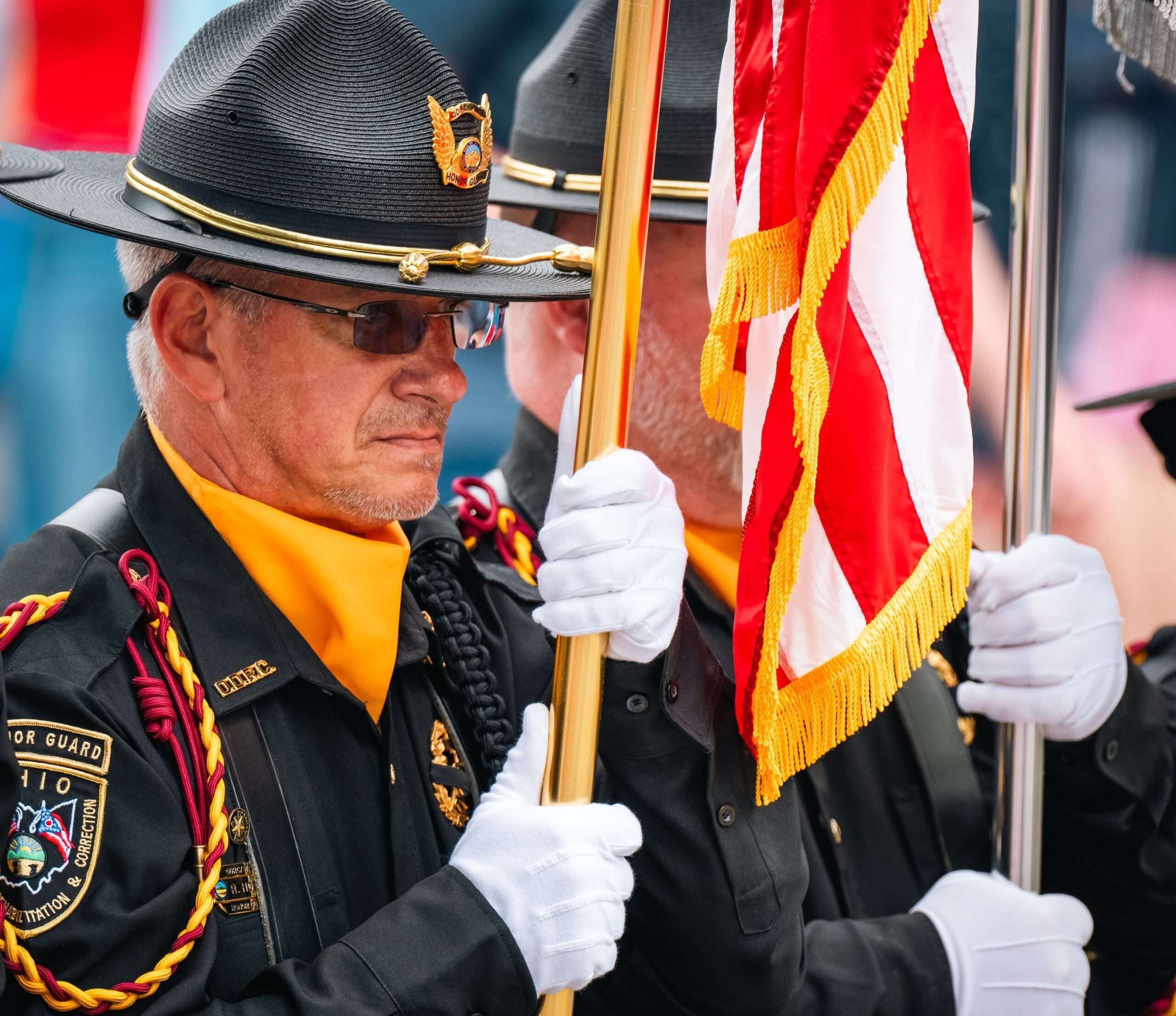
Chancery will be buried with full military funeral honors at 10 a.m. on Saturday, August 8, at Lottie United Methodist Church Cemetery near Atmore, alongside his brother George Donald Chancery, his sister Gladys Chancery, and his parents. Retired Rear Admiral Phillip Lee Jr. of the U.S. Navy will officiate the graveside service, which is open to the public, with a luncheon for family, friends, veterans and the community to follow at the Lottie Volunteer Fire Department next to the cemetery.
Chancery earned a lengthy list of military honors during his service, including the Purple Heart, the Army Good Conduct Medal, the National Defense Service Medal, the Korean Service Medal with three bronze service stars, a Navy Presidential Unit Citation, the United Nations Service Medal, and South Korea’s own war service and presidential unit citation medals. He is memorialized on the Courts of the Missing at the Punchbowl in Honolulu and on the Korean War Veterans Memorial Wall in Washington, D.C. Following his burial, a rosette will be placed beside his name on the Courts of the Missing, marking him as fully accounted for at last.
Chancery’s homecoming adds to a small but steady stream of closure for Korean War families across Alabama and the nation. DPAA continues its worldwide search for the more than 81,000 Americans still unaccounted for from World War II, the Korean War, the Vietnam War, the Cold War and other conflicts, more than 7,300 of them from Korea alone. For the Chancery family, after generations of hoping and waiting, that long search has finally reached its end.
Brewton, the seat of Escambia County in south Alabama, is a small city that has produced its share of military veterans over the years. Brewton-Born soldiers who served in World War II and the Korean War are particularly remembered in local memorial events.
The Defense POW/MIA Accounting Agency, the federal agency responsible for locating and identifying the remains of missing service members, has worked for decades to recover and identify the remains of Americans who went missing in service. The agency uses historical records, forensic science and family DNA to make identifications.
When the remains of a missing service member are identified, the family typically arranges for burial in a national cemetery, a state veterans cemetery or a private family plot. Burial services for identified service members often include military honors, with full military funeral details and the presentation of the American flag to the next of kin.
Local governments and community partners are working through the implications of the situation, and several follow-up meetings have been scheduled for the coming weeks. Members of the public who want to weigh in on the matter can find the meeting dates on city and county websites, and written comments can be submitted through the standard channels used by the relevant agencies. Local news outlets will continue to cover the story as it develops.
Across south Alabama, similar issues are being addressed in other communities, and the lessons learned here are likely to inform how those communities approach their own challenges. Local officials have indicated they are in regular contact with counterparts in neighboring cities and counties, and they expect to share best practices as the situation continues to evolve.
The agencies involved in the matter have committed to keeping the public informed as the work progresses, and residents who want to receive updates directly can sign up for email or text alerts through the relevant city or county websites. Local community organizations have also agreed to share information as it becomes available, and several have scheduled public forums in the coming weeks to give residents a chance to ask questions of the officials involved.
For background, readers can consult the official websites of the relevant agencies, the local newspapers that have covered the story, and the public-meeting archives that document the prior deliberations on related topics. The combination of those resources should give residents a thorough understanding of how the current situation developed and how the agencies and elected officials are approaching the decisions that remain.