

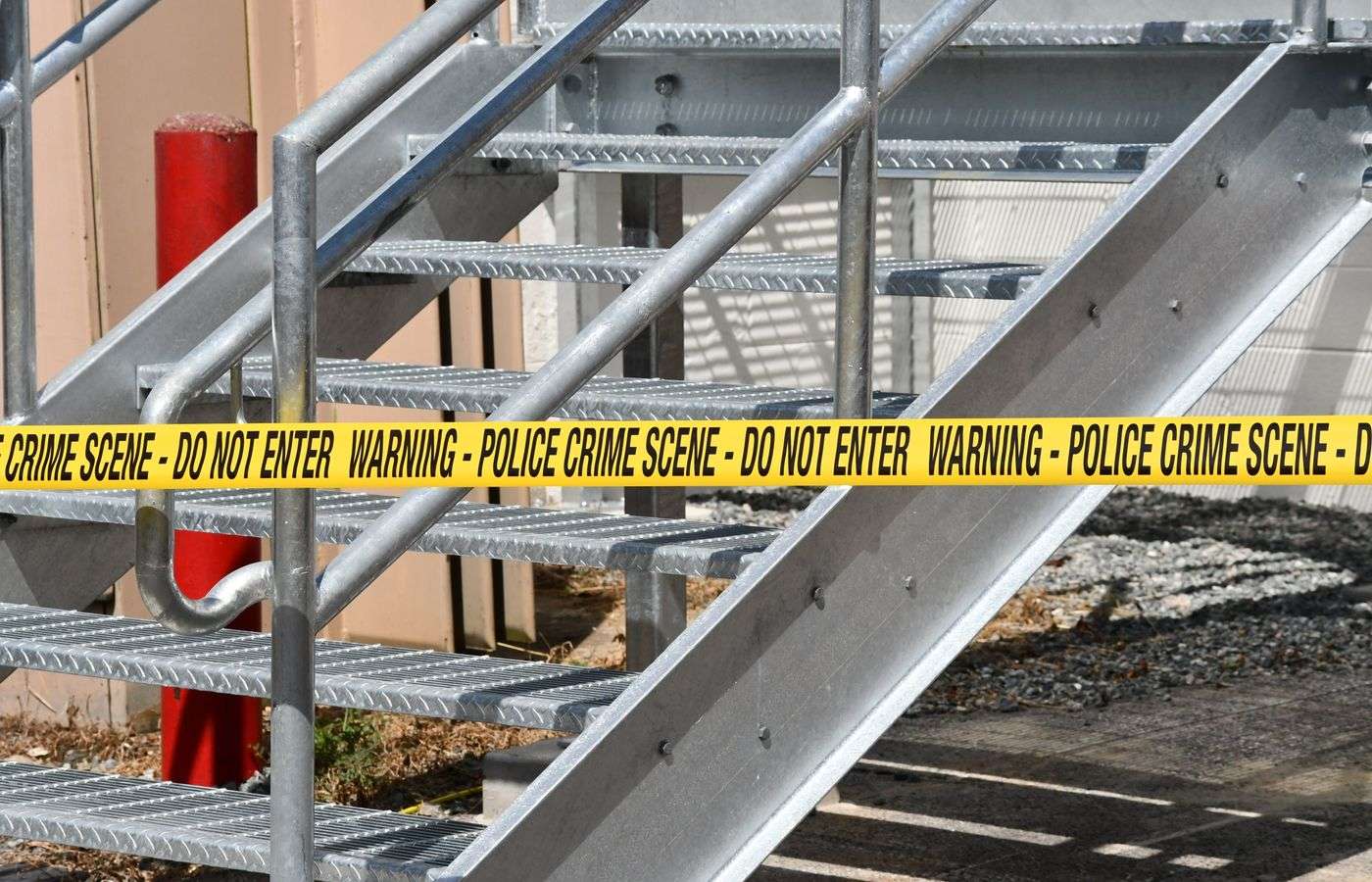
Update, July 27, 2026: Mobile Police have identified the victim as 67-year-old Roger Sumlin and say a subsequent autopsy determined he died from an accidental fall, not a homicide as initially feared when officers found him with injuries inside his Murray Hill Court home. Officers had responded to the 1200 block of Murray Hill Court around 11:40 a.m. on July 24 for a death investigation that was briefly treated as a homicide while detectives worked to determine what happened. The original report on the initial investigation continues below.
The autopsy’s conclusion brings a three-day investigation to a close with answers for the neighborhood and for the family of the man found in his home that Friday morning. What began with the uncertainty of a suspected homicide ended with the determination that Sumlin’s death was a tragic accident — a result investigators pursue by examining the scene, the injuries and the circumstances before ruling out foul play.
Deaths from falls are a significant cause of fatal injury among older adults, and emergency physicians note that head injuries sustained in a fall can prove fatal even when the victim lives alone with no witnesses to the event. That reality often makes initial death investigations ambiguous: officers arriving to find a person with unexplained injuries must treat the scene as suspicious until the physical evidence and medical examination say otherwise.
The original report on the initial investigation continues below, reflecting what Mobile Police knew — and had not yet determined — in the first hours after the response.
Mobile Police are investigating a homicide after officers were called to a residential area in the 1200 block of Murray Hill Court on Friday morning, according to the department. Officers responded to the scene shortly after 11:30 a.m. following an initial report of a death investigation.
As detectives gathered more information, the case was upgraded and is now being treated as a homicide, Mobile Police said. Investigators remain on the scene and continue working to piece together the circumstances surrounding the death.
How Death Investigations Unfold
When officers respond to a report of an unattended death, the department’s first hours follow a standard sequence. Patrol officers secure the scene, detectives and crime scene units document the location and any signs of disturbance, and the medical examiner’s office takes custody of the body for examination. Only after those steps can investigators begin to distinguish an accident from a crime.
The upgrade to a homicide investigation, announced the same morning, reflected the working assumption detectives follow when injuries cannot immediately be explained. Classifying a death as a homicide investigation is a procedural posture, not a final finding — it directs resources toward preserving evidence and interviewing anyone who may have information, and it can be reclassified once forensic results arrive.
Police have not released the identity of the victim, a possible motive, or information about a suspect as the investigation continues. Mobile Police said additional details will be released once they become available, but no further information is being shared publicly at this time while the investigation is active.
The restraint is deliberate and standard practice. Investigators hold back identifying details, causes of death and scene specifics because premature release can compromise interviews, tip off potential suspects or cause pain to family members who have not yet been fully notified. In cases that later prove accidental, that same caution protects the family’s privacy through the most difficult days of the process.
The Murray Hill Court Neighborhood
Murray Hill Court is located in a residential section of Mobile, a neighborhood of homes where the sight of police cars and crime scene tape on a Friday morning drew immediate attention from nearby residents. Neighbors reported the heavy presence of investigators through the late morning and early afternoon as detectives worked the scene.
Police have not indicated whether the case is connected to any other incidents in the area. The absence of any announced threat to the neighborhood, and the autopsy’s subsequent finding of an accidental fall, resolved the concern that often grips a community in the hours after an unexplained death is discovered.
Deaths inside private homes in established neighborhoods like this one are typically discovered by family, friends or neighbors who check on someone after failed contact. The 11:30 a.m. response time suggested a morning discovery rather than an overnight event, consistent with someone being found after concerns mounted through the morning.
What Comes After a Finding of Accidental Death
When an autopsy rules a death accidental, the investigation closes from a law enforcement standpoint, but the paperwork of the finding matters to the family in practical ways. The cause and manner of death recorded by the medical examiner become part of the official record used in death certificates, insurance matters and estate proceedings, and a classification of accident — rather than homicide or undetermined — spares families the years of legal uncertainty that a criminal case would carry.
For a 67-year-old man living in his own home, the finding also speaks to a broader public health issue. Falls among older adults are among the leading causes of injury death nationwide, and health officials consistently encourage families to check on older relatives, review home hazards such as loose rugs, poor lighting and absent handrails, and consider medical alert devices for those living alone.
Community members who knew Sumlin were left to reconcile the alarming first reports with the quieter truth that emerged three days later — a man who died alone in an accident, not a victim of violence, in a neighborhood that had feared the worst.
How to Provide Information to Mobile Police
Anyone with information related to the case is asked to contact the Mobile Police Department’s non-emergency line at 251-208-7211. Tips can also be submitted anonymously online at mobilepd.org/submit-anonymous-tip.
The department’s anonymous tip portal allows residents to pass along information without giving their names, a channel that detectives rely on in cases where witnesses may be reluctant to come forward. Even in investigations that conclude as accidents, information from neighbors and family members helps investigators complete the timeline of a person’s final days and confirm the circumstances of death.
The non-emergency line remains the correct channel for information about concluded or ongoing cases. Residents are reminded that 911 is reserved for emergencies in progress, and that the department’s investigative units can be reached through the non-emergency number for follow-up questions about any case.
South Alabama News will provide updates on this developing investigation as Mobile Police release additional information.
For the Murray Hill Court neighborhood, the July 24 response and its July 27 resolution bookended a weekend of uncertainty. The department’s final account — a 67-year-old resident, an accidental fall, no crime — closed the case with the kind of answer no one hopes for but which, at least, leaves a community its peace.
Serving Mobile’s Neighborhoods
The Murray Hill Court response illustrates the range of calls the Mobile Police Department handles on any given day. The department patrols neighborhoods across the city, from downtown’s entertainment district to residential enclaves like this one, and death investigations are among the most resource-intensive calls a precinct receives — pulling patrol officers, detectives, crime scene technicians and command staff into a single coordinated response.
Each stage of the response involved different units. Patrol officers arrived first, secured the home and began canvassing; detectives took over the scene as the case was upgraded; and the department’s public information function kept the flow of updates measured while the investigation remained active. Residents watching from the street saw only the visible layer of a much larger process.
The department’s non-emergency number, 251-208-7211, also serves as the community’s year-round point of contact for concerns that fall short of emergencies — suspicious activity that has already passed, follow-up questions about cases in the news, and requests for extra patrols in neighborhoods experiencing problems.
Fall Prevention and Older Adults Living Alone
The circumstances of Sumlin’s death — an older adult, found alone, after a fall — repeat themselves in communities across the country every day, and public health agencies have built entire prevention campaigns around the pattern. The Centers for Disease Control and Prevention ranks falls as the leading cause of injury-related death among Americans 65 and older, with head injuries and hip fractures accounting for many of the fatalities.
Simple home modifications reduce the risk substantially: securing loose rugs, installing grab bars in bathrooms, improving lighting on stairs, and keeping frequently used items within easy reach. Regular vision checks, medication reviews and strength-and-balance exercise programs also appear consistently in the prevention guidance offered to families with aging members.
For adult children and neighbors of older adults who live alone, the most effective tool remains the most basic: regular contact. A daily phone call or a standing visit ensures that a fall or medical event is discovered quickly, when treatment still changes the outcome — and it spares families the ambiguity that turns an accidental death into a homicide investigation’s first hours.
Sumlin’s death, ruled accidental by autopsy three days after he was found, leaves his neighborhood with that lesson and his family with the official record that he died as investigators ultimately determined: from a fall, and from no one’s hand.