A Who’s Who of Mobile Lined Up Behind Sam Jones — Including Two Men and Women He Beat
Nearly 150 hosts, at $1,000 a couple, signed on to a December reception for Mobile Mayor Sam Jones — among them Ann Bedsole and John Peavy, two rivals from the 2005 race that made him the city's first black mayor.
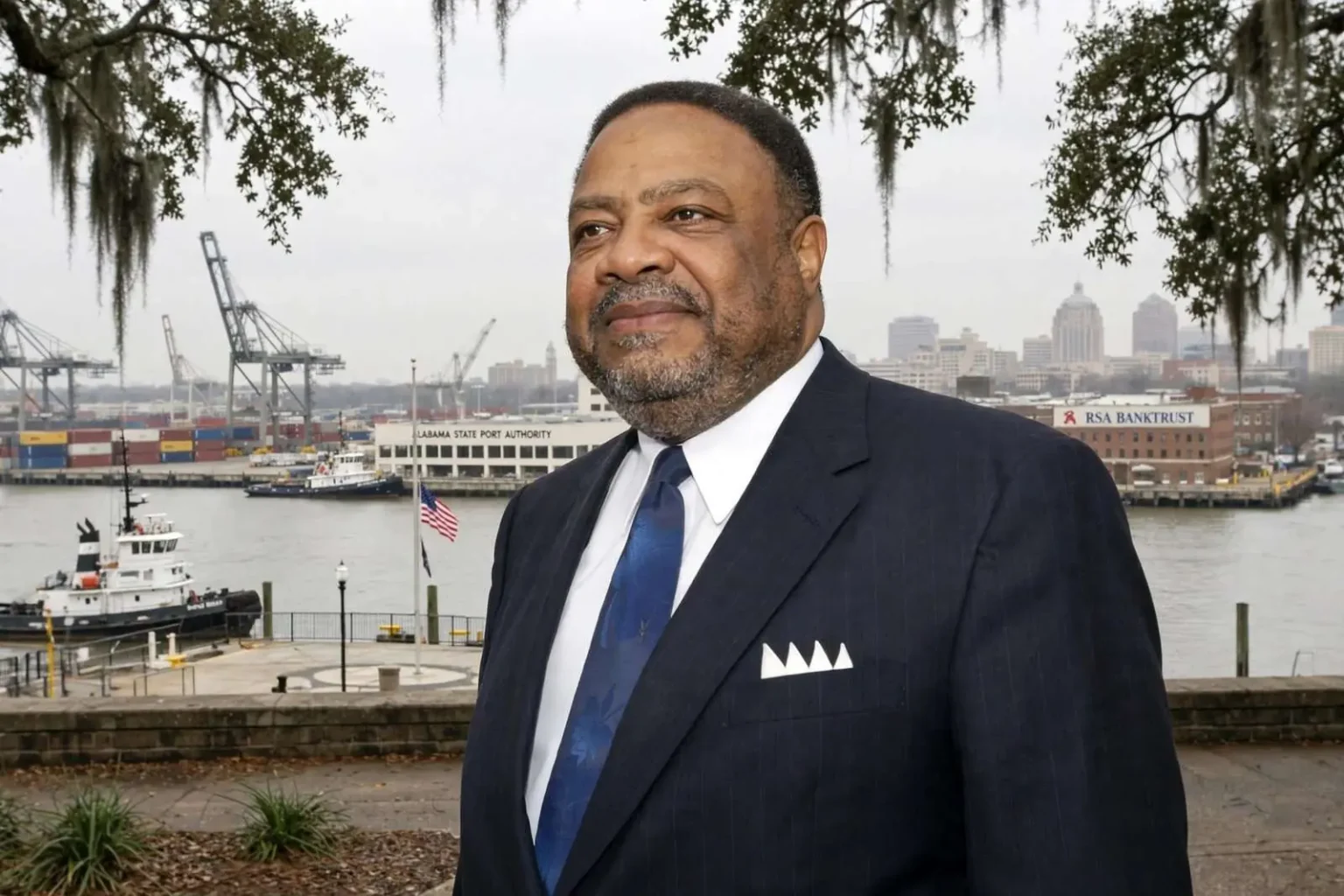
Nine months before Mobile voters return to the polls, the city’s business, civic, professional and political establishment has arranged itself behind Mayor Sam Jones in a manner that leaves little to the imagination.
A fundraising reception for the mayor is set for Thursday, Dec. 11, from 5:30 to 7:30 p.m. at the home of Matt and Phyllis Metcalfe. The price is $1,000 per couple. The host committee runs to nearly 150 names — a roster that reads less like a campaign list than like a directory of the people who run things in Mobile.
Old rivals on the host list
The most telling names on it belong to two people who once tried to keep Jones out of the office he now holds. Ann Bedsole and John Peavy both ran against Jones in the 2005 mayoral race. Jones defeated Peavy in a runoff to become the first black mayor in the history of a city founded in 1702.
Three years later, both are listed among the hosts and hostesses inviting Mobile’s donor class to the Metcalfe home on the mayor’s behalf. In municipal politics, few gestures are interpreted more clearly. A challenger who has made peace with an incumbent is a challenger who is not running.
Bedsole, a former state legislator, had been one of the best-known names in Mobile Republican politics for decades before her mayoral run, while Peavy brought his own long history in city government and community affairs. That both would lend their names to the mayor’s fundraiser signaled that the divisions of the 2005 contest — a hard-fought race that required a runoff to settle — had been set aside in the interest of what the host committee saw as a cooperative civic direction.
The roster
The host committee gathers, in one document, most of the strands of civic power in the city. Former Mobile Mayor Mike Dow, whose retirement opened the seat Jones won, appears on it with his wife. So does former U.S. Rep. H.L. “Sonny” Callahan. So does Jimmy Lyons, the director of the Alabama State Port Authority, whose docks were then in the middle of the biggest expansion in their modern history.
The list includes developer and philanthropist Abraham A. Mitchell; businesswoman Celia Wallace; attorney Cecil Gardner; attorney Palmer C. Hamilton; businessman Harris Morrissette; former state transportation director Perry Hand; and Charles Story, the retired executive who had recently described to a civic club the quiet workings of the community’s behind-the-scenes problem-solvers.
Lawyers, doctors, bankers, contractors, shipping executives, ministers and old political hands fill out the remainder. Each name carries its own network: the attorneys who shape the city’s development deals, the bankers who finance them, the shipping interests tied to the port’s growth, and the clergy and civic figures whose presence signals breadth across the city’s neighborhoods. A committee assembled this way does not merely raise money; it advertises who is included in the governing conversation of the moment.
Mobile’s municipal elections were scheduled for Tuesday, Aug. 25, 2009. As the invitations went out, Jones had no announced opposition. That combination — no declared opponent, and a fundraiser underwritten by an establishment broad enough to include the mayor’s former rivals — is how incumbency compounds.
Money raised early does more than pay for signs and television time. It discourages the campaigns that might otherwise require the signs and the television time in the first place. A serious challenger surveying that host list in the winter of 2008 would have found few obvious places to go looking for a check. Fundraising in municipal races depends heavily on the same business and professional networks that populate the Metcalfe invitation, and a challenger who must ask those same donors to fund a run against a popular incumbent faces an uphill climb before the campaign has even begun.
The timing was also a statement about the moment. Mobile in late 2008 was still counting the promise of ThyssenKrupp’s steel complex north of the city, the shipbuilding boom at Austal on the downtown waterfront, and the long campaign to bring aircraft assembly to Brookley. Those projects had been sold to the region as the fruit of cooperation between city hall, the county, the port and the business community.
A crowded, expensive host committee at a private home on a December evening was, among other things, an argument that the cooperation should continue. The steel projects represented thousands of construction jobs and hundreds of permanent positions, and the businesses behind them had a stake in a city government they knew and had helped elect. The reception gave the establishment a vehicle to demonstrate that stake publicly.
Why it mattered
Nine months is a long time in municipal politics, and no campaign season is decided by a single fundraiser. But the December reception accomplished three things at once: it banked early money, it showcased an unusually unified host committee, and it sent a signal of deterrence to any officeholder or newcomer weighing a challenge. In a city where coalitions are built name by name, the invitation itself functioned as a form of campaign infrastructure.
Context for today
Jones, a former Mobile County commissioner, took office in 2005 and would go on to win re-election in 2009 before losing the office in 2013. The fundraiser at the Metcalfe home belongs to the period when his coalition was at its widest — when the people who had run against him, and the people who had funded the people who ran against him, were writing checks in the same direction.
Viewed from the present, the guest list doubles as a portrait of Mobile’s power structure at a hinge moment: Dow’s mayoralty had recently ended, the port was expanding, industrial recruitment was bearing fruit, and the city’s first black mayor stood at the center of an establishment that had, within a single election cycle, gone from opposing him to hosting him. How long that alignment would hold was unknowable in December 2008 — but for one evening, in one living room, it was fully assembled.
The $1,000-per-couple price point placed the event firmly among the major ticket fundraisers of a Mobile municipal cycle, the kind of reception that seeds a campaign’s treasury before a single yard sign has gone up. Early money in a municipal race pays for the unglamorous machinery of a campaign — filing fees, consultants, staff, voter files, an office — and a candidate who starts with a full account enters the spring with options that a late-starting rival simply does not have.
The Metcalfe home itself carried weight in the invitation. Fundraisers at private residences signal a personal endorsement from the hosts, and receptions of this scale require both a house that can absorb a crowd and a couple whose social standing draws the guest list. Matt and Phyllis Metcalfe were by all appearances offering both, lending their home and their names to the mayor’s re-election effort nearly a year before Election Day.
For the broader donor class, the reception compressed what would otherwise be a season of solicitation into a single evening. Rather than fielding separate requests from the mayor’s committee through the winter and spring, Mobile’s business and civic leadership could settle the question in one December visit — and be seen settling it together. The photographs and conversations from such evenings travel through the city’s clubs and boardrooms for weeks, reinforcing the same message the host list already carried in print.
Whatever the motivations of individual hosts — loyalty, gratitude, business pragmatism or genuine enthusiasm for the mayor’s direction — the cumulative effect was the one the text of any such invitation always intends: the appearance of inevitability. In the months between a December reception and an August election, few assets are more valuable to an incumbent than the perception that his re-election has already been arranged.
The December reception also fit into a longer arc of Mobile political history. Municipal elections in the city have long been shaped less by party labels than by coalition-building across neighborhoods, business districts and the city’s civic organizations. A mayoral campaign is assembled block by block — a downtown business faction here, a neighborhood association there, ministers, the port community, the legal bar — and the host committee of a year-before fundraiser is often the first public display of how those pieces are being arranged.
In that sense, the invitation list did more than raise money for a specific evening. It mapped the coalition as it stood in the winter before an election year, and it gave every actor in city politics a document to study. Council members weighing their own futures, potential challengers counting likely donors, and civic groups deciding where to place their energy all had the same answer available in print: the city’s establishment had chosen its candidate.
For Jones, the event capped a remarkable political ascent. A former Mobile County commissioner who entered the 2005 race as neither the establishment favorite nor the best-known name on the ballot, he had won the office in a runoff against Peavy and made history in a city whose municipal story stretches back to 1702. The breadth of the 2008 host list suggested how thoroughly the early skepticism that greeted his election had given way to accommodation across the city’s traditional power centers.
December fundraising receptions rarely decide elections on their own, but they define the terrain on which elections are fought. Nine months out from Aug. 25, 2009, the terrain was defined: an incumbent with no announced opposition, a war chest taking shape, and a host committee that read like the city’s directory — leaving any would-be challenger to contemplate a campaign that would have to be built against nearly all of it at once.