
Bayou La Batre Poised to Hire a Sitting Legislator, and the Mayor’s Cousin, for Development Job
State Rep. Spencer Collier was the front-runner for a $52,000-a-year contract to coordinate economic development for Bayou La Batre, a job to be awarded by Mayor Stan Wright, who is his cousin.
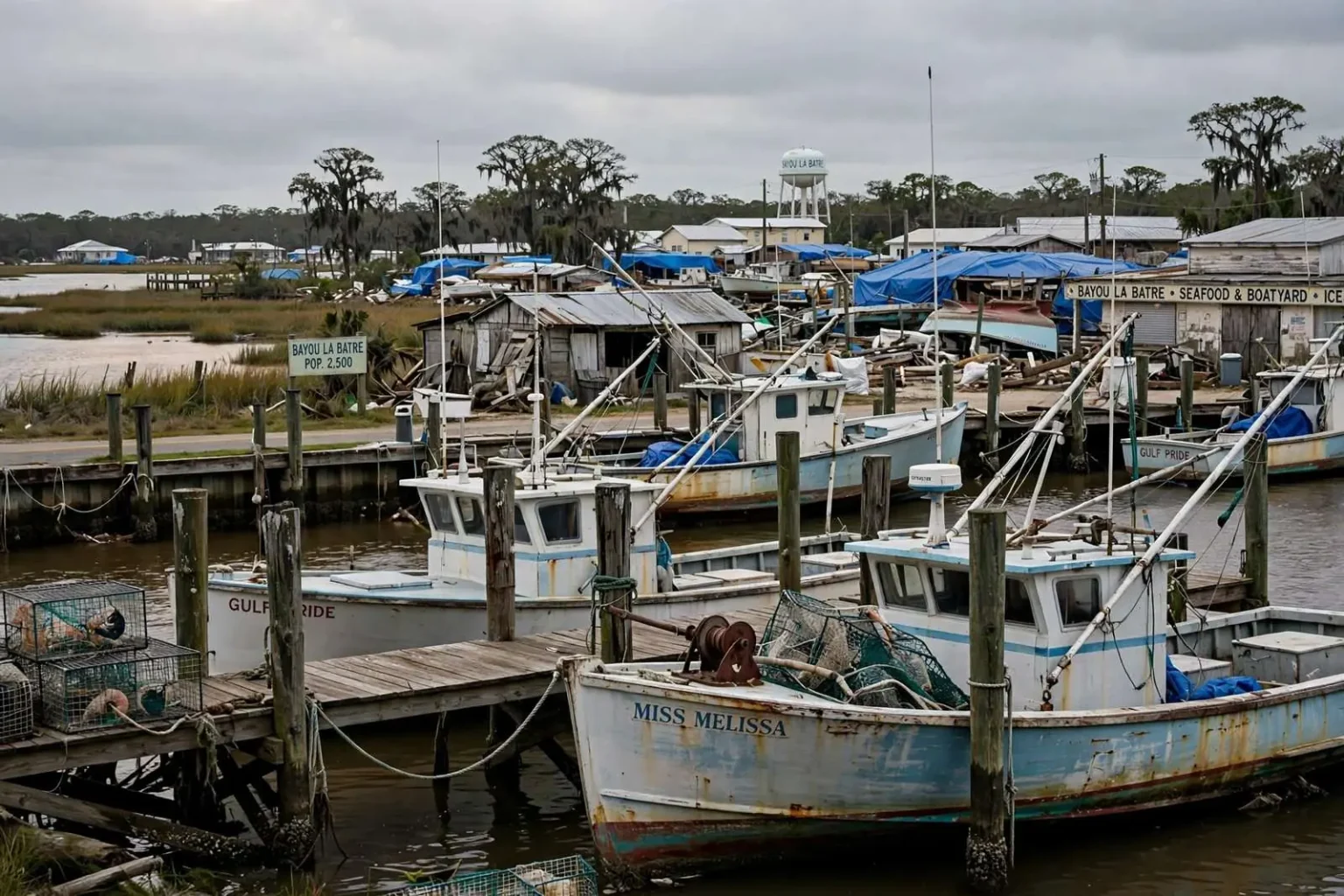
State Rep. Spencer Collier is the front-runner for a contract position coordinating economic development for the city of Bayou La Batre, according to informed sources — an arrangement that would place a sitting member of the Alabama House on the payroll of a city government run by his cousin.
The Bayou La Batre City Council voted roughly two weeks ago to authorize Mayor Stan Wright to make the hire. Under the terms contemplated, the contractor would be paid $52,000 a year. Wright and Collier are cousins.
The arrangement captured, in a single hiring decision, nearly everything that makes small-town Alabama government distinctive: a part-time Legislature whose members need day jobs, a coastal city desperate for an economic engine, a family connection between the two, and an ethics framework permissive enough to allow all of it.
Collier declines to discuss it
Collier said he preferred not to comment on the report for the time being. A former state trooper, Collier was at the time employed as a legal investigator for the Mobile law firm of Cunningham Bounds. He had remarked in recent months on the competing demands of public office and his work with the firm — a familiar complaint in a state whose Legislature is nominally part-time and, in practice, is not.
The complaint has real substance. Alabama’s citizen Legislature meets in regular session for only a portion of the year, but the work of representing a district — constituent casework, interim committee meetings, the constant presence of local government — fills the calendar. Lawmakers must earn a living somewhere, and the question of where is never neutral: a legislator’s employer, clients or contract partners are often the same entities his or her votes affect. In South Mobile County, where the pool of professional employment is small and the network of officials smaller, those overlaps are woven into public life rather than hidden from it.
Who Collier is
Collier, 36, was nearing the end of his second term as the Republican representing House District 105, which takes in south Mobile County, including the Bayou. He and his wife, Melissa, live in Bayou La Batre and have three boys and a girl. He is a graduate of Troy University, where he studied criminal justice and political science.
Within two years he would be one of the more consequential figures in Alabama state government: Gov. Robert Bentley appointed him director of the Alabama Department of Homeland Security in 2011, and he later became secretary of the Alabama Law Enforcement Agency, a post from which his 2016 firing would help trigger the political crisis that ended Bentley’s governorship. In December 2009, he was a legislator looking for a steadier living.
The arc matters for understanding the moment. In 2009 Collier was a second-term backbencher with a law-enforcement background and a young family, weighing how to make his public service financially sustainable. Within half a decade he would run the state’s homeland security apparatus and then its merged law enforcement agency, and his eventual rupture with Bentley — the governor who elevated him — would become a pivotal thread in the impeachment scandal that drove Bentley from office. The Bayou La Batre contract question, looked back at from that distance, reads as a fork: the steadier living he was considering was in the same small city whose fortunes he would be positioned to shape from Montgomery.
Why the Bayou needed a development coordinator
Bayou La Batre in 2009 was a city under sustained economic strain. The seafood industry that gave the town its identity — shrimping, oystering, the processing houses and the boatyards along the bayou — had been battered from several directions at once: cheap imported shrimp, rising fuel costs, and the destruction left by Hurricane Katrina in 2005, from which the city was still visibly recovering.
The numbers behind that strain were structural rather than cyclical. Imported shrimp had collapsed the dockside prices that small Gulf boats depend on; diesel costs had climbed toward record levels for working vessels; and the Katrina surge had destroyed fleets, processing plants and docks that insurance and federal aid only partially replaced. Bayou La Batre’s licensed shrimp boats — once among the largest fleets on the Gulf — had been shrinking for years, and each departing vessel took with it a family income and a share of the city’s tax base.
Federal recovery money had built houses; it had not rebuilt an economy. That distinction defined the town’s predicament after Katrina. Road home repairs, reconstructed homes and restored public buildings could be counted and photographed, but the economic machine that made those homes affordable — steady seafood paychecks, boatyard employment, processing line jobs — required markets and margins, not construction crews. A development coordinator’s job, in that context, was to find something else for the town to do.
Collier said he was already working on several projects, including a natural gas storage hub that he estimated could generate as many as 400 construction jobs beginning in the spring. The proposal fit the moment’s logic: the central Gulf Coast’s energy infrastructure was expanding, and a deepwater bayou with an industrial waterfront, rail access and a working port tradition offered the physical ingredients such facilities require. For a town whose economy had always rested on one harvest — first the sea, later the shipyards that serve the offshore industry — an energy project promised the kind of construction payroll that seafood no longer could.
The city itself had a history of reinvention forced upon it. Bayou La Batre had weathered hurricanes before Katrina, had seen its shrimp fleet decimated by foreign competition, and had been described in national media — and put on screen — as a place where hard coastal labor defines daily life. What the city had never secured was a durable substitute for the seafood economy, and by late 2009 its leaders were willing to consider unconventional arrangements to find one.
The obvious question
The arrangement raised the question that arrangements like it always raise. A sitting legislator, whose votes in Montgomery affect the flow of state money to municipalities, would be paid by a municipality — one led by a relative — to attract investment to it. Nothing in Alabama law as it then stood clearly prohibited such a contract. The state’s ethics statutes were notably permissive about legislators holding outside employment, including with public bodies, and the practice was common enough that it had a name in Montgomery: double-dipping.
The term covered a spectrum. At one end sat legislators on school system payrolls, county commissions and municipal contracts — arrangements disclosed, legal and defended as the inevitable consequence of a part-time legislature in a state with a small professional class. At the other end sat the outright conflicts that periodically became scandals: lawmakers steering public money toward entities that paid them. Alabama’s ethics commission could flag conflicts, and senators and representatives were expected to abstain from votes in which they had an interest, but the burden of avoiding corruption fell largely on the official’s own discretion.
Bayou La Batre’s version had an additional layer in the family connection. A mayor hiring a cousin is a routine event in a town of a few thousand people, where the eligible labor pool for any specialized role is tiny and nearly everyone is related to nearly everyone. But the combination — cousin-mayor, cousin-legislator, public contract, state funding streams — compressed every conflict-of-interest concern Alabama’s reformers had been cataloguing into one small-city hiring decision.
That would change. Within a year of this report, a newly Republican Legislature meeting in special session would pass a package of ethics laws that tightened the rules on legislators’ outside income and on the relationship between public officials and the entities they influence — a package Collier himself would support. The 2010 reforms, passed after an election in which ethical scandals had become the dominant statewide theme, banned or restricted many of the arrangements that had been routine, put teeth into disclosure requirements, and made the phrase “double-dipping” a political liability rather than a shrug.
The episode also illustrates why small coastal cities were such frequent subjects of Alabama’s ethics debates. Municipal contracts of this size rarely attract statewide attention, but the legislative payrolls of part-time lawmakers are built from exactly these arrangements, scattered across dozens of towns where personal relationships substitute for formal structures. Reformers argued that the practice made Legislators accountable to the mayors and boards that paid them; defenders answered that the alternative was a Legislature composed only of retirees and the independently wealthy. Bayou La Batre’s hiring decision, whatever its outcome, sat squarely on that fault line.
For Bayou La Batre, the calculation was narrower and more practical: a city of a few thousand people, with a shrinking tax base and an urgent need for jobs, was hiring the person best positioned in Montgomery to help it find them. The council’s authorization gave the mayor room to make the hire; whether the hire happened, and what it produced, would be measured in the only currency the Bayou had ever counted — boats in the water, boats in the yard, and paychecks in town.