

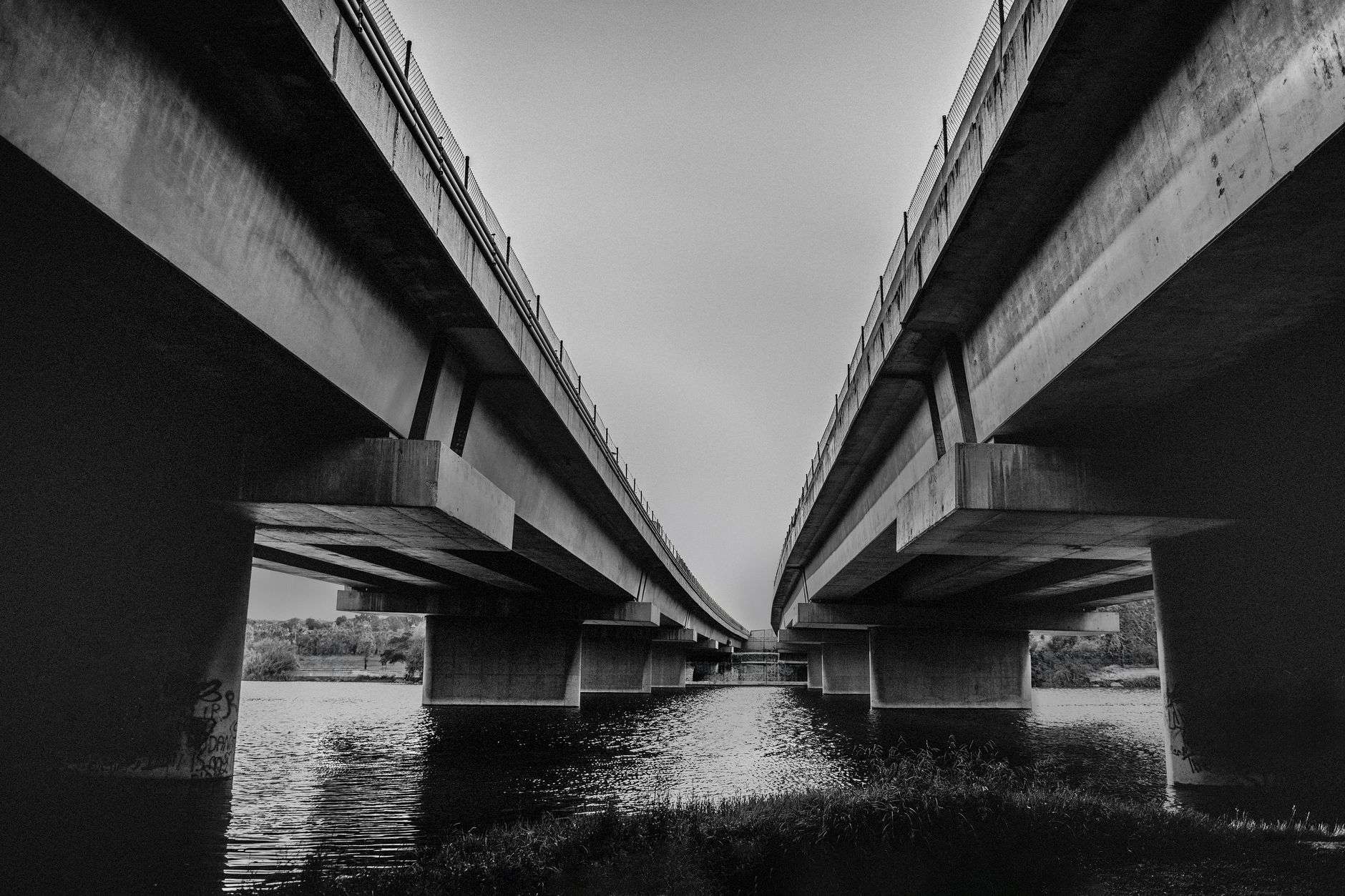
MOBILE, Ala. — After nearly three decades of studies, false starts and a public revolt over tolls, the I-10 Mobile River Bridge stopped being a proposal on Thursday and became a financed construction project.
Alabama sold revenue bonds to investors on Wall Street, raising the last of the money needed to build a six-lane bridge over the Mobile River and take pressure off the Wallace Tunnel. The state also finalized an agreement with the federal government for the low-interest loans officials have described as indispensable to the deal.
A formal announcement from the U.S. Department of Transportation was expected Friday. Alabama Department of Transportation spokesman Tony Harris did not wait for it.
“I can confirm everything is on track to close, with construction of Phase One fully funded,” Harris said by text message.
The financing makes $3.2 billion available to the contractor team selected to do the work. That figure is a guaranteed maximum price, which is the single most consequential term in the entire arrangement: any cost overrun is borne by the contractor, not the state.
What Phase One Actually Builds
The project as it now stands is narrower than the one Alabama first envisioned, and the difference is worth understanding clearly.
The original plan paired a new Mobile River crossing with a new structure over Mobile Bay. Rising costs pushed the bay crossing into a future Phase Two. What gets built now is the river bridge, plus a reworking of the existing Bayway.
Rather than replacing the Bayway, ALDOT will spend roughly $888 million to restripe it — removing the shoulders to create three lanes in each direction, matching the six lanes coming off the new bridge.
Harris was clear that “restriping” undersells the work. The contractor will also build about a mile of new roadway on the Bayway at the point where it merges with the bridge, which will rise 215 feet above the Mobile River.
That 215-foot clearance is the number that has driven the project’s cost and design from the beginning. It exists because the Mobile River is a working shipping channel serving the Port of Mobile, and the vertical clearance has to accommodate the vessels that use it. A lower bridge would be cheaper and would also strand the port.
Where the $3.2 Billion Comes From
The capital stack behind the project draws on four federal and state sources plus toll-backed borrowing:
- $125 million from the federal Nationally Significant Multimodal Freight & Highway Projects program, known as INFRA.
- $550 million from a grant awarded in 2024 under the Bridge Improvement Program.
- $250 million pledged by ALDOT — a figure Harris said will likely end up higher when all is said and done.
- About $2.5 billion in low-interest, federally backed loans under the Transportation Infrastructure Finance and Innovation Act, or TIFIA.
- About $625 million in borrowing to be repaid with toll revenue.
TIFIA is the load-bearing piece. It is a federal credit program that lends to large surface transportation projects at Treasury rates, which are typically well below what a state or toll authority could obtain in the open municipal market. On borrowing of this size, the interest rate difference over the life of the loan is measured in hundreds of millions of dollars. That is why officials have consistently described the TIFIA agreement as crucial rather than merely helpful, and why the deal could not close until it was signed.
Separately, ALDOT has already spent roughly $500 million on the corridor since 1997 — money that went to acquiring rights of way and completing engineering and environmental studies. That spending is what makes the project “shovel-ready” today. It is also a reminder of how long this has been underway: the first dollars went out the door when the Wallace Tunnel was 24 years old.
The Tolls
The toll structure is the part of this project that has generated the most public heat, and the final numbers reflect lessons learned from that fight.
Drivers will pay to use the new bridge or the Bayway. The Causeway and the existing tunnels will remain free — a guarantee that matters, because it means a toll-free route across the bay continues to exist for anyone unwilling or unable to pay.
The rate schedule rewards transponders heavily:
- $3 per crossing for passenger vehicles using an ALGO Pass — the lowest available rate.
- $60 per month for an unlimited-use pass.
- Up to $15.40 for vehicles without a transponder device.
The spread between $3 and $15.40 is not a penalty for the sake of one. Transponder tolling is dramatically cheaper to administer than the alternative, which involves photographing a license plate, matching it to a registered owner, generating an invoice and mailing it. Every toll agency in the country prices that difference into its rates, and the gap here is on the wide side.
For a commuter, the math is straightforward. At $3 a crossing, two crossings a day for 22 working days is $132 a month. The $60 unlimited pass beats that comfortably for anyone crossing regularly, and the break-even sits at about 10 round trips a month.
The $60 unlimited pass also functions as an answer to the objection that sank the project’s first toll proposal in 2019, when a plan carrying a substantially higher per-crossing charge drew organized opposition from Baldwin County commuters and was withdrawn. A monthly cap converts an open-ended expense into a fixed one, which is a different proposition for a household budget.
The Shoulders Are the Trade-Off
The Bayway plan deserves a closer look, because it buys capacity by giving something up.
Adding a third lane in each direction without building new structure means using the pavement that is already there. On the Bayway, that pavement is currently shoulder. Removing it converts emergency stopping space into a travel lane.
The benefit is obvious: three lanes each way instead of two, matching the bridge, at a fraction of the cost of a new bay crossing. The cost is less obvious until something goes wrong. A disabled vehicle on a shouldered highway pulls off. A disabled vehicle on a shoulderless elevated causeway stops in a live lane, and a two-lane backup becomes a one-lane backup for as long as it takes to clear.
Highway agencies manage this with incident response — patrols, cameras, quick-clearance protocols — and the Bayway’s length and exposure over open water make that response harder than it would be on an inland stretch. It is a solvable operational problem, but it is a real one, and it is the practical price of the $888 million approach over a new structure.
What a Revenue Bond Sale Means
The mechanics of Thursday’s sale are worth spelling out, because “the state sold bonds” can sound like an accounting formality when it is in fact the moment the project became real.
A revenue bond is not backed by the state’s general taxing power. It is backed by a specific stream of money — here, future toll collections from the bridge and Bayway. Investors buying that debt are making a judgment that enough drivers will pay enough tolls, for long enough, to repay them.
That judgment is not sentimental. It rests on traffic and revenue studies projecting how many vehicles will cross, how many will hold transponders, and how many will divert to the free Causeway to avoid the charge. A market willing to buy the paper is a market that has looked at those projections and found them credible.
It also means the toll is not a policy preference that a future administration can simply drop. Bondholders hold a claim on that revenue stream. Once the debt is sold, the tolls are a contractual obligation for the life of the borrowing.
The Baldwin County Factor
Much of the demand pressure on the Wallace Tunnel originates on the eastern shore.
Baldwin County has been among Alabama’s fastest-growing counties for years, and a substantial share of that growth commutes west across the bay for work in Mobile. Add the seasonal surge of Gulf Shores and Orange Beach tourism traffic, and the freight moving through on I-10, and a 1973 two-lane tunnel is asked to serve three distinct demands at once.
That is also why the toll structure drew the reaction it did in 2019. A per-crossing charge does not land evenly. It falls hardest on the household making the trip twice a day, five days a week — which describes a large number of Baldwin County families. The $60 monthly cap is aimed squarely at that group.
Why the Wallace Tunnel Needed Relief
The case for the project has always rested on a single structure and its limits.
The George Wallace Tunnel opened in 1973, carrying Interstate 10 beneath the Mobile River with two lanes in each direction. It was designed for traffic volumes from an era before I-10 became a primary east-west freight corridor across the Gulf South, and before Baldwin County became one of the fastest-growing counties in Alabama.
The result is a familiar daily experience for anyone in the region: a four-lane interstate funneling into a two-lane tube, with backups that extend for miles in both directions and a crash inside the tunnel capable of shutting down interstate traffic across the entire bay.
There is also a freight dimension. Vehicles carrying hazardous materials are prohibited from the tunnel and must divert to the Cochrane-Africatown Bridge, adding miles and time to every such trip. A six-lane high-level bridge changes that calculus for carriers moving through the Port of Mobile.
Thirty Years in the Making
This is a project that has been declared imminent before, which is why Thursday’s bond sale matters more than any previous milestone.
Studies date to the 1990s. Rights-of-way acquisition began in 1997. A toll plan was announced and abandoned in 2019. Costs escalated through the early 2020s, pushing the bay crossing out of the initial scope. The Toll Authority approved the $3.2 billion financing framework and set the $3 toll earlier this year.
What was missing until Thursday was the money itself. Grant awards are commitments. A TIFIA agreement is a signed loan. A bond sale is cash raised from investors who now hold a claim on future toll revenue. Those are categorically different things, and the last one is the one that starts construction.
What Happens Next
With Phase One fully funded, attention turns to the construction schedule and to the guaranteed maximum price that caps the state’s exposure.
That cap is the structural protection in this deal. On megaprojects, the overrun risk is the risk — a bridge that comes in 20 percent over budget would blow a nine-figure hole in any financing plan. Placing that risk on the contractor team is what allows the state to treat $3.2 billion as a number rather than an estimate.
The bay crossing remains in Phase Two, unfunded and unscheduled. The restriped Bayway is an interim answer to a capacity problem the original design proposed to solve with new structure, and at some point the question of what happens to the Bayway itself will return.
For now, the more immediate questions belong to drivers: when construction begins to affect I-10 traffic, when the ALGO Pass becomes available to sign up for, and how the Causeway performs as the free alternative once tolling starts.
Those are ordinary questions about an ordinary infrastructure project — which, after thirty years, is itself the news.