Fugitive Wanted in Baldwin County Securities Fraud Case Captured in Moldova, Extradited to Face Charges
A man wanted on securities fraud charges in Baldwin County was arrested by U.S. Marshals in Moldova and extradited back to Alabama, where he is now being held without bond at the Baldwin County Jail.
A man wanted on securities fraud charges in Baldwin County has been returned to Alabama after being tracked down and arrested overseas, according to officials with the local district attorney’s office and the state securities regulator. The case, which began as a local prosecution and stretched into an international manhunt, ended more than five thousand miles from the courthouse where it started. For the Baldwin County investigators who built the underlying case, the arrest closes a chapter that had remained open for years.
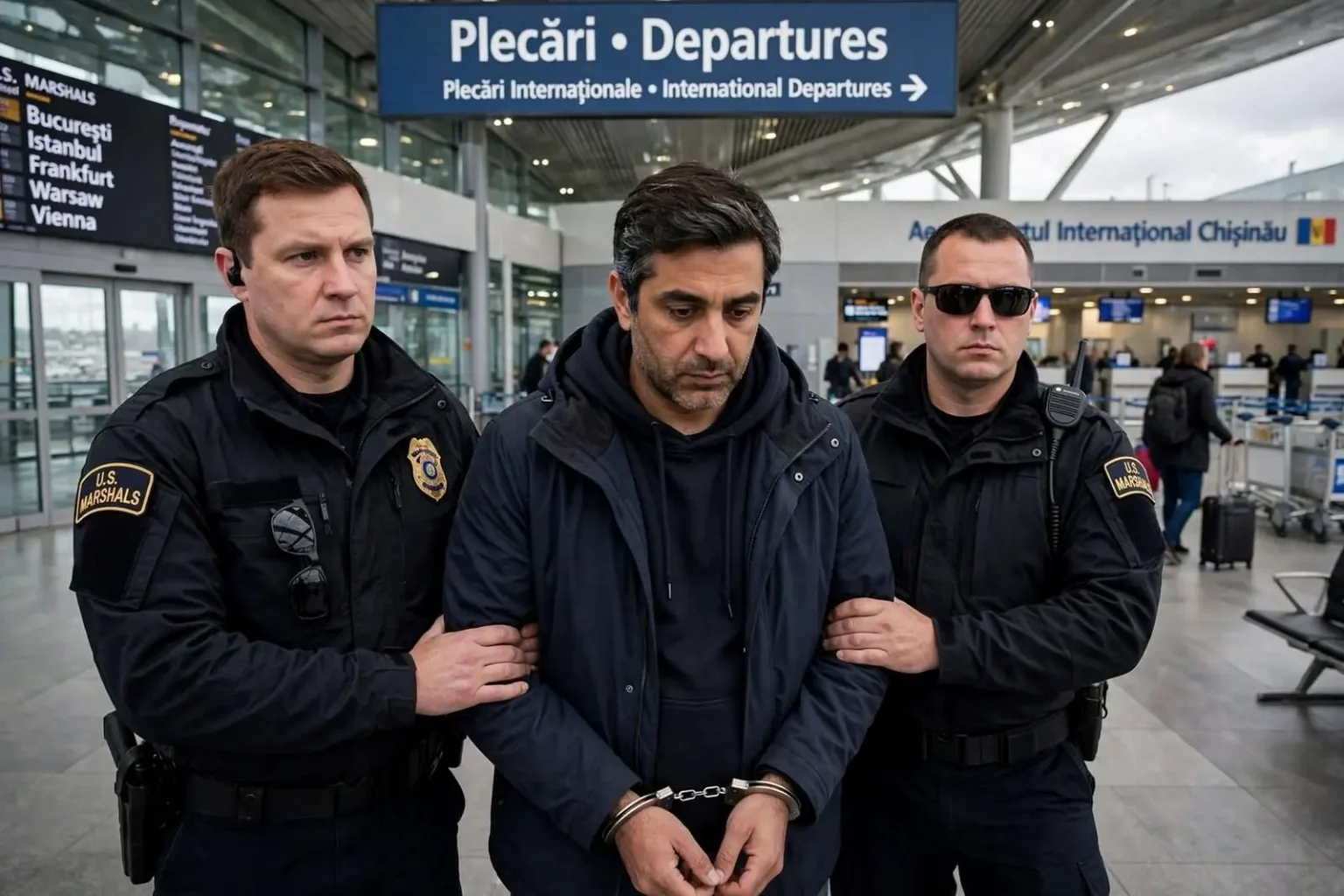
Vahak Dino Awadisian was taken into custody by United States Marshals at Chisinau International Airport in Moldova, a small Eastern European nation more than 5,600 miles from south Alabama, before being extradited back to the United States to answer to outstanding warrants tied to a securities fraud case built in Baldwin County. Chisinau, the capital of a country wedged between Romania and Ukraine, is not a typical waypoint in a Baldwin County criminal case, and the geography of the arrest illustrates how far a fugitive must travel to escape the reach of an American warrant. It is still not far enough.
He was booked into the Baldwin County Jail on July 29 and is being held without bond as his case moves forward. The booking closed the loop on a fugitive status that had persisted for years, returning the defendant to the jurisdiction that first charged him. Jail officials processed him under the terms of the outstanding warrants rather than through any new arrangement.
How the Case Unraveled
The arrest brings a years-long search to a close. Awadisian had originally been taken into custody in connection with the fraud allegations and was later released after posting a $150,000 bond through the Baldwin County Circuit Court. Bond in securities fraud cases reflects the seriousness with which Alabama courts treat financial crimes, where victims can number in the dozens and alleged losses can spread across years of transactions.
As a condition of that release, he was required to surrender his United States passport to law enforcement. Passport surrender is a standard condition for defendants with the means and connections to leave the country, designed to keep a bonded defendant within the court’s practical reach. The condition placed Awadisian, on paper at least, in the category of defendants who cannot lawfully cross a border.
That arrangement fell apart in the summer of 2014. On Aug. 27 of that year, Awadisian failed to show up for a scheduled hearing before Circuit Judge Langford Floyd. The judge responded by ordering his $150,000 bond forfeited and issuing a new warrant for his arrest on a failure-to-appear charge, effectively branding him a fugitive from Baldwin County justice.
Investigators and federal marshals spent the years that followed working to locate Awadisian, who had apparently left the country despite having handed over his passport. How a man without a lawful travel document crossed an international border is a question investigators have not fully answered publicly, and it speaks to the document fraud and border gaps that complicate fugitive cases. What is certain is that the surrender of the passport did not prevent the flight, only delayed and complicated the pursuit.
The United States Marshals Service carries primary responsibility for tracking federal and, through task force arrangements, state fugitives who cross jurisdictional lines. Marshals work from warrant databases, financial trails and international partnerships, and their fugitive operations routinely run for years on cases that local agencies cannot sustain alone. Awadisian’s case fit the profile: a state warrant, a defendant abroad and a pursuit that only federal reach could complete.
His eventual arrest overseas and extradition underscore the lengths to which law enforcement agencies will go to bring securities fraud defendants back to face Alabama courts, even when a case stretches on for years and across international borders. The message, as prosecutors see it, is that flight does not dissolve a warrant; it merely postpones the reckoning and adds charges to the ledger. Cases of this kind also depend on diplomatic channels, since extradition requires the cooperation of the foreign government where the fugitive is found.
The Machinery Behind the Return
The United States maintains an extradition treaty with Moldova, one of a network of treaties that allow American warrants to follow defendants into foreign jurisdictions. The process involves the foreign state’s courts, its interior ministries and the State Department, and it can take months or years from arrest to transport. An arrest at an international airport, as in Awadisian’s case, typically results from coordinated surveillance involving host-country authorities and American agencies.
Chisinau International Airport serves as Moldova’s primary air gateway, a transit point for routes connecting Eastern Europe with the Middle East and beyond. For a fugitive moving through the region, the airport is a choke point where identity checks concentrate, which is why so many international fugitive cases end at a gate or a customs line. The Marshals Service’s cooperation with local authorities there delivered Awadisian into custody and set the extradition process in motion.
Once a defendant is returned to the United States, custody reverts to the jurisdiction that holds the warrant. Awadisian’s July 29 booking in Bay Minette reflected that handoff, placing him back under the authority of the Baldwin County Circuit Court and the judge whose warrant he had evaded. The failure-to-appear charge he now faces exists alongside the securities fraud allegations that started the case.
Securities fraud cases like this one are typically investigated with assistance from the Alabama Securities Commission, the state agency responsible for enforcing Alabama’s securities laws and protecting investors from fraudulent investment schemes. The commission’s examiners and investigators build the documentary record, transaction trails and testimony that prosecutors carry into court. Its involvement signals that the case’s alleged conduct fell within the state’s regulatory perimeter rather than purely federal securities law.
Such cases often involve allegations that a defendant misrepresented investment opportunities, mishandled investor funds, or otherwise deceived people who entrusted them with money. The mechanics vary, from promissory notes pitched to church congregations to pooled investment funds sold through personal networks, but the pattern is consistent: victims are promised returns that do not materialize, and the money does not go where it was said to go. Prosecuting those cases means reconstructing a paper trail that can stretch across years and jurisdictions.
For the investors at the center of the Baldwin County case, the arrest provides something the warrants alone could not: the prospect of a defendant actually standing trial. Financial crime victims often describe the fugitive years as a second injury, a period in which accountability seemed to recede with every mile the defendant put between himself and the courthouse. The extradition reopens the possibility of restitution and resolution.
What Comes Next in Court
Awadisian is expected to remain in the Baldwin County Jail without bond while his case proceeds through the Baldwin County Circuit Court. The no-bond status reflects both the failure-to-appear history and the demonstrated flight risk, factors that judges weigh heavily in setting release conditions. A defendant who has already left the country once faces an uphill argument for any form of pretrial release.
Additional court dates are expected to be scheduled in the coming weeks as prosecutors move forward with the securities fraud charges that first brought him into the local justice system. The revived case will move through the standard sequence of arraignments, motion practice and, eventually, trial or resolution. Years of delay complicate the prosecution in practical ways, from witness memory to the preservation of financial records, but the underlying documentary case remains the prosecution’s foundation.
Baldwin County officials have not indicated whether additional charges related to the years spent out of the country, or the manner in which Awadisian left the United States after surrendering his passport, will be pursued. Failure-to-appear is already on the books as a separate charge from the Aug. 27, 2014, warrant. Prosecutors will decide in due course whether the flight itself, including any conduct abroad, draws further counts.
The case offers a case study in how a local prosecution can become an international one without changing its essential character. The alleged fraud was built in Baldwin County, the victims are local, the charges were filed in Bay Minette, and the court that issued the original bond remains the court that will resolve the case. Everything else, the passport, the bond forfeiture, the years abroad, the arrest at a Chisinau gate, is scaffolding around that original jurisdiction.
For the district attorney’s office and the Alabama Securities Commission, the arrest validates the patience that securities fraud prosecutions demand. Cases involving defendants with the means to flee test an office’s willingness to keep a warrant alive through budget cycles and personnel changes. The return of a fugitive after years abroad is the rare outcome that makes that persistence visible.
A Warning Wrapped in an Arrest
The broader lesson of the case, as officials frame it, is directed at defendants contemplating flight: borders are slower obstacles than they appear, and the warrant on file in Baldwin County does not expire. International fugitive recovery has grown more routine as marshals expand their partnerships abroad, and even countries distant from American news, such as Moldova, participate in the treaty framework that makes returns possible.
It is equally a message to investors, whom the Alabama Securities Commission routinely urges to verify that anyone selling investments is registered and to be skeptical of returns that sound too reliable. Fraud cases in Baldwin County and across the state have a way of beginning with trust extended to a familiar face. The commission’s role in Awadisian’s case reflects its standing assignment: police the market for schemes before they metastasize, and when they do, see the prosecution through to its end.
The years-long arc from a Bay Minette bond hearing to a Moldovan airport terminal will now conclude where it began, in a Baldwin County courtroom. The securities fraud charges await, the failure-to-appear warrant has been served, and the defendant who once held a $150,000 bond is being held without one. Whatever the outcome at trial, the record now shows that the case survived the longest detour a defendant could devise.