Longtime Alabama meteorologist James Spann renewed his warnings about hurricane misinformation on social media during a weekend visit to Alabama’s Gulf Coast, arriving at the height of a season when a single careless post can send thousands of families scrambling in the wrong direction. Spann, the Birmingham-based broadcast meteorologist known for decades of storm coverage and one of the largest weather-focused social media followings in the country, came to Mobile as the keynote speaker at a disaster preparedness forum hosted by United Way of Southwest Alabama. The venue was the National Maritime Museum of the Gulf in downtown Mobile, and the crowd that gathered there Saturday was large enough that organizers had little trouble making the case that coastal residents are listening.
Spann’s message was direct. He urged people to seek out credible sources, to avoid forwarding alarmist weather posts to friends and family, and, above all, to “think before you share.” Then he put a sharper point on it. “We live in a cesspool of disinformation,” Spann said. “We have a real problem here.” For a man who has spent nearly half a century forecasting Alabama weather, the indictment was not rhetorical flourish. It was a diagnosis of an information environment that, in his view, now competes directly with the National Weather Service and the National Hurricane Center for the public’s attention during the most dangerous weeks of the year.
While Spann has long been a trusted weather voice in north and central Alabama, he is equally well known along the Gulf Coast, where his straight-shooting forecasts and trademark suspenders make him instantly recognizable to beachgoers and year-round residents alike. Gulf Shores, Orange Beach and the Mobile Bay communities sit squarely in the path of tropical systems, and generations of coastal families have followed his coverage through landfall seasons. His familiarity here predates the forum by decades, and the turnout in Mobile reflected it.
Spann, who grew up in Greenville, spent Saturday in Mobile speaking at the seminar before making an equally well-documented stop later in the evening: dinner at Callaghan’s Irish Social Club, the neighborhood bar and burger institution in Mobile’s Old Shell corridor. There he took to Facebook to declare that he may have found the best cheeseburger in Alabama, a verdict that promptly set off its own round of likes, shares and friendly disagreement — a reminder that when Spann posts, Alabama pays attention.
A Viral Hoax as a Cautionary Tale
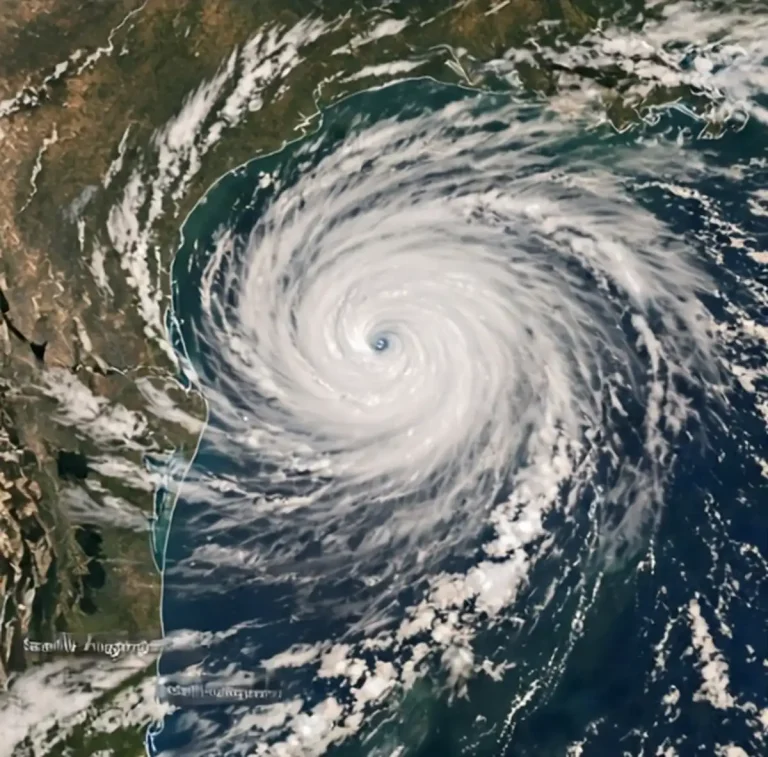
During his presentation, Spann did not make the case against misinformation in the abstract. He walked the audience through a specific example of the kind of post he warns about: a Facebook item declaring, “Killer Hurricane to Hit Florida!” published by a source with no connection whatsoever to the National Weather Service or the National Hurricane Center. The post had no forecasting basis, no official source and no accountability behind it. What it did have was reach.
“It was shared two million times,” Spann said. “We had people canceling beach vacations and elective surgery because some nitwit put this on Facebook. There was no truth to this — none whatsoever.” The consequences he described were not hypothetical panic on a screen. Beach towns from Pensacola to Gulf Shores depend on visitors who book months in advance, and hospitals schedule elective procedures around staff availability. A fake hurricane, in other words, does real economic and medical damage long before any actual storm ever forms.
Spann told the Mobile audience that social media users should be deeply skeptical of any post that predicts a storm’s path more than 10 days before it is expected to arrive. “There is no skill in forecasting a placement or a tropical cyclone more than 10 days in advance,” he said. “Science is not at that point. Deterministic model output beyond 240 hours means nothing. Think before you share.” The distinction he drew matters during hurricane season, when long-range model runs circulate widely on social platforms and are frequently presented as certainties. A model guess at day 10 is not a forecast, and the difference between the two is precisely where most viral hurricane hoaxes find their fuel.
For residents of Mobile and Baldwin counties, the advice carries particular weight. The central Gulf Coast has absorbed some of the most consequential landfalls in modern Alabama history, and each of those storms arrived with a run-up period in which rumors traveled faster than official guidance. During those days between a system’s formation and its landfall, the National Hurricane Center’s forecast cone — not a screenshot of a model panel — is the only authoritative picture of where a storm may go. Officials at the weather service have spent years trying to train the public to read the cone and heed local warnings, and Spann’s message in Mobile was the same lesson delivered by the state’s most trusted broadcaster.
A Rare Foray Beyond Weather
Spann, who generally avoids political commentary, has occasionally spoken out about the broader effects of social media on public life. Following the assassination of Charlie Kirk last year, he lamented what he described as a societal “decay” and discussed the threats he himself had received in recent years — a striking admission from a forecaster whose public work consists of radar loops and spaghetti plots. Social media, he told audiences, is simply a microcosm of society, reflecting back both its best and worst impulses at algorithmic speed.
His counsel to the crowd in Mobile extended beyond storm season. “I strongly recommend that you turn off your phone today and just take a long walk outside,” Spann said. “Too much negativity online can drain your mental energy.” It was an unusually personal prescription from a man whose professional life depends on being reachable around the clock, and it landed with the audience precisely because of that contradiction.
Despite those concerns, Spann has built one of the largest weather-focused social media audiences in the country, and he defends the platform as a tool rather than condemning it wholesale. He has more than 550,000 followers on X and roughly 301,000 followers on TikTok, where his videos have drawn more than 2.8 million likes. He has said his combined Facebook and Instagram following totals about 1.5 million people. That reach, he argues, is vital to keeping the public informed with credible weather information that can save lives — particularly in a state where tornadoes and hurricanes demand rapid, trusted communication.
“At least, in my case, I will not do the fear stuff,” Spann said, urging people to follow certified meteorologists for weather updates rather than anonymous accounts chasing engagement. “I cannot control what some knuckleheads say on social media, but if you hear me say strong words, it’s happening.” The formula he described — restraint in ordinary conditions, urgency only when urgency is warranted — is the opposite of the engagement-driven approach that makes hoaxes go viral, and it is the reason his warnings carry weight where others’ do not.
The forum itself drew a cross-section of the coast: community members, first responders and local officials from across Mobile and Baldwin counties. That mix reflected a continued regional focus on storm preparedness as the Atlantic season approaches its most active stretch, the period from late August through September when climatological activity in the tropics typically peaks. For United Way of Southwest Alabama, which serves Mobile, Baldwin, Clarke, Choctaw, Marengo and Washington counties, the event was part of a longer-term effort to build household readiness — the kind of planning that pays off most for families who have supplies, a shelter plan and a reliable information source before the first warning is ever issued.
Why South Alabama Listens
South Alabama sits in one of the most hazard-prone corners of the United States. The region faces severe thunderstorms and tornadoes in spring, tropical systems and storm surge from June through November, and flooding episodes that can unfold in a matter of hours. The National Weather Service operates a forecast office on the central Gulf Coast that issues watches and warnings for the area, and county and municipal emergency management agencies coordinate preparedness and response across jurisdictional lines. Residents are routinely advised to maintain emergency supplies, identify safe shelter, and heed official guidance during weather events — guidance that only works if people are actually receiving it from credible channels.
That last step is where Spann’s argument lands hardest. A household with a stocked kit and an evacuation plan is still vulnerable if its members plan around a hoax, canceling travel that was safe or ignoring a real threat because they have learned to distrust everything in their feed. Disinformation does not merely spread bad information; it corrodes the trust that makes all official communication effective. When a genuine evacuation order arrives after two million people have already shared a fake one, the credibility deficit has already done its work.
Spann’s career offers a case study in the alternative. Decades of continuous coverage — through devastating tornado outbreaks in north Alabama and numerous Gulf landfalls — have made him a reference point for Alabama households in a way no anonymous account can match. His insistence on keeping the same standard online as on air, refusing fear-driven content even when it would grow his audience faster, is the discipline he asked the Mobile crowd to demand of every account they follow.
The keynote’s setting added its own resonance. The National Maritime Museum of the Gulf, located on Mobile’s downtown riverfront, documents the Gulf’s long relationship with its waters — commerce, shipbuilding, and the storms that shape both. Hosting a disaster preparedness forum inside an institution devoted to the region’s maritime history put the message in context: the Gulf Coast has always lived with hurricanes, and the tools for surviving them have evolved from hard copy maps and radio bulletins to push alerts and social feeds. The feeds are new; the discipline of verifying before reacting is not.
As hurricane season moves into its peak weeks, the practical takeaways from Saturday’s session were simple and repeated: know your sources, follow certified meteorologists, distrust any storm prediction framed as certainty more than 10 days out, and think before you share. In a region where the next system can form in the Caribbean and reach the Alabama coast within days, the cheapest form of preparedness remains an informed, skeptical feed.