

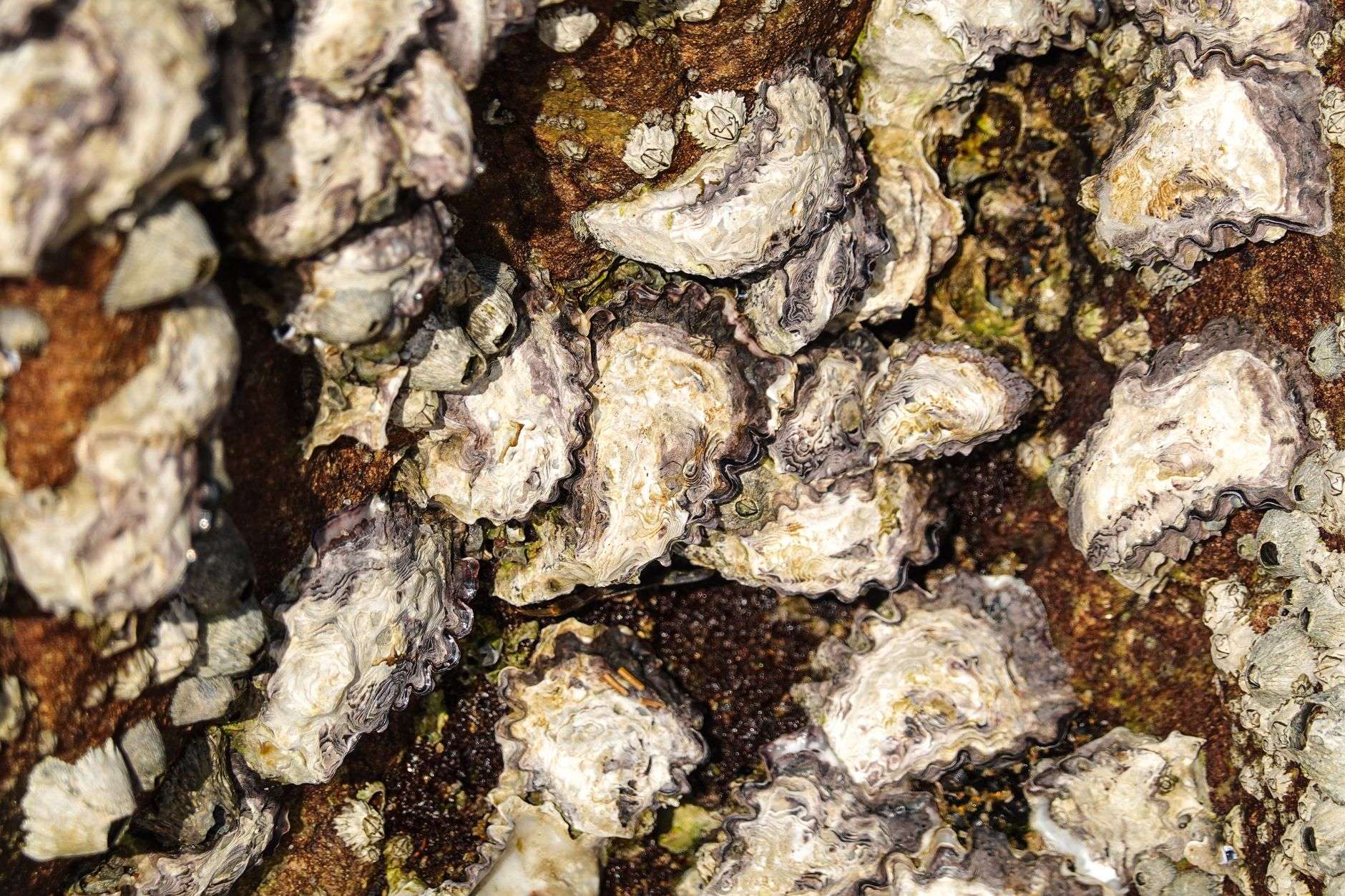
Oyster beds in Mobile Bay are slowly coming back to life. The Alabama Wildlife Federation and several partners have launched a 50-acre oyster cultch planting project near Cedar Point Beach, while Mobile Baykeeper's Oyster Keepers Program placed 240,000 oysters on restoration reefs in 2025 alone. The milestones come as the region marks National Oyster Day on August 5, and as the Alabama Department of Conservation and Natural Resources (ADCNR) announced a new, longer-term restoration effort backed by federal recovery funds.
ADCNR was recently awarded $7.1 million in Natural Resource Damage Assessment (NRDA) funds tied to the Deepwater Horizon oil spill for a project titled "Improving Resilience for Oysters by Linking Brood Reefs and Sink Reefs." The project aims to increase oyster abundance and restore resilience to oyster populations by increasing reef connectivity through larval transport and the construction of oyster reefs across a range of habitats and salinities. It calls for building a network of high-vertical-relief brood, or protected, reefs that link to existing and newly created sink reefs — areas that are harvested and/or protected — through larval transport, with the goal of boosting long-term oyster population sustainability and reef resilience.
ADCNR Commissioner Chris Blankenship serves as the lead Trustee for Alabama on the NRDA Trustee Council that oversees project selection and implementation for Deepwater Horizon oil spill funding. ADCNR's Marine Resources Division and Deepwater Horizon Restoration Section are working with the University of South Alabama and Auburn University to identify restoration sites and techniques most likely to yield the best results. Building on the Marine Resources Division's working knowledge of the fishery, the agency's goals for this stage of the project are to understand the biological, physical and chemical factors that affect restoration success and use that information to build and enhance oyster reefs. The project is expected to take about two years.
To help with oyster restoration in the short term, ADCNR's Marine Resources Division is teaming up with local oyster catchers and the Alabama Wildlife Federation to try to bolster current oyster habitat along the Alabama coast, which includes the Cedar Point cultch planting already underway. Craig Newton, the Marine Resources Division's district supervising biologist, said the state's oyster grounds have shrunk dramatically over the past two decades. "Since the 2000s, our oysters have been primarily restricted to one main area," Newton said. "Historically, our oysters have been anywhere from Whitehouse reef off Alabama Port south to the Cutoff at Jemison's, with Buoy reef, Cedar Point, Heron Bay and Portersville Bay as areas of significant harvest. All these places had oysters.
For the last 15-20 years, we've been mostly restricted to Heron Bay and Cedar Point." The Alabama Wildlife Federation began work on the Cedar Point project in July 2026, using approximately 4,600 tons of No. 4 washed limestone shipped by barge from Vulcan Materials' Pride Quarry in Tuscumbia. Cooper Marine handled barge transport, while JW Marine deployed the limestone across the restoration area. AWF Executive Director Tim Gothard said the planting, known as the AWF Cedar Point West Oyster Cultch Planting, is the group's second large-scale cultch planting effort in the Cedar Point area and would not be possible without its partners. "AWF is committed to the Coastal Alabama Comprehensive Oyster Restoration Strategy, developed by ADCNR Marine Resources Division in conjunction with NOAA," Gothard said.
Background and Context
"The 4,600 tons of limestone rock oyster cultch provides a significant window of opportunity, up to a decade or more, for the right conditions to come together for oyster larvae to attach and successfully develop." He said the ultimate goal is oysters of multiple age classes established on the site, including commercial harvest size, with a portion available to be harvested under Marine Resources Division rules. The Cedar Point project is the fourth oyster cultch planting led by the Alabama Wildlife Federation. Past plantings include 2,600 tons near Dauphin Island and 1,000 tons near Gaillard Island in Mobile Bay. Meanwhile, Mobile Baykeeper's Oyster Keepers Program aims to return five million oysters to Mobile Bay by 2028.
The program launched in 2023 with a pilot featuring four pier gardens on Dauphin Island and in Bon Secour Bay. Today, 44 pier owners are enrolled, each hosting cages attached to their residential docks with 160 live adult oysters distributed across four cages. Together, the cages filter 8,000 gallons of water daily and produce 400 million larvae annually. More than 80 percent of Mobile Bay's historic oyster population has vanished since 1950, largely due to overharvesting, pollution and habitat loss, making restoration efforts like these increasingly important to the bay's long-term health. Alabama's most recent harvest season, which typically starts in October, resulted in 5,153 sacks, or 210,000 meat pounds, of oysters taken from state waters, compared to the most recent peak of 1.2 million meat pounds taken in 1992.
Newton said the recent grassroots restoration push reflects a recognition of that long decline. "There have been grassroots efforts over the past couple of years," he said. "They've taken it upon themselves to do whatever they can to provide somewhat of a quick relief and provide some benefits to the oyster population." A Growing Industry Alongside Restoration The comeback effort is unfolding alongside a broader transformation in Alabama's oyster industry. While wild harvesting in public waters remains closely managed, the past two decades have seen the rise of commercial oyster farming along the coast.
Alabama is now home to more than a dozen commercial farms, including well-known operations such as Murder Point Oysters and Navy Cove Oysters, which use off-bottom techniques — raising oysters in floating cages above the seafloor — to produce premium oysters known for their consistent quality and distinctive Gulf flavor. That modern approach helps ensure local seafood houses can serve guests oysters sourced directly from nearby waters. Restoration work also extends well beyond the current Cedar Point and Oyster Keepers initiatives. Volunteers have grown nearly 2 million juvenile oysters for restoration sites since 2001, part of a long-running community commitment to Mobile Bay that predates the newest projects.
On National Oyster Day, that connection between environment and table is on full display, as diners across the region choose everything from raw oysters on the half shell to fried oysters, chargrilled preparations with garlic butter and Oysters Rockefeller. Update: Long-Delayed Gulf Aquaculture Project Finally Gets Underway As oyster restoration efforts continue near Cedar Point, a separate, long-delayed aquaculture project in the Gulf's nearshore waters off Fort Morgan has finally moved forward after years of waiting on permits and agreements. The project, first funded during former U.S. Sen. Richard Shelby's time in Washington, is now testing whether finfish, along with oysters and seaweed, can be raised to marketable size in open Gulf waters roughly two miles off Fort Morgan, where a platform and fish pen were installed in 2025.
Background and Context
Marine biologist Ashley McDonald returned to the Dauphin Island Sea Lab to take on the role of integrated multitrophic aquaculture project manager, leading a team working to develop an additional local protein source. "This project has basically been dead in the water, waiting on permits and agreements," McDonald told the Alabama Department of Conservation and Natural Resources. The project has since secured a protected species agreement from the National Oceanic and Atmospheric Administration, along with permits from ADCNR's State Lands Division, the U.S. Army Corps of Engineers and the U.S. Coast Guard. Unlike large-scale commercial aquaculture operations, McDonald said the model is designed to be small in scale and individually owned and operated. "It's not one of these big, massive aquaculture projects," she said.
"The idea being that we wanted to incorporate local native species with intrinsic market value for Gulf species locally. We wanted to provide an avenue for smaller commercial harvesters that might be looking into branching out into aquaculture or subsidizing any of their commercial revenue and doing it in a way that it doesn't feel like it's competing with commercial harvest." The small-form aquaculture concept originated with a group in Canada, and the project's model comes from a New Hampshire aquaculture operation whose business plan combines steelhead trout, blue mussels and kelp. Off Fort Morgan, the team is growing three native species with genetics local to Mobile Bay: red drum as the finfish component, oysters raised in hanging baskets, and macroalgae, or seaweed. "They are all native species," McDonald said.
"Their genetic component is local to Mobile Bay, so these are local, homegrown animals."
Wider Significance for Coastal Alabama
This story is part of a broader set of changes playing out across Mobile, Baldwin and the wider Gulf Coast region. Local residents, businesses and government agencies have been watching developments like this one closely, because decisions made in Mobile and Baldwin counties often ripple outward into neighboring communities across south Alabama, Mississippi and the Florida Panhandle. Public meetings, council work sessions and state legislative hearings have all carried echoes of the underlying concerns, with stakeholders ranging from neighborhood associations to industry groups weighing in on what the outcomes will mean for daily life along the Gulf Coast. Reporters and editors in the region have worked to document how these issues affect ordinary people, from commuters on Interstate 10 to families visiting the public libraries and parks that anchor so many of the Port City’s neighborhoods. The deeper context often emerges over months rather than days, as projects move from announcement to planning to construction, and as the people most directly affected find their voices in the public record. Continued coverage remains important, both for accountability and for the historical record, and the unfolding situation is one that warrants attention from anyone with a stake in the future of south Alabama.
Looking ahead, observers across the region expect the conversation to continue evolving. Local officials have signaled their intent to monitor outcomes closely, and community organizations have indicated they will remain engaged as new information becomes available. The intersection of state policy, local implementation and on-the-ground impact is precisely where stories like this one tend to develop their lasting significance. For Mobile and Baldwin residents, the practical effects will play out over time, in everything from tax bills and utility rates to traffic patterns and the availability of public services. Following the developments requires patience and attention to detail, but it is also a reminder of how civic life in coastal Alabama continues to be shaped by decisions that begin far from the neighborhoods they ultimately touch. Residents who want to stay informed can do so by following local government meetings, attending public hearings when significant issues arise, and reading the regional reporting that tracks how these stories progress from one phase to the next.
Local news organizations continue to follow this story closely, and updates are expected as more details emerge. The developments have generated discussion across the region, with attention from both longtime residents and newcomers who are following the issue for the first time. Community leaders have emphasized the importance of staying engaged with local government and participating in public meetings when significant decisions are being made. As the situation continues to unfold, residents are encouraged to remain informed through reliable local reporting and official city and county communications channels. The story remains active, and additional information is anticipated in the coming days and weeks as the relevant agencies and stakeholders complete their work.