Mobile Clinicians Say Children as Young as 10 Are Overdosing on Medicines Found at Home
AltaPointe psychiatric nurse practitioner Mary Lee says she is seeing more children arrive after intentional overdoses using household medications, often triggered by ordinary discipline. Help is available at 988 and at 251-450-2211.
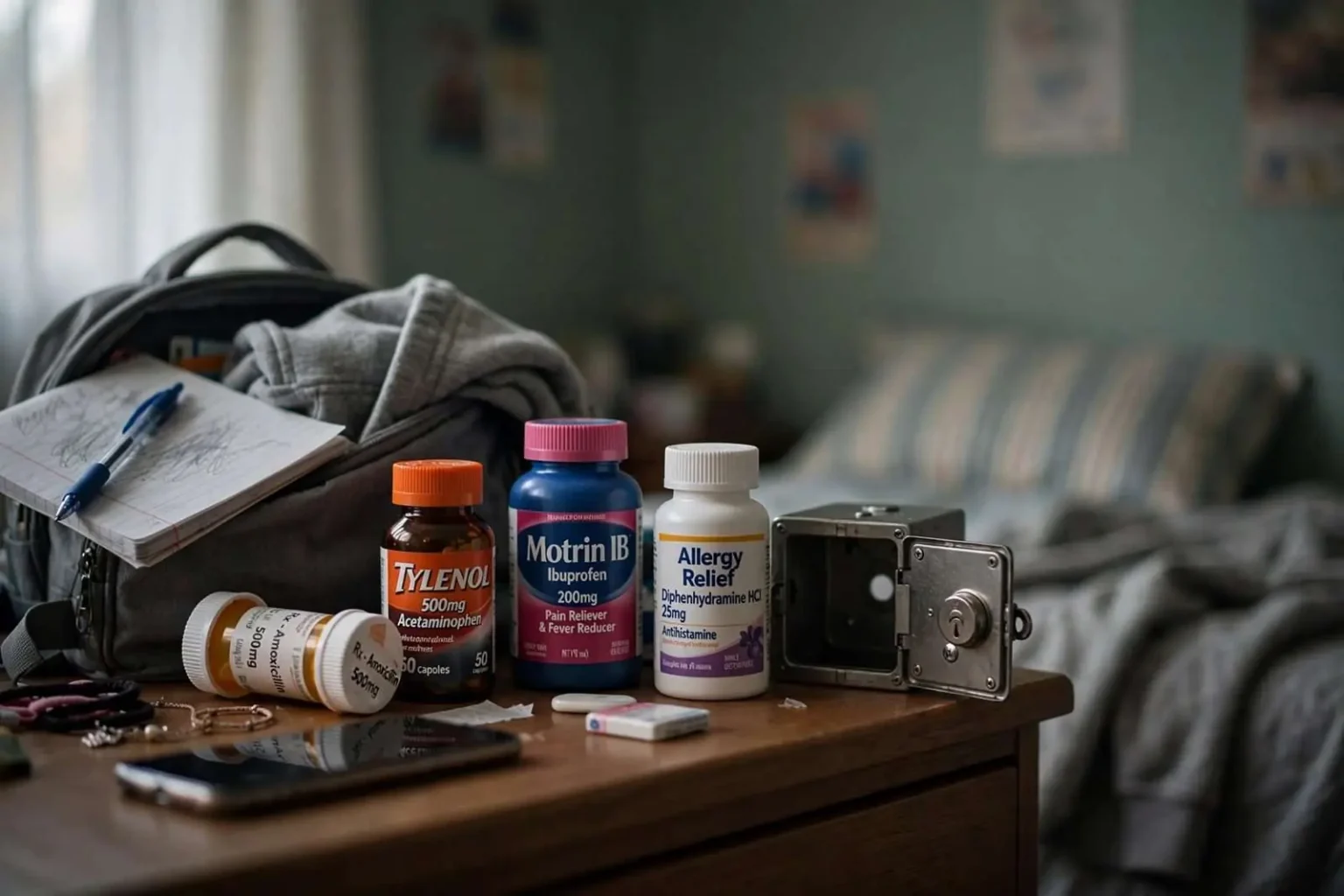
MOBILE, Ala. — Medical professionals in Mobile say they are seeing more children arrive in emergency care after intentionally overdosing on medications kept at home, and that the children coming through the door are getting younger.
Mary Lee, a psychiatric nurse practitioner with AltaPointe who also contracts with USA Children’s and Women’s Hospital, has practiced medicine for a decade. She said some of the children she now sees are as young as 10.
“We’re getting more self-harm in general, but specifically recently, it’s been these over-the-counter medicines, whether it be antibiotics or allergy medicines, Tylenol, Motrin, anything they can find in the house,” Lee said.
If you or someone you know is struggling, the 988 Suicide & Crisis Lifeline is available 24 hours a day by calling or texting 988. AltaPointe’s Access to Care line is 251-450-2211.
What Precedes These Episodes
The part of Lee’s account that she describes as most concerning is not the method but the trigger.
“What I’m finding is most of the time, there’s not a huge reason leading up to these overdoses. It’s as simple as I got grounded and my phone was taken away,” Lee said.
She said that for children and teenagers, a phone functions as considerably more than a device.
“They see that phone as their connection to the outside world, and somewhere along the way, we’ve lost the art of face-to-face communication, and so when that phone is taken away, the coping skills sometimes go with that,” Lee said.
That observation is not an argument against parental limits. It is a description of what happens when a young person’s primary means of connection and self-regulation is removed abruptly and nothing replaces it. The clinical concern is the absence of alternative coping capacity rather than the discipline itself.
The Impulsivity Problem
Lee’s description of triggers that appear small relative to the response aligns with what researchers have documented about adolescent self-harm: much of it is impulsive, with very little time elapsing between the decision and the act.
That time compression is why access matters so much. An adolescent in acute distress who must locate means may pass through the crisis before doing so. An adolescent who can reach a medicine cabinet in thirty seconds may not.
The children Lee describes are not a population that fits common assumptions about who is at risk.
“These are kids that are very high functioning, very intelligent, play on sports teams, and just have a short-sighted moment where they’re not really thinking about their future,” she said.
The Misconception About Survival
After a child is medically stabilized, Lee is frequently among the next people they see. She said one of the most persistent misconceptions she encounters is that surviving means no lasting harm.
“We’ve also seen these kids who have these suicide attempts be regretful, but also have lasting health, long-term health effects where they’re having problems with multi-organ failure. So even if it is a survivable event, you could still have lasting repercussions,” Lee said.
This is medically important and widely misunderstood. Common household medications are not benign in overdose. Several can cause organ damage that develops over days, sometimes after a person initially appears to have recovered. A child who survives can be left with lasting consequences requiring long-term medical management.
Lee framed the conversation she wants parents to have in exactly those terms.
“Checking in, too, just to make sure they know what a suicide attempt truly means. This life is not a video game. You don’t get three tries. This is it. So just letting them feel comfortable coming to you and talking to you and just helping them understand. This is a long-term, this is a long-term thing that you’re doing for a very short-term problem,” she said.
What Parents Can Do
Lee said prevention starts with simple conversations and with paying attention — including checking in with a child when everything appears fine.
Her specific recommendations:
Make medications harder to access. This is the single most concrete step available to a household. Over-the-counter pain relievers, allergy medications and leftover prescriptions are typically stored where anyone can reach them. Securing medications in a locked box or cabinet, and disposing of unused prescriptions, changes what is available during a moment of crisis.
Monitor screen time and know what children are doing online.
Check in regularly, not only when something seems wrong. A conversation that only happens after a problem surfaces teaches a child that the subject is a crisis topic.
Keep the door open. Lee emphasized helping children feel comfortable coming to a parent and talking — which requires that earlier disclosures have been met with something other than alarm or punishment.
The Role of Teachers
Lee said teachers can play an important part as well. A simple question, a conversation, or recognizing a change in behavior could be the opening a child needs to ask for help.
School staff are frequently positioned to notice what families cannot. They observe children across a full day, in a peer environment, and they have a baseline for comparison across many students. Changes in attendance, withdrawal from friends, a decline in work, or a shift in demeanor can register at school before they register at home.
The timing of the warning matters. The start of a school year brings academic pressure, social reconfiguration and disrupted routines all at once, and it is a period when accumulated stress can surface.
How to Respond
Guidance from mental health professionals on responding to a child who may be at risk is fairly consistent:
Ask directly. Asking a young person whether they are thinking about hurting themselves does not introduce the idea. Research has consistently found that direct questions do not increase risk, and they frequently provide relief to someone who has been carrying the thought alone.
Listen before solving. A young person who has disclosed something difficult is usually not asking for a plan. Moving immediately to solutions can end the conversation.
Take it seriously without escalating into panic. A reaction of alarm can teach a child that disclosure produces chaos, which discourages the next one.
Reduce access to means. This is the step most directly associated with reduced risk.
Get professional help. A pediatrician, school counselor or mental health provider can assess and connect a family to appropriate care.
Where to Get Help in Mobile
Those concerned about their child’s mental health can call AltaPointe’s Access to Care line at 251-450-2211.
AltaPointe Health is the region’s principal community mental health provider, operating outpatient services, crisis response and inpatient psychiatric care across Mobile and surrounding counties.
The 988 Suicide & Crisis Lifeline is available 24 hours a day by call or text from anywhere in the United States, and connects to trained counselors.
In a medical emergency, including a suspected overdose, call 911 immediately. Poison Control can be reached at 1-800-222-1222 for guidance on medication ingestion.
This report discusses self-harm and suicide. If reading it has been difficult, help is available at 988.