

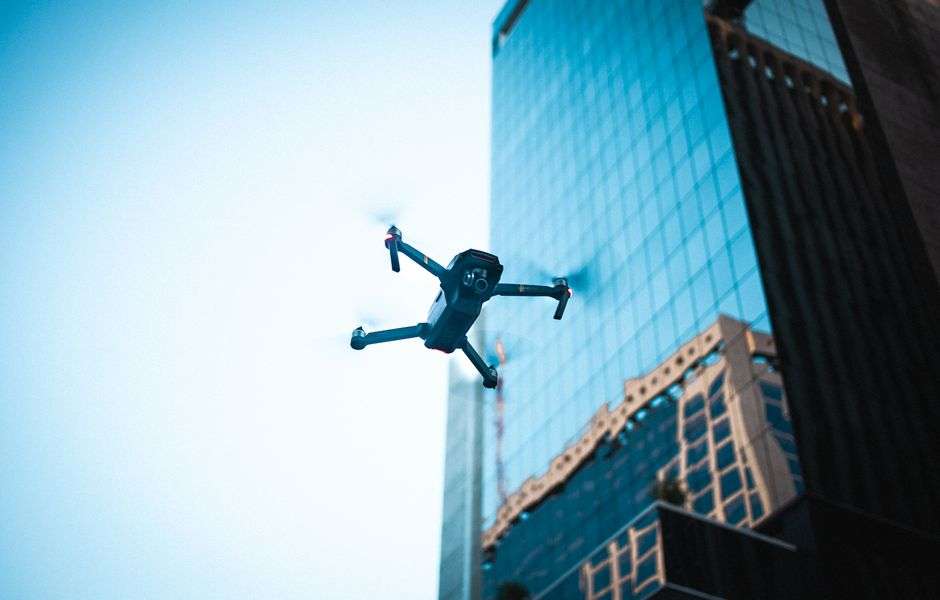
Responding to complaints they had heard from constituents, Mobile city councilors said a package of drones the city plans to purchase are not meant to “spy” on citizens or invade their privacy, but to maintain public safety in new ways.
The council authorized a $139,345.85 order to Unmanned Vehicle Technologies LLC for three drones, two cameras and various accessories during its Tuesday morning meeting. No member of the body opposed the purchase, but the question of how the high-tech equipment will be used by the Gulf Coast Technology Center prompted city leaders to discuss the item at unusual length on the record.
A Constituent’s Question Becomes a Council Conversation
During the council’s pre-meeting work session, District 7 Council Vice President Gina Gregory asked Public Safety Director Curtis Graves to explain the purchase, noting that one constituent concerned about privacy had contacted her to ask that she vote against it.
Graves said drones are a necessary part of modern police work, and have previously kept large public gatherings — like Mardi Gras — safe.
“It’s not something that is designed, again, to spy or do anything other than what I described,” he said. “We are using them for the purpose of public safety.”
Gregory said during the council’s meeting a few hours later that the drones are wanted for the safety of all Mobilians.
“We had a discussion about this during our pre-conference meeting just to help alleviate some fears of spying or invasion of privacy,” she said. “Those are certainly not the purposes of these drones. They are for public safety use, for buildings, for parks, for Mardi Gras. It also helps us look at building elevations when we are developing new buildings throughout the city.”
District 3 Council President C.J. Small said the drones could help police safely apprehend fleeing suspects — a point he tied directly to one of the most common complaints his office receives.
“One of the complaints I have been receiving for the last couple years is police chases,” he said. “This here will help eliminate police chases when a drone from a bird’s eye view can follow suspects besides having six, seven or eight police officers chasing suspects down the street and putting citizens in danger.”
Building on a Program Already Flying
The purchase did not come out of nowhere. One week earlier, the city had formally announced the creation of a drone surveillance program to monitor city parks, special events and other public spaces — an aerial situational awareness program that quietly began taking shape in May under Mayor Spiro Cheriogotis’ public safety agenda.
That program is built around tethered drone systems: aircraft connected to a ground station by a durable, lightweight tether that allows them to stay aloft for hours at a time, livestreaming video to incident commanders below. The city has said the tethered systems give first responders a real-time view of large events, improve emergency response times and increase visibility for commanders without the battery limits that constrain conventional drones.
The Mobile Fire-Rescue Department has operated drones for years for rescue operations and hazard assessment, and the new police-oriented purchases will supplement a fleet of Fotokite tethered systems already in use. When deployed, the new drones can be attached to lightweight tethers and connected to a ground station, giving officers eyes in the sky for extended periods during events at city parks and other large-scale activities like Mardi Gras, when downtown crowds swell into the hundreds of thousands.
Alongside the drone purchase, the council also introduced a resolution to approve an annual service contract worth $695,000 with Protec Video, LLC for deployment and management of technology, training and consulting services at the Gulf Coast Technology Center — a reminder that the aircraft themselves are only one piece of the operating cost of a modern aerial program.
The Privacy Debate
Drones occupy contested ground in American policing. Civil liberties groups have repeatedly warned that aerial surveillance programs can slide from event overwatch into persistent monitoring of neighborhoods, and several states have moved to regulate police drone use. Mobile’s approach — tethered systems parked over specific events and parks, operated by a technology center rather than roving patrol units — is designed to keep the aircraft’s coverage predictable and tied to defined missions.
City officials leaned on that distinction during the council discussion. Graves emphasized that the drones exist to give first responders a better view of large events and emergencies, not to watch residents going about their lives. Gregory, whose district includes west Mobile neighborhoods, made a point of saying the purchase had been explained publicly precisely so residents would know what the aircraft are for and what they are not.
The council’s discussion also touched on the practical, non-enforcement uses of the fleet: inspecting building elevations during development reviews, surveying public property, and documenting conditions in parks. Those uses, council members said, make the fleet a general-purpose municipal tool rather than a police-only asset.
What the Purchase Buys
The $139,345.85 order covers three drones, two cameras and a package of accessories — spare batteries, controllers, mounts and support equipment that agencies typically need to keep a small fleet operational. The vendor, Unmanned Vehicle Technologies, is a Mississippi-based public safety drone supplier that equips agencies across the Southeast.
With the purchase approved and the broader drone surveillance program already announced, the city’s aerial footprint will grow in the months ahead — over Mardi Gras crowds, parks, and emergency scenes. The council’s message to residents wary of that expansion was consistent: the drones will watch events and emergencies, not neighborhoods — and any citizen who believes otherwise now has a public record of exactly what their council members said the aircraft would and would not be used for.