

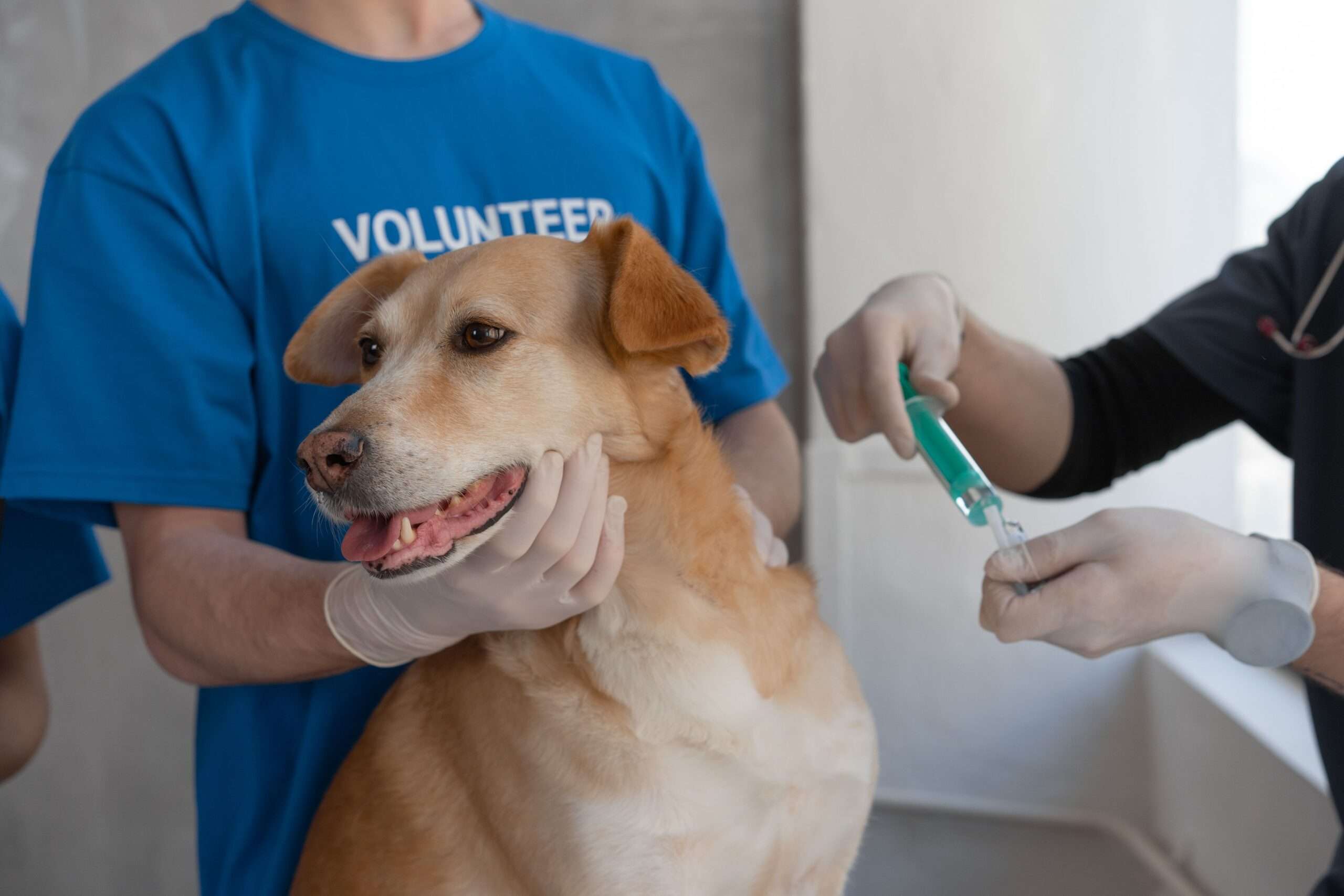
Pet owners across Mobile County will have five chances this August to get their dogs, cats and ferrets vaccinated against rabies at low-cost weekend clinics organized by the Mobile County Health Department.
MCHD’s Rabies Officer hosts the clinics each month at rotating locations around the county, offering a one-year rabies vaccine for a flat fee of $15 per animal, payable in cash. Most of the events are drive-through style, allowing pet owners to stay in their vehicles while a technician administers the shot, though the clinic hosted at B&B Pet Stop is run a bit differently, with owners bringing their pets up to what staff describe as “the front porch” of the facility.
Here is the full schedule of August rabies clinics planned across Mobile County:
Saturday, August 1, 10 a.m. to noon — City of Mobile Animal Shelter, 855 Owens Street, Mobile
Saturday, August 8, 10 a.m. to noon — Mobile County Animal Shelter, 7665 Howells Ferry Road, Mobile
Saturday, August 8, 1 to 3 p.m. — Pet Supplies Plus, 803 Hillcrest Road, Mobile
Saturday, August 15, 10 a.m. to noon — Pine Air Baptist Church, 10341 Highway 188, Grand Bay
Saturday, August 22, 9 a.m. to noon — Prichard Animal Shelter, 2402 North Rebel Road, Prichard
Why the Clinics Matter
State law tasks local health departments with making rabies vaccinations affordable and accessible to pet owners, and Alabama requires that dogs, cats and ferrets be currently vaccinated against the disease. MCHD’s monthly clinic schedule is designed to reach residents in different parts of the county throughout the year rather than concentrating services in one location, giving families in Mobile, Grand Bay, Prichard and surrounding communities a nearby option roughly once a month.
The rotation is deliberate. Mobile County stretches from the Mississippi line to Mobile Bay and from the state line down to the Gulf of Mexico’s inland shore, taking in dense urban neighborhoods, suburban corridors like Hillcrest Road and Howells Ferry Road, and rural communities in the county’s southern reaches near Grand Bay. A single fixed site would be a long drive for many residents, so the health department brings the clinic to shelters, churches and retail partners in different quadrants of the county, one Saturday at a time.
The partnering sites themselves are familiar anchor points for local pet owners. The City of Mobile Animal Shelter on Owens Street and the Mobile County Animal Shelter on Howells Ferry Road handle stray intake and adoption for their respective jurisdictions, and Prichard’s shelter serves one of the county’s largest cities. Hosting a clinic at each location pairs the vaccination program with the animal services infrastructure many residents already know how to find.
The program appears to be reaching a substantial share of the county’s pet population. MCHD’s Rabies Officer administered 218 vaccinations in July alone, including 164 dogs and 54 cats, and vaccinated 3,261 household pets over the course of 2025 — 2,585 dogs, 675 cats and one ferret. Health officials point to that volume as evidence that low-cost, convenient clinics remain one of the most effective tools for keeping vaccination rates high in a large, spread-out county.
About Rabies and the Law
Rabies is a viral disease that attacks the central nervous system and is nearly always fatal once symptoms appear, making prevention through vaccination the most important line of defense. The virus spreads through the saliva of infected mammals, typically via a bite, and can be transmitted to both pets and humans. Early symptoms in infected animals can include unusual behavior, irritability, fever and difficulty eating or drinking, progressing to balance problems, disorientation, circling, seizures, coma and death. Because all warm-blooded mammals are susceptible, public health officials stress that keeping pets current on their rabies shots protects not just the animal but the entire household and neighborhood.
The Gulf Coast environment gives the requirement particular weight here. South Alabama’s woods, bayous and marsh edges support populations of raccoons, foxes, skunks and bats — the wild mammal species most commonly associated with rabies in the region — and encounters between wildlife and domestic pets are a routine fact of life in both rural Grand Bay and leafy city neighborhoods. A vaccinated pet that tangles with a rabid animal typically receives only a booster and observation; an unvaccinated pet faces far more restrictive quarantine outcomes, which is why health officials describe the $15 clinic fee as inexpensive insurance against a difficult situation.
Mobile County’s rabies control efforts are part of a statewide framework overseen by the Alabama Department of Public Health, which maintains guidance for pet owners on quarantine procedures in the event of a suspected exposure. Residents whose pets may have been bitten by a wild animal, or who have questions about the vaccination requirement, can consult MCHD’s Rabies Quarantine Fact Sheet or contact the health department directly. The fact sheet walks owners through what to do after a suspected exposure, from confining the animal to reporting the encounter so public health staff can assess the risk and set any required observation period.
The state’s vaccination mandate has real legal consequences for pet owners. An animal whose rabies vaccination has lapsed and that bites a person or is exposed to a potentially rabid wild animal can be subject to extended quarantine or, in the worst cases, euthanasia testing, while a currently vaccinated pet is generally handled with far lighter requirements. That distinction is the practical reason behind the monthly clinic push: every pet vaccinated at a Saturday clinic is one fewer animal that would face the harshest outcomes if an encounter ever occurred.
Planning a Clinic Visit
For pet owners planning to attend one of August’s clinics, officials recommend keeping dogs on a leash and cats and ferrets secured in a carrier for everyone’s safety while waiting in line. The drive-through format means most owners never leave their vehicle, but even a brief window with a loose pet in a parking lot can create problems for other animals in line, so restraints are treated as a condition of participation rather than a suggestion.
The $15 fee is payable in cash only, so attendees should come prepared. Pet owners who cannot make one of the August dates have standing options: the Rabies Officer’s schedule rotates to new locations each month, and the health department posts the upcoming lineup on its website. Owners of newly adopted puppies and kittens should also note that the one-year vaccine administered at the clinics is for animals due for their current shot, and a veterinarian can advise on the initial puppy and kitten series for very young animals.
Summer timing is no accident. August in south Alabama is peak season for outdoor activity with pets — evening walks, beach and bayou trips, backyard gatherings — and it is also the time of year when people and animals are most likely to cross paths with wildlife active after dark. Health officials use the month’s five clinics to catch animals whose vaccinations lapsed during the year and to bring newly adopted pets into compliance before the fall.
More information about MCHD’s ongoing rabies vaccination program, including future clinic dates, is available through the health department’s website.
A Program Built Over Decades
Low-cost vaccination clinics have been a fixture of public health work in Mobile County for generations, dating to an era when rabies control was among the first organized public health campaigns in Alabama and mass dog vaccination drives helped drive the disease out of urban areas across the South. The model has changed — today’s drive-through lines are a long way from the county fairgrounds queues of decades past — but the underlying logic has not: rabies cannot be eliminated from a community by treating people after exposure, so the intervention has to happen at the animal level, door to door and pet to pet.
The Rabies Officer’s role sits at the intersection of that mission. The position investigates animal bites and suspected rabies exposures reported to the health department, enforces quarantine requirements, and runs the monthly clinic circuit that keeps the county’s pet population vaccinated. In a county the size of Mobile — home to hundreds of thousands of residents spread across Mobile, Prichard, Saraland, Satsuma, Creola, Bayou La Batre, Dauphin Island and the unincorporated communities in between — that circuit is the backbone of the program, and the annual totals it produces represent one of the largest county-level vaccination efforts in the state.
The clinic partnership model also reflects how public health operates on the Gulf Coast, where institutions routinely share space and resources. Churches like Pine Air Baptist in Grand Bay open their parking lots for county services; retailers like Pet Supplies Plus and B&B Pet Stop bring pet owners and health staff together on neutral ground; and municipal and county shelters provide sites where a vaccination visit can turn into an adoption inquiry or a microchip question. Each partner extends the program’s reach into a different corner of the county, and each August date gives pet owners who missed earlier months a fresh opportunity to catch up.
For families weighing whether to make the drive, health officials offer a simple framing: the $15 fee and a few minutes in line are the entire cost of compliance, while the alternative — an unvaccinated animal in a county where wildlife encounters are routine — carries costs measured in quarantine board bills, veterinary visits and, in the gravest cases, human post-exposure treatment that runs into the thousands of dollars. The clinics exist precisely so no resident has to make that calculation with an unprotected pet at home.