

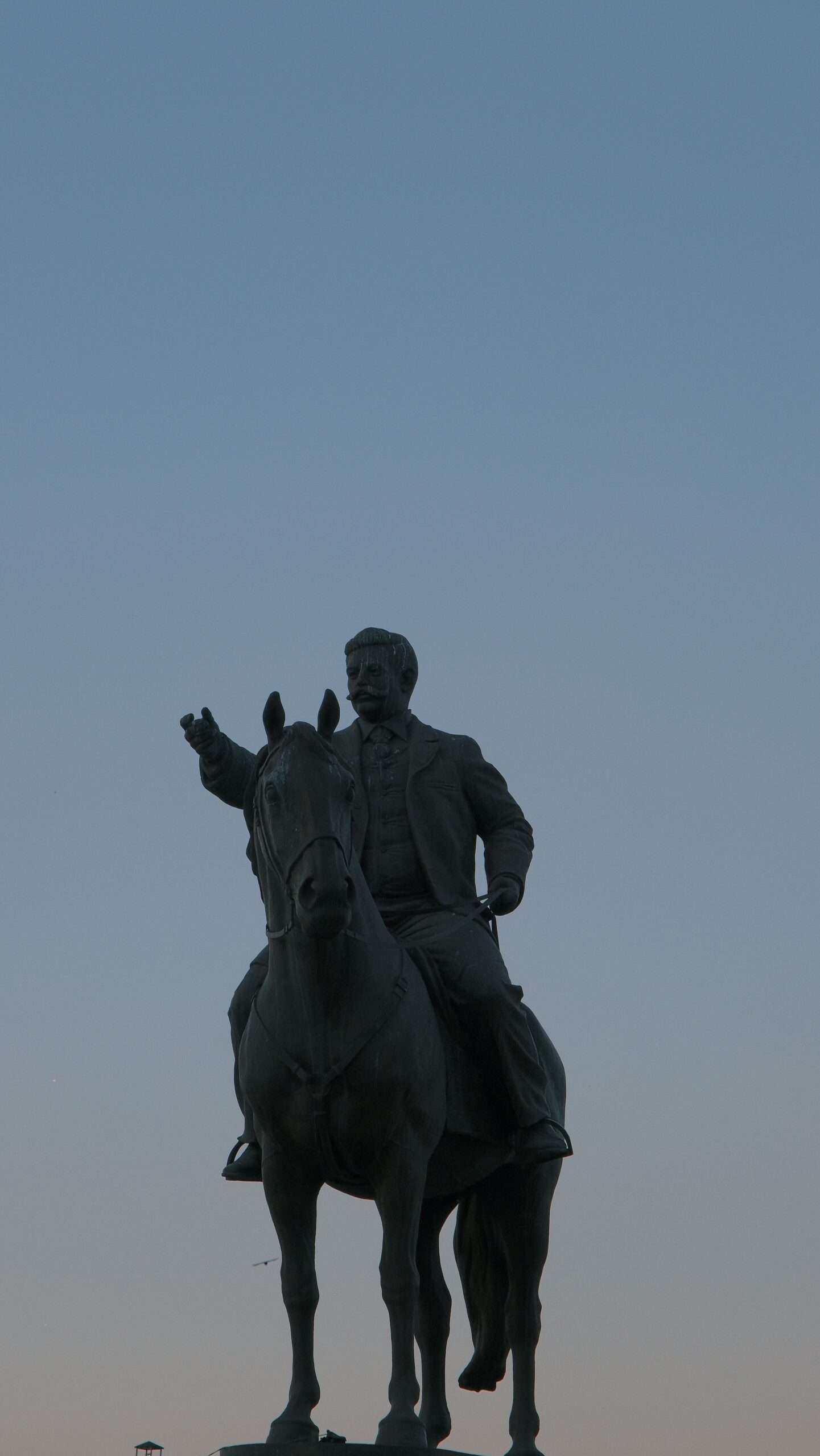
MOBILE, Ala. — One of downtown Mobile’s most beloved pieces of public art is heading back to its longtime home. The Little Colt, a bronze statue gifted to Mobile by its Spanish sister city of Cordoba in 1967, is set to be restored to its pedestal in Spanish Plaza following a lengthy restoration effort. For generations of downtown workers and visitors, the small bronze horse has been one of the recognizable landmarks of the riverfront civic space at the foot of Government Street.
The statue was a fixture of the plaza for years before Hurricane Frederic struck the Gulf Coast in 1979, causing damage that led to its removal. For decades afterward, the Little Colt effectively vanished from public view. City officials and preservationists lost track of its whereabouts until it was rediscovered in the early 2000s sitting in a private warehouse.
Hurricane Frederic, which came ashore just west of Mobile in September 1979, remains one of the most destructive storms in the city’s recorded history, flattening signs, shattering windows and tearing apart waterfront amenities across downtown. The cleanup that followed reshaped parts of the city for years, and the Little Colt’s disappearance from the plaza was among the small, easily overlooked losses that a major hurricane leaves behind amid the larger damage to buildings and infrastructure.
Once the statue resurfaced, bringing it back to public display required both money and craftsmanship. The restoration was funded by a gift from the Wayne D. McRae Philanthropic Fund, which is administered by the Community Foundation of South Alabama. With that support, the Little Colt has since been repaired and is once again in the city of Mobile’s possession.
Restoring a bronze sculpture that has spent decades in storage is meticulous work. Conservators clean corrosion from the metal surface, repair or recast damaged sections, address the pedestal and mounting hardware, and apply protective patina treatments designed to withstand the humid, salt-tinged air of the Gulf Coast. The philanthropic support from the McRae fund covered that specialized work, which private donations of this kind often make possible for public art that municipal budgets cannot prioritize.
The statue’s return closes a long chapter for a piece of art that many downtown visitors and longtime Mobilians remembered fondly from Spanish Plaza before the 1979 storm. Its reappearance also marks a quiet victory for the preservation-minded residents who never stopped asking where the little bronze horse had gone.
The city marked the statue’s homecoming with a short ceremony in Spanish Plaza at noon on Tuesday, March 16, 2010, led by then-Mayor Sam Jones. The event celebrated both the artwork’s restoration and the decades-old sister-city relationship between Mobile and Cordoba, Spain, which the gift was originally intended to commemorate.
Spanish Plaza itself was built in the 1960s as a monument to that sister-city relationship, and the Little Colt has long been considered one of its signature features. Its return gives the plaza back a piece of its original character and offers another reminder of the international ties woven into Mobile’s downtown landmarks.
Mobile’s connection to Spain runs deep. The city was founded as the capital of French Louisiana in 1702, passed under Spanish control in the 1780s during the colonial reshuffling that followed the French and Indian War, and retains street names, architectural touches and civic symbols from both colonial eras. The sister-city partnership with Cordoba — the Andalusian city famous for its historic mosque-cathedral and its own equestrian traditions — grew out of that shared heritage, and the gift of a bronze colt was a fitting emblem of the friendship between the two cities.
Sister-city gifts like the Little Colt occupy a distinctive place in public art. They are diplomatic gestures made physical: a statue that arrives from abroad becomes a local landmark, and its upkeep becomes a matter of civic pride and of honoring the relationship it represents. When the statue vanished after Frederic, the loss was felt not merely as damage to a piece of metal but as an absence in one of downtown’s most symbolic spaces.
The March 2010 ceremony returned the story to its proper ending. Under a clear mid-March sky typical of Mobile’s spring, city officials and supporters gathered where the statue had stood for more than a decade before the hurricane, and the Little Colt resumed its post overlooking the plaza at the foot of Government Street.
For the Community Foundation of South Alabama and the McRae fund, the project stands as an example of how private philanthropy can retrieve a piece of a city’s memory. And for downtown Mobile, the plaza’s signature bronze colt is back where generations of photographs, postcards and family snapshots placed it — a small horse with a long journey behind it, standing once more in the Spanish heart of the city.
Spanish Plaza and the Cordoba connection
Spanish Plaza occupies a prominent spot in downtown Mobile’s network of parks and civic spaces near the waterfront, designed in the 1960s as a deliberate monument to the city’s Spanish colonial past and its modern bond with Cordoba. The plaza’s Spanish-themed design elements — including features referencing the sister city — made it a favorite gathering spot for civic ceremonies, festivals and the daily foot traffic of a downtown that has reinvented itself repeatedly over the decades.
The Little Colt became part of the plaza’s identity almost immediately after its 1967 installation. Children posed beside it, downtown workers used it as a meeting point, and its small scale — a colt rather than a monumental equestrian statue — gave the formal plaza a touch of approachability. That affection is why its absence lingered in local memory long after the hurricane debris was cleared and the city moved on to larger rebuilding priorities.
Hurricane Frederic’s toll on downtown Mobile provides the context for how a citywide sculpture could simply go missing. The September 1979 storm, a Category 4 hurricane at landfall near the Alabama-Mississippi line, drove storm surge into Mobile Bay and hurled wind-blown debris through the downtown core. In the months of cleanup that followed, damaged artwork, signage and monuments were moved to storage, and records of where each item went were sometimes scattered among contractors, city departments and private property owners.
The Little Colt’s rediscovery in a private warehouse in the early 2000s resolved a mystery that preservationists had periodically raised. How it got there — and how it survived — became secondary to the central question once it was found: could the statue be restored and returned? The answer required identifying the conservation work, securing funding and confirming that the city still held title to the piece, all of which took years to complete before the 2010 ceremony.
What the restoration means for Mobile’s public art
The Little Colt’s return arrives as part of a broader appreciation in Mobile for the public art and historic markers that anchor the city’s identity. Downtown’s revitalization over recent decades — from the restoration of historic commercial blocks to the growth of the convention center and riverfront attractions — has raised the stakes for the details that make the district distinctive, and small landmarks like the plaza colt carry outsized weight in that picture.
The project also illustrates the role the Community Foundation of South Alabama plays in the region. The foundation administers charitable funds for donors across the southwest Alabama counties it serves, channeling gifts toward causes that include education, health, arts and community development. The Wayne D. McRae Philanthropic Fund’s support for the statue’s restoration fits squarely within the tradition of donor-directed giving that keeps cultural assets alive without relying solely on public budgets.
For city officials, the episode left behind a practical lesson as much as a celebratory one: inventory matters. Knowing what public art the city owns, where each piece is stored, and what condition it is in prevents the kind of decades-long disappearance the Little Colt suffered. Cities across the hurricane-prone Gulf Coast have since formalized such inventories, cataloging monuments and sculptures so that the next storm does not scatter them into anonymous warehouses.
The March 16, 2010 ceremony closed the circle begun 43 years earlier with Cordoba’s gift. A statue created as a token of friendship between two cities on opposite sides of the Atlantic had been knocked down by a hurricane, lost, found, restored and returned — and its presence in Spanish Plaza once again tells visitors something true about Mobile: that this Gulf Coast city’s history and friendships reach far beyond its harbor.
Visitors to Spanish Plaza today can find the Little Colt on its pedestal, polished by conservation work and carrying the faint traces of its long journey. It remains what it was in 1967: a small bronze ambassador, standing at the foot of Government Street in one of the oldest cities on the Gulf Coast.