Severe Thunderstorms Send Tree Crashing Into Back of Milton Home
A large tree crashed into the rear of a Milton home during severe thunderstorms this week, the latest in a string of storm-related damage reports.
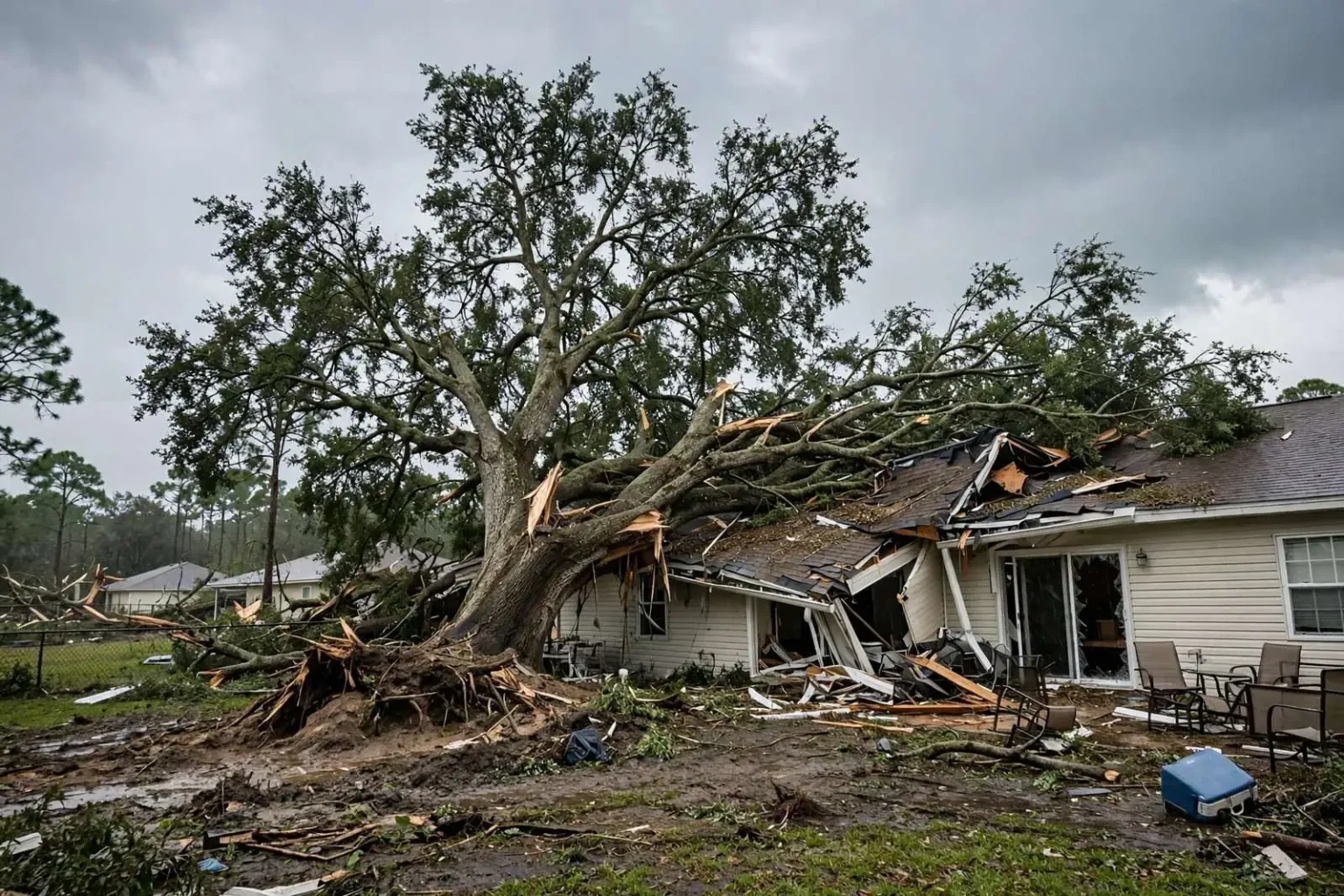
Severe thunderstorms rolling through the area this week left a Milton homeowner with a mess to clean up after a large tree came crashing down onto the rear of a house. The tree fell during a round of storms that moved through the region, striking the back portion of the home.
No further details on the extent of the damage, injuries, or the exact location within Milton have been released. Local officials and utility crews often respond quickly to storm-related incidents like this one to check for downed power lines, blocked roadways, and structural hazards before residents are cleared to fully assess the damage on their own.
Storm Season Brings Familiar Risks
Falling trees remain one of the most common sources of property damage during Gulf Coast thunderstorm season, which regularly brings gusty winds, heavy rain, and lightning to communities across Santa Rosa County and the surrounding Florida Panhandle. Saturated soil combined with strong wind gusts can be enough to topple even healthy, mature trees, particularly those with shallow root systems or existing damage from previous storms.
Homeowners who experience storm damage are typically advised to photograph the damage before any cleanup begins, contact their homeowners insurance provider promptly, and avoid approaching any downed limbs or trees that may be resting on power lines. Licensed tree removal professionals are recommended for safely clearing large fallen trees, especially when they are in contact with a structure or utility lines.
As storm season continues, residents throughout Milton and the broader Santa Rosa County area are encouraged to stay alert to weather alerts and secure loose outdoor items ahead of approaching thunderstorms.
Why trees fall in Panhandle storms
The Milton tree is a routine casualty of a familiar Gulf Coast hazard. Severe thunderstorms rolling through Santa Rosa County and the wider Panhandle regularly deliver the combination that drops mature trees: saturated soil from days of rain, then a gust front that finds the weak point. A tree with a shallow root system, a prior wound from an older storm, or simply the wrong species for wet ground can go over with little warning, and the back of a house is a common landing spot because storms often come from the west and trees lean accordingly. The damage in Milton is one instance of a pattern that plays out across the region every spring and summer.
The immediate safety steps
When a tree takes down a home, the first risks are the invisible ones: downed power lines, compromised structure, and the temptation to start clearing before it is safe. Utility and fire crews typically arrive to check for live wires and structural hazard before a resident should approach, and the standard advice — photograph everything, call the insurer, stay clear of limbs on lines, hire licensed pros for removal — exists because amateur cleanup near a damaged roof or a live wire turns a property loss into a personal injury. The Milton homeowner’s next steps are the ones every storm-damaged household faces, and doing them in order matters more than doing them fast.
A season that demands preparation
The broader lesson for Milton and Santa Rosa County is the one residents hear every year: stay alert to alerts, secure loose items before a storm, and know that a healthy-looking tree is not a guarantee. Trimming weak limbs in calm weather, knowing which trees sit close to the house, and keeping an outage kit ready are the unglamorous defenses against exactly the scenario on the Milton property this week. As thunderstorm season continues, the region will see more of these falls, and the households that prepared — and that wait for professionals — are the ones that come through them intact.
The human side of the cleanup
Behind the property-damage framing is a household displaced from part of its home, a yard turned into a worksite, and the slow bureaucratic dance of insurance and tree service that follows every storm. For the Milton resident, the “mess to clean up” is also lost routine and unexpected cost, and the quick response of local crews to check for hazards is the first kindness in what is usually a weeks-long recovery. Storm season on the Gulf Coast is measured not only in wind speed but in these small, repeated disruptions to ordinary life, and the Milton tree is one more of them.
Milton’s place in the storm path
Milton sits inland along the Blackwater River, but it is no stranger to the severe thunderstorms that track across the Panhandle, and the tree-on-house scenario is a recurring local hazard rather than a freak event. The town’s mix of established neighborhoods with mature trees and newer development carved from wooded land means plenty of limbs and trunks poised to fall when the soil is wet and the wind is up. Crews’ quick checks for downed lines and structural danger are the standard first response, and the Milton homeowner’s experience is a reminder that “storm season” on the Gulf Coast is not only hurricane season — it is every thunderstorm capable of toppling a tree.
After the tree is cleared
Once the Milton tree is removed and the damage assessed, the longer work begins: the insurance claim, the roof repair, the yard restoration, and the quiet reckoning with which trees to trim before the next storm. Storm-damaged households across Santa Rosa County know this rhythm, and the Milton home is one address in a seasonal pattern. The advice to document, call and wait for pros is the same every time, and the residents who follow it recover faster and safer than those who rush. The tree crashing into the back of a Milton house is a headline for a day and a project for a season.
Preparing before the next cell
The Milton tree is also a prompt for the households around it: walk the property with an eye for the lean, the crack, the limb already half-down, and act in calm weather rather than after the storm. Arborists recommend removing or cabling hazardous trees before thunderstorm season, not during it, and the cost of prevention is almost always less than the cost of a tree through the roof. Santa Rosa County residents who take that step turn the next round of storms from a threat into an inconvenience — and the Milton homeowner’s week is the cautionary tale that makes the case.
When the weather turns
The Practical takeaway from the Milton tree is mundane and lifesaving: respect the storm. The National Weather Service issues severe thunderstorm warnings for exactly the wind that drops trees, and the difference between a close call and a catastrophe is often whether a household heeded the alert, secured the yard, and stayed clear of downed lines. Santa Rosa County sees these storms as a seasonal fact, and the Milton home is this week’s example of why the standard advice exists. As the season continues, more trees will fall; the prepared and patient households are the ones that weather them without becoming the next story.
The wider Panhandle pattern
Milton’s tree is one data point in a regional pattern that emergency managers track every year: thunderstorm-driven wind damage concentrated in the warm months, when unstable air and gulf moisture collide over the Panhandle. Santa Rosa County, like its neighbors, budgets for debris removal and keeps mutual-aid agreements ready because these storms rarely strike just one home. The Milton case is small in the county’s ledger but large in the homeowner’s life, and the public-safety response — crews checking lines and structure before clearance — is the same playbook used after every such fall. The season’s toll is the sum of these individual messes, and preparation is the only lever residents control.
A note on insurance
For the Milton homeowner, the financial recovery hinges on the steps taken in the first days: thorough photos before cleanup, prompt notice to the insurer, and a written scope from a licensed contractor rather than a handshake estimate. Storm claims are among the most disputed in property insurance, and documentation is the homeowner’s best protection against a lowball or a denial. The advice to avoid limbs on power lines is not only safety but also claim integrity — disturbing a utility-connected tree can complicate both the cleanup and the coverage. Doing it in the right order is what turns a disaster into a managed recovery.
Staying weather-aware in Milton
The simplest protection a Milton household has is attention: a phone set to alert, a glance at the radar before a planned outdoor task, and a plan for where to shelter if a warning sounds. The Gulf Coast’s thunderstorm season is long and repetitive, and complacency is the most common cause of preventable damage. The tree behind the Milton home is a visible lesson in how fast a calm afternoon turns — a warning, a gust, a crash — and the residents who treat each forecast with mild respect are the ones who avoid becoming the next address in the storm report. Awareness is free, and it is the first line of defense the crews cannot provide.