

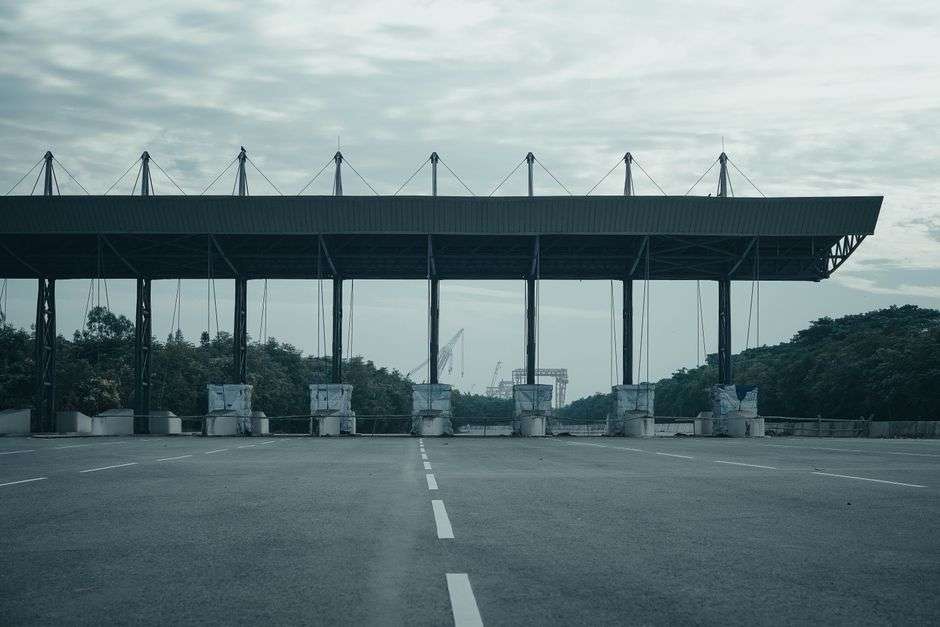
Alabama politics has long divided along a north-south fault line, and the debate over a planned toll on the Interstate 10 Bayway is only the latest example of how that divide plays out in real dollars for South Alabama drivers. State officials are moving forward with plans to charge motorists somewhere between three and six dollars to cross the Bayway once new lanes and improvements are complete. For commuters who cross the causeway daily between Mobile and Baldwin County, that toll would add up to a real monthly expense, layered on top of already rising costs of living along the Gulf Coast.
At five crossings each workday week, a charge in that range translates into anywhere from roughly sixty to well over a hundred dollars a month for a single commuter, before a cent of it buys anything for the driver beyond the crossing itself. Households with two working adults on opposite sides of Mobile Bay would feel it twice over. For families in Daphne, Spanish Fort, Fairhope and the rest of the Eastern Shore who work, shop, worship and see doctors in Mobile, the Bayway is not an occasional excursion route. It is the daily artery, and there is no true substitute for it.
That geography is what makes the dispute sharper here than it might be elsewhere. Interstate 10 reaches the Gulf Coast as a four-lane highway that threads through downtown Mobile beneath the river in the George Wallace Tunnel, then leaps across the upper bay on the elevated Jubilee Parkway — the long bridge span local drivers simply call the Bayway. A driver headed from Pascagoula or Biloxi toward Pensacola has to make that crossing, and so does a nurse who lives in Fairhope and works at a hospital in midtown Mobile. The difference is that the nurse has to make it every morning, in both directions, and will pay for the privilege every time.
Alternate routes exist, but only in a limited sense. Drivers can dodge the tolled lanes by taking the old Bankhead Tunnel or the downtown streets and then swinging north onto the U.S. 98 and U.S. 90 causeway corridor that skirts the upper edge of Mobile Bay, or they can thread through Spanish Fort and Daphne on U.S. 31. Those routes carry them across the same delta on aging, congested two- and four-lane roads that were never designed to absorb interstate traffic. In practice, most daily commuters have fewer workable alternates than the term implies, which is precisely why critics of the toll plan argue the burden lands hardest on the people who live here.
A toll that would never fly in Birmingham
Critics of the plan argue that a toll of this kind would never be seriously considered on a comparable stretch of interstate closer to the state’s population centers in the north. No one is proposing tolls on Interstate 59/20 through downtown Birmingham, and no one is floating the idea of charging drivers to reach Bryant-Denny Stadium in Tuscaloosa or Jordan-Hare Stadium in Auburn. Yet a toll on the coast, where daily commuters have fewer alternate routes, has drawn comparatively little pushback from state leadership.
The contrast is hard to escape. Birmingham’s interstate system has been rebuilt, reconfigured and widened through the heart of the state’s largest metro area without a per-trip charge being suggested for the lanes that carry commuters past downtown. Huntsville has absorbed enormous federal and state investment along its research corridor without any conversation about tolling its commutes. Montgomery, the capital, sits at the junction of two interstates that moved through decades of reconstruction without a single toll plaza. Only on the coast, critics say, has the state reached for a pay-per-crossing model — and only because the people who would pay it hold so little leverage in Montgomery.
South Alabama’s legislative delegation has not been silent on the point, but its size tells part of the story. The legislative districts around Mobile Bay are outnumbered by the blocks of seats clustered around Birmingham, Huntsville and Montgomery, and transportation dollars historically have flowed toward the population centers that cast the most votes. A bridge project on the coast, funded by tolling the coast, fits an old pattern that residents of Mobile and Baldwin counties have learned to recognize: improvements arrive, but the bill for them is expected to be paid locally.
The through-traffic argument
Part of the calculus, supporters of the toll note, is that a significant share of I-10 traffic through Mobile and Baldwin counties consists of out-of-state travelers passing between Mississippi and Florida rather than local commuters. Backers of the toll argue that spreading the cost to through-traffic, rather than relying solely on state gas tax dollars, is a reasonable way to fund the upgrades. Still, local residents who use the Bayway for work, school and everyday errands would not be exempt from the charge.
The argument has a real logic to it. I-10 is one of the busiest freight and tourist corridors in the country, running from California to Florida, and the stretch through Mobile Bay carries a heavy mix of beach traffic, trucking and regional commuters. On a summer weekend, a large portion of the vehicles grinding across the Jubilee Parkway are bound for the beaches of Gulf Shores and Orange Beach or onward to Pensacola and Destin. Tolling that traffic, supporters say, means visitors and freight haulers help pay for the asphalt they wear out, instead of leaving the entire tab with Alabama fuel taxpayers.
But the same logic has a hole at its center, and local officials have pointed at it repeatedly. There is no mechanism in the plan that distinguishes a vacationer from Baton Rouge on his way to the beach from a schoolteacher from Loxley on her way to work. Both cross the same span and both would pay the same charge. Discount schemes and tolling technology can soften the blow for frequent local users, but they do not remove it, and commuters who cross the Bayway two or three times a day for shifts, school pickups and errands would absorb the cost over and over.
Supporters also argue that tolling is simply the only financing tool left on the table. Gas tax revenue has been squeezed for years by fuel-efficient vehicles, and the state’s per-gallon tax rate historically has been among the lowest in the nation, leaving the Alabama Department of Transportation chronically short of the money needed for major capacity projects. Under that view, the choice is not between a tolled Bayway and a free one paid for by the state; it is between a tolled Bayway and no widened Bayway at all. Critics answer that a state that can find money for projects in the north could find it for the coast if the political will existed.
Sixty miles of coastline, little coastal power
The dispute also highlights a broader dynamic in Alabama politics: unlike many other coastal states, Alabama’s political power has not historically been concentrated along its shoreline. With only about 60 miles of Gulf coastline, Alabama’s coastal counties have had to compete for influence against the state’s larger population centers in the north and around the capital in Montgomery.
The comparison with neighboring states is instructive. Florida’s peninsula funnels population and money toward the water, and its politics bend accordingly; even Louisiana, with its working coast and port economy, has built a political establishment around its southern parishes. Alabama’s shoreline, by contrast, is a short ribbon of beach towns at the very bottom of the state, and the counties that contain it — Mobile and Baldwin — have never formed a bloc strong enough to dictate statewide transportation priorities. Baldwin County’s explosive growth in recent decades has added seats and weight, but the state’s political gravity still sits hundreds of miles from the surf.
That imbalance shapes more than tolls. Port investment in Mobile, hurricane recovery funding, oyster and fishery policy, and the perennial question of beach access all pass through the same filter: decisions made by legislators whose districts sit far from the salt air and whose constituents will never cross the Bayway on a Tuesday morning. A toll imposed on a corridor almost nobody in the north uses daily is, in that sense, a textbook case of the pattern — the costs are local and the approval is statewide.
Coastal lawmakers have used every tool available to them: public hearings, letters to transportation officials, and the leverage of a fast-growing Baldwin County delegation that now carries more votes than it did a generation ago. The emerging toll plan will test whether that growing strength is enough to bend a statewide decision, or whether the old north-south ledger still governs who pays for Alabama’s infrastructure.
What the money is supposed to buy
The improvements at the heart of the plan are aimed at the worst bottleneck on Alabama’s Gulf Coast. The proposal would add lanes to the Bayway crossing and upgrade the approaches around it, addressing a stretch where traffic stacks up daily and where a single wreck can close the region’s main east-west artery for hours. State transportation officials have spent years studying the crossing, and the financing question — how to pay for construction and maintenance — is what eventually led them to the toll model now under consideration.
For residents, the practical stakes are easy to list. A reliable Bayway means shorter trips to jobs in Mobile’s downtown, medical district and port area, and shorter runs to Daphne, Spanish Fort and the Eastern Shore’s growing retail base. It means hurricane evacuation capacity, which on this coast is not an abstraction: when a storm threatens, the Bayway and the causeway are the routes tens of thousands of people would use to move inland, and a crossing that grinds to a crawl on a sunny afternoon becomes a genuine danger in an evacuation. It also means the freight that keeps the Port of Mobile competitive can move without paying a time tax at the region’s worst choke point.
Whether tolling is the right way to get there is the question South Alabama has not settled. Proponents see a user-pays model that finally delivers a project the region has needed for decades, financed substantially by outsiders. Opponents see a double standard — a toll on the one interstate corridor where the state’s coastal residents have no way around it, and none on the corridors that serve the state’s political centers. Both sides agree on one thing: the crossing itself must be rebuilt.
The road ahead for coastal drivers
For now, planning continues, and the charge remains somewhere in the three-to-six-dollar range for the new lanes once they open. Drivers who cross the Bayway regularly are watching for details that would matter enormously to their budgets: whether any discount program will exist for frequent local users, whether the causeway alternates will be upgraded to give residents a genuine choice, and how the revenue will be accounted for once collection begins.
The broader lesson is not lost on the people who live here. In a state where the population, the universities, the stadiums and the political capital all sit north of the piney woods, South Alabama’s roads are built with South Alabama’s money more often than not. The Bayway toll, supporters insist, is simply a modern financing tool applied to a modern problem. Critics insist it is the newest chapter in a much older story — a state that takes the coast’s traffic, the coast’s port, and the coast’s growth for granted, and asks the coast to pay when it finally wants a bridge worth crossing. Either way, the daily commute across Mobile Bay is about to become one of the clearest measures of how Alabama balances its regions when the money is on the line.