

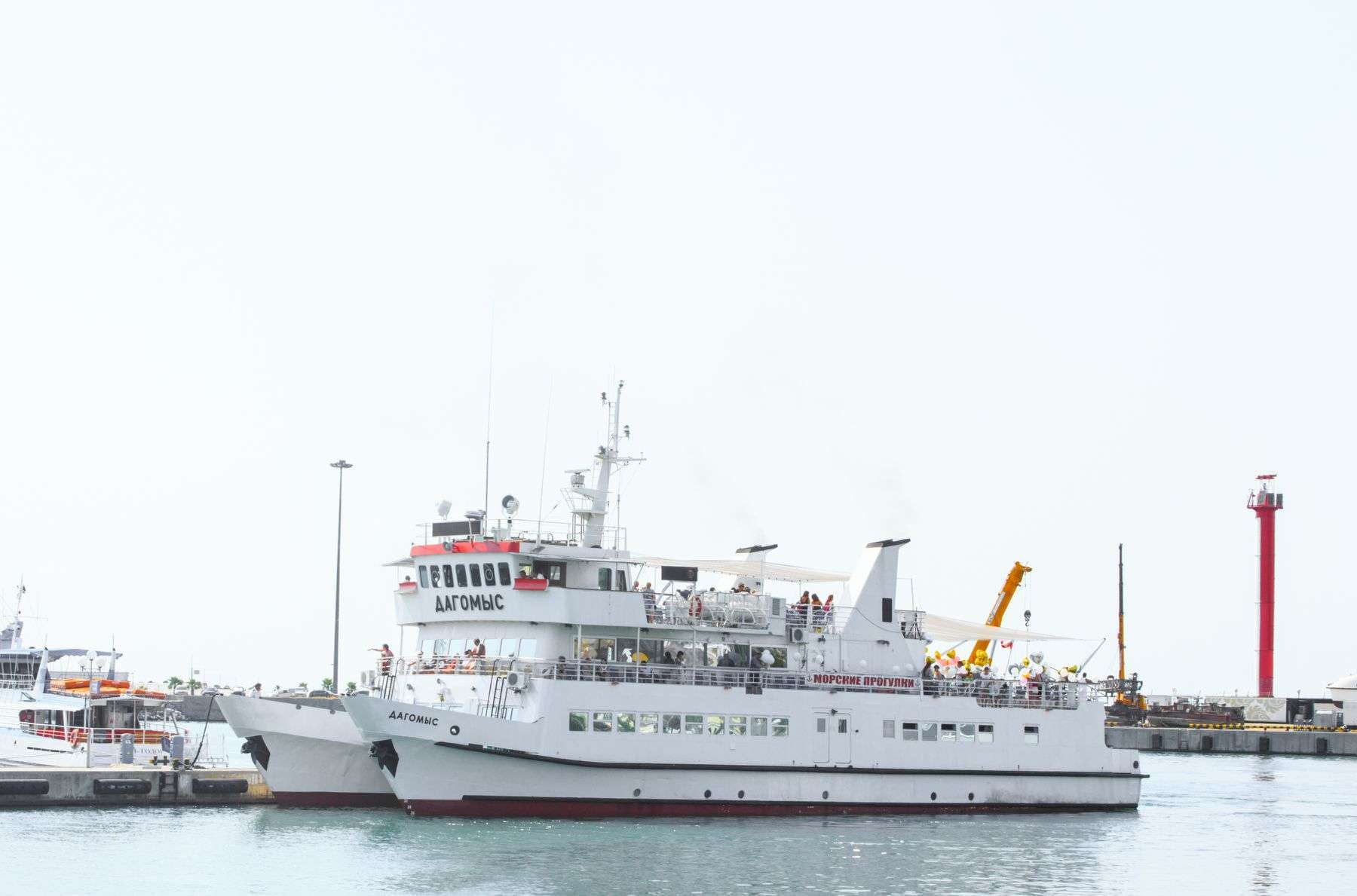
A little-remembered chapter of Gulf Coast maritime history resurfaced this week as archived reporting on a proposed Tampa-to-Cuba ferry route came to light, illustrating just how fiercely Tampa and Mobile once competed for a foothold in the region’s passenger cruise and ferry business. The episode, which dates to the early 2000s, centers on a Tampa-based operator’s plan to launch a weekly ferry connecting Florida with Cuba for Cuban American families — a proposal that, whatever its ultimate fate, underscored how much Gulf Coast ports were jockeying for position in a fast-changing cruise industry.
A Humanitarian Pitch for a Tampa-Havana Ferry
According to the original wire announcement, the company behind the proposal, Yucatan Express, described its plan as a way to give Cuban Americans an affordable alternative to air travel when visiting relatives on the island. Matthew Hudson, identified in the announcement as chairman of Yucatan Express, framed the service explicitly as humanitarian rather than commercial or political in nature. “The Tampa-Cuba ferry service is a humanitarian program that would help Cuban Americans connect with their families in Cuba and allow them to provide much more of the humanitarian aid permitted under existing U.S. rules,” Hudson said at the time. “It is not political, nor would it promote business and trade.”
The proposed schedule called for the ferry to begin operating February 25 of that year, pending government approval, running for ten round trips through April. Fares were set at $499 per adult for a round trip, a price the company said would include a standard cabin, four meals a day, port charges, security fees and applicable U.S. taxes. Passengers could pay extra for cabin upgrades, and the announcement noted that any fees levied by the Cuban government on arrival would be billed separately. Perhaps most notable was the cargo allowance: Yucatan Express said it would palletize and shrink-wrap up to 100 cubic feet of personal cargo per adult passenger at no additional charge, provided the goods met U.S. humanitarian aid rules. “We are offering to carry humanitarian goods, such as food, clothing and medicines free of charge to help families that have been separated,” Hudson said.
The Cuba route was pitched as an extension of a service the company had already launched between Tampa and Mexico’s Yucatan Peninsula, which by the time of the announcement had reportedly been operating weekly since late November of the previous year. That Tampa-to-Mexico run, however, proved to be a difficult business from the start; published travel-industry reporting from the period indicates the Yucatan Express route to Mexico was suspended within roughly a year of its debut, a reminder of how tough the economics of small-scale international ferry service could be, even without the added regulatory complexity of a Cuba route.
The Vessel and the Operator
The ship at the center of the proposal was the M/S Scotia Prince, described in the original announcement as 485 feet long, fully stabilized and capable of carrying up to 1,000 passengers and 200 vehicles, including motorcycles, boats, campers, trailers and RVs. The vessel was operated by Scotia Prince Cruises, a company with decades of experience running ferry service between the United States and Canada dating back to 1970. Over that span, the company said it had carried some five million passengers and roughly 600,000 vehicles. Under the proposed Cuba itinerary, the ship’s vehicle deck would have been repurposed to carry humanitarian cargo southbound, with the vessel returning to Tampa empty rather than carrying paying vehicle traffic back north.
Ferry service of this kind sat in a legal gray area that required careful navigation of the decades-old U.S. embargo on Cuba. Since the early 1960s, U.S. law has restricted most trade and travel between the two countries, but successive administrations have carved out licensed exceptions for specific categories of travelers, including Cuban Americans visiting close relatives, humanitarian workers and academic or religious groups. Any general passenger and cargo service between a U.S. port and Cuba, sea or air, has historically needed sign-off from federal agencies, including the U.S. Treasury Department’s Office of Foreign Assets Control, which administers the embargo, and the Coast Guard and Customs officials who oversee port operations. That licensing requirement is why the original Yucatan Express announcement repeatedly stressed that its Cuba plan was contingent on government approval and framed itself as strictly humanitarian, a positioning aimed at fitting within the narrower categories of travel the embargo permitted at the time.
Mobile Enters the Cruise Race
The archived material accompanying the ferry story also captured a separate but related storyline: the competition between Tampa and Mobile for cruise ship business along the Gulf Coast. By the mid-2000s, Mobile had emerged as a new entrant in an industry Tampa had cultivated for years through its Port Tampa Bay cruise terminal. Mobile’s pitch to cruise lines centered on its access to the Interstate 65 corridor, which the port promoted as putting a market of roughly 10 million people within an eight-hour drive — a geographic advantage aimed squarely at Midwestern and inland Southern travelers who might otherwise drive to Florida or Texas ports.
Mobile’s cruise ambitions received an unplanned boost after Hurricane Katrina struck the Gulf Coast in 2005 and forced the closure of the cruise terminal in New Orleans, one of the region’s established departure points. Carnival Cruise Line, which had been sailing out of New Orleans, redirected vessels to other Gulf ports in the storm’s aftermath, and Mobile’s Alabama Cruise Terminal became one of the beneficiaries of that shift. According to the archived reporting, the local cruise terminal manager at the time, Al St. Clair, said Mobile had gone on to deploy a larger Carnival ship because of strong, consistent bookings — a sign that the port’s bet on cruise tourism was paying dividends even as it remained the newer, smaller player compared with long-established Florida ports.
The archived commentary also pointed to a specific vessel that had been reassigned from New Orleans to Mobile in the wake of the storm, part of a broader reshuffling of Gulf Coast cruise capacity that took years to fully settle. Mobile’s cruise terminal ultimately hosted Carnival sailings for several years before the relationship lapsed and was later revived, reflecting the up-and-down nature of the regional cruise business that both the Tampa ferry proposal and the Mobile cruise terminal story illustrate.
Betting on High-Speed Ferries
Beyond traditional cruise ships, the archived material noted that the industry was also eyeing high-speed ferries — vessels built for speed rather than onboard luxury, designed to move passengers and vehicles quickly between destinations without the amenities of a full-scale cruise ship. Mobile had a direct stake in that trend through Austal USA, the shipbuilder’s U.S. subsidiary based at the Port of Mobile, which specializes in aluminum catamaran-hulled vessels. Austal built a high-speed ferry for Hawaii service, part of the company’s broader push into fast ferry construction that has continued to be a core part of its Mobile shipyard’s business in the years since, alongside its work building vessels for the U.S. Navy.
That combination — a shipyard building fast ferries on one hand, and a cruise terminal chasing traditional cruise business on the other — reflected Mobile’s dual approach to establishing itself in the maritime passenger industry during a period when the Gulf Coast cruise map was being redrawn. The archived reporting drew a comparison between the smaller, boutique-style ship proposed for the Tampa-Cuba run and smaller European cruise vessels, suggesting that not every operator in the market was chasing the same mega-ship model that came to dominate mainstream cruising in later years.
A Snapshot of a Changing Industry
Taken together, the archived material offers a snapshot of a Gulf Coast cruise and ferry industry in flux in the years following the early 2000s. Tampa, with its established cruise infrastructure, was fielding ambitious if ultimately short-lived ferry proposals aimed at Mexico and Cuba. Mobile, meanwhile, was working to build a cruise identity almost from scratch, aided first by geography and later by the disruption Hurricane Katrina caused to New Orleans’ competing terminal. Both cities’ experiences speak to how sensitive the cruise and ferry business can be to regulatory approval, storm disruption and shifting travel patterns — forces that reshaped which Gulf Coast ports hosted major cruise lines over the following decade.
For Mobile specifically, the Alabama Cruise Terminal’s early 2000s expansion marked the start of a cruise relationship with Carnival that has continued, with interruptions, into the present day, as the port has periodically added and lost cruise line partners depending on broader corporate fleet deployment decisions. The Tampa-Cuba ferry proposal, by contrast, appears to have been one of several early-2000s attempts to establish direct maritime links between South Florida and Cuba for humanitarian and family-reunification purposes — efforts that operated under close federal scrutiny and that, in many cases, struggled to find a sustainable, long-term business model within the embargo’s tight constraints.
The broader history of U.S.-Cuba ferry proposals shows that plans like the one described in the archived Yucatan Express announcement were not unique; several companies pursued similar licenses for Florida-Cuba ferry service over the following decade, with mixed results, as regulatory conditions shifted with changes in U.S.-Cuba policy. Readers interested in current travel and cargo rules affecting Cuba should consult the U.S. Treasury Department’s Office of Foreign Assets Control and the U.S. State Department for up-to-date guidance, since embargo-related licensing categories and enforcement priorities have changed multiple times since the early 2000s.