

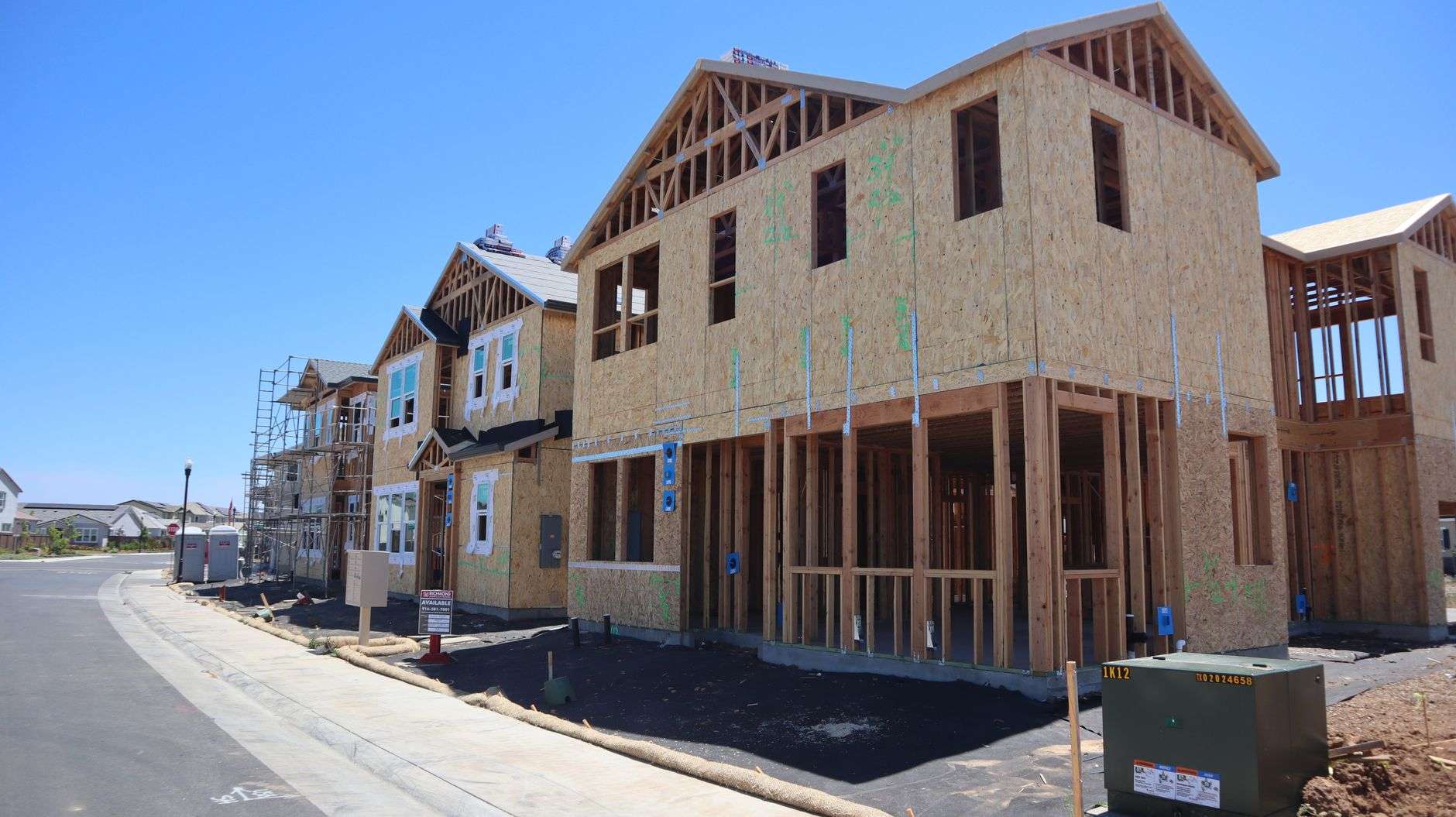
MOBILE, Ala. — The City of Mobile is putting nearly $2 million behind a new affordable housing development near Oaklawn Homes, after the City Council approved the additional funding.
Council President C.J. Small represents the district where the development is planned.
“What’s before us today is close to $2 million. $2 million that’s going to bring new life to a community and new hope to people that are hopeless,” Small said.
Seventy Homes Near 1010 Baltimore Street
The project planned for the area near 1010 Baltimore Street will include 70 new homes, with 69 expected to be available to current Oaklawn residents.
Small said that when he first took his seat in office he made a promise to revitalize Ann Street. With that revitalization complete, he is moving on to what he calls the second worst street in his district: Baltimore Street.
“We now have brand new street, a brand new community center, but we still have that stigma of 1010 Baltimore Street that’s still sitting there,” he said.
The commitment of 69 of 70 units to current Oaklawn residents is the structural feature that distinguishes this project from general affordable housing construction. It is a replacement-and-relocation model: residents of an existing public housing property move into new units nearby rather than being dispersed.
That approach preserves the social fabric of a neighborhood — the relationships, church memberships, school assignments and informal support networks that dissolve when a public housing property is demolished and its residents scatter across a city with housing vouchers.
The Financing Gap
The additional funding comes after the project faced a nearly $2 million financing gap that the city has said was tied to the lack of project-based vouchers from the Mobile Housing Authority.
The Housing Authority has disputed that characterization, saying the city was asking it to move quickly through a process requiring public notice and resident input.
The city had already approved about $11.5 million for the project. With this additional funding approved, city leaders say the goal is to keep Taylor Landing moving toward construction.
Project-based vouchers are federal rental assistance tied to specific units rather than to individual tenants, and they function as a guaranteed revenue stream that developers use to secure financing. Their absence creates a gap that has to be filled from another source — in this case, city funds.
The disagreement between the city and the Housing Authority is a procedural one. Committing project-based vouchers involves federally required public notice and resident participation, and those steps take time. The city’s position is that the project cannot wait; the Housing Authority’s position is that the process cannot be compressed.
‘Are We Taking a Short Cut? Yes.’
“This money was set aside to put into residents like Baltimore Street to revitalize it and that’s exactly what this money was set aside to do,” Small said. “Are we taking a short cut to move forward? Yes. We’re not trying to wait around another three or four years for this to happen. We’re looking to break ground very soon.”
Small said the project is not one the city can complete alone.
“We want to work with the housing board, we want to work with anybody who is able, private investors, who’s able to help move our citizens up to the next level,” Small said.
Timeline
Construction is expected to take about 18 months once it begins.
With roughly $13.5 million in city funding now committed, the project’s remaining path runs through final financing, permitting and a construction start that Small says he wants to see soon.
Update: The Resolution, an Amendment and the Housing Authority’s Response
The funding approved by the City Council pledges $1.95 million from the city’s Fiscal Year 2026-27 Community Development Block Grant Census Tract fund to help Taylor Landing reach groundbreaking. The project calls for 70 new residences next to the Oaklawn public housing complex at 1010 Baltimore Street.
What the Resolution Said
As originally drafted, the resolution identified the cause of the shortfall directly.
“The Taylor Landing project that is to be funded through Community Development Block Grant Disaster Recovery funds, Alabama Housing Finance Authority Bond funds and private mortgage funds has a $1,950,000 financing gap caused by the Mobile Housing Authority’s abstention to participate with project-based vouchers,” the resolution read.
It went on to say the city must support the development with funding “to reverse the decline of the neighborhood caused, in part, by years of neglect by the Mobile Housing Authority with the neighboring Oaklawn Homes, commonly referred to as 1010 Baltimore Street.” The city’s participation was therefore “required and justified,” the resolution read.
The Money Is Structured as a Mortgage
Senior Director of Neighborhood Development Jamey Roberts told councilors that Taylor Landing cannot move forward to groundbreaking without the $1.95 million. The funding will serve as a “mortgage,” he said — meaning it will eventually be repaid to the city if public housing vouchers are used.
Mayor Spiro Cheriogotis said the city does not want a project that will “change the face of Baltimore Street permanently” to fail for lack of funding.
The Housing Authority Disputes the Account
The Mobile Housing Authority issued a statement on Tuesday, Sept. 8, disputing the city’s characterization. The agency said Taylor Landing’s developers were told project-based vouchers were not available, and that the MHA quickly approved a package of Rental Assistance Demonstration vouchers to help.
“The development team and personnel from the city came back and demanded that the Mobile Housing authority rush a process that requires public notice and input from the residents and the general public and provide them with project-based vouchers,” the statement reads. “It is unfortunate that a narrative is being spun to make the Mobile Housing Authority appear unwilling to serve as a catalyst for change in the Oaklawn community when in reality it has already gone above and beyond.”
An Amendment Removed the Criticism
During the council’s pre-meeting work session on Tuesday, Sept. 16, District 6 Councilman Josh Woods proposed an amendment striking the language critical of the Mobile Housing Authority from the resolution.
District 3 Council President C.J. Small thanked Woods after the council voted to allocate the funds.
“You draw more flies with sugar and honey than you do with vinegar. That’s why I take my hat off to my fellow councilmember Woods for making that amendment,” Small said. “We want to work with the housing board. We want to work with anybody who is able, private investors who are able to help us move our citizens up to the next level.”
Changing the Address
Small said the city will change the property’s address of 1010 Baltimore Street to remove the negative association attached to that number.
“That is going to bring new life to a community and new hope to people that are hopeless,” he said. “We got a brand new street, we got a brand new community center, but we still have that stigma of 1010 Baltimore Street that’s sitting right there. With the help of Mr. Jamey Roberts, the past administration, the current administration, this council, we’re looking to build some townhomes.”