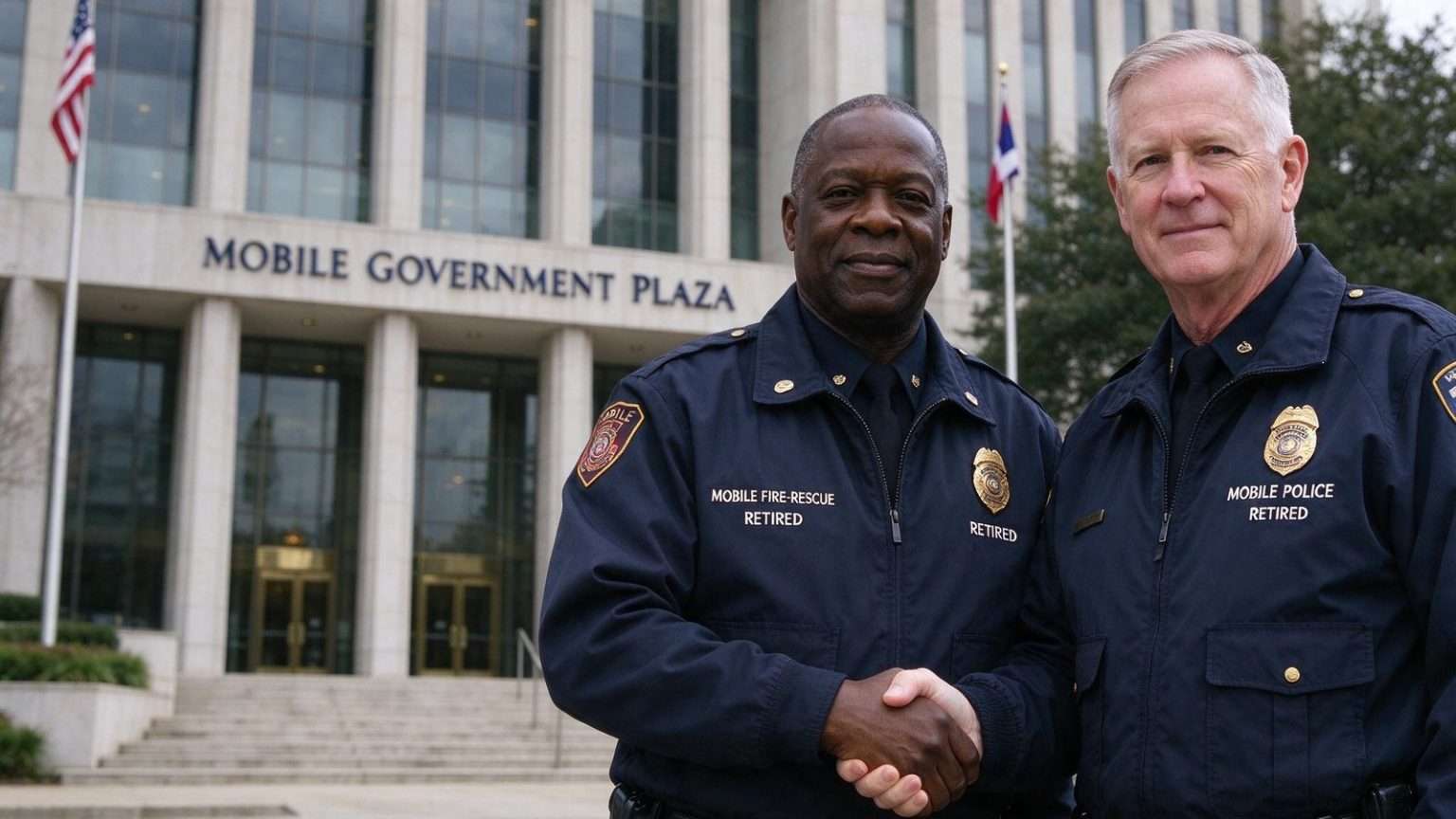
Retired Mobile police officers and firefighters may soon see their first permanent increase to monthly pension payments in more than two decades. A proposed 2.5% cost-of-living adjustment is moving forward as the city closes in on the final stretch of a 30-year effort to erase a shortfall in the Mobile Police and Fire Pension Plan.
Randy Reed, president of the Mobile Fire Retirees Association, said the change has been a long time coming. He represents roughly 350 retired Mobile firefighters and said morale among that group is high heading into a vote on the proposal.
“We’re very happy because it’s been a lot of years,” Reed said. If the increase clears its remaining approvals, retirees would begin receiving it Oct. 1, the start of the city’s 2027 fiscal year. Reed said the bump, while welcome, will not go far given how much everyday costs have climbed.
“Cost of living, cost of insurance, deductibles, medicine, everything’s gone up, and 2.5%, you know, probably for most of them, probably will mean about $600 a year,” he said. “So it doesn’t change things a whole lot. Does help.”
Bryan Lee, who chairs the Mobile Police and Fire Pension Board, said the increase would mark just the third adjustment to retiree benefits in about two decades. Retirees who left the department before 1996 received a 2% cost-of-living adjustment in 2008.
Those who retired between October 1996 and 2008 instead got a one-time lump-sum payment of $1 for every month worked, meaning someone with 25 years of service received $300. The last across-the-board increase to monthly benefits came in 2005, when retirees received a 4% bump.
Mobile Chief of Operations James Barber said the timing of the proposed increase is tied directly to the pension system finally climbing out of a deep financial hole. “The retirees have been just outstanding in knowing and understanding that we had to get this unfunded liability out of the way, and then once we were able to do that, we made this proposal to the mayor about doing this cost-of-living adjustment,” Barber said.
According to Barber, the city has been paying down roughly $15 million a year toward the pension plan’s unfunded liability, which ballooned after the system faced serious debt problems and the threat of insolvency in the 1990s. “It started off at around $80 million. It grew to as much as $120-something million, and then we’ve been able to bring it all the way down and got rid of that unfunded portion,” Barber said. The city expects to make its final payment on that debt next March.
Lee said 769 retirees and beneficiaries currently draw payments from the pension plan. The Mobile Police and Fire Pension Board was expected to vote this week on formally requesting the 2.5% increase.
If the board signs off, the proposal would then head to the Mobile City Council for final approval before retirees could see the extra money in their checks.
What a cost-of-living adjustment means
A cost-of-living adjustment, or COLA, is a percentage increase to a retiree’s monthly pension check intended to help benefits keep pace with rising prices. Unlike a one-time lump-sum payment, such as the $1-per-month-of-service payment some retirees received in 2008, a COLA permanently raises the base benefit, which is why the city calculates its cost over the long term.
A pension plan’s unfunded liability is the gap between the benefits it has promised current and future retirees and the assets it has on hand to pay them. Mobile has been closing that gap with annual catch-up payments, and city officials tied the timing of this increase to the plan reaching full funding.
Updates
Update: The pension board’s requested increase has formally advanced to the Mobile City Council as a resolution sponsored by the mayor’s office. The proposal was expected to receive its first reading at Tuesday’s council meeting and, under council rules, will likely be laid over for one week, setting up a possible final vote as soon as Aug. 4.
The resolution spells out exactly which retirees and beneficiaries would receive the 2.5% cost-of-living adjustment: those who left city service before Oct. 1, 1977, those who retired between April 15, 1985, and Sept. 30, 2026, and retirees currently participating in the Deferred Retirement Option Program, known as DROP. Retirees who left between Oct. 1, 1977, and April 14, 1985, would not receive the increase.
The adjustment would also extend to certain beneficiaries, including widows of retirees who retired before April 14, 1985, who currently receive the benefit commonly known as the “$150 widows” benefit, as well as widows and other beneficiaries whose benefits began between April 15, 1985, and Sept. 30, 2026.
Update: The Mobile City Council formally considered the 2.5% cost-of-living increase at Tuesday’s meeting.
City officials said the pension plan covers nearly 800 retired police officers and firefighters, all but three of whom will receive the adjustment. Those three retirees, who left the department between Oct. 1, 1977, and April 14, 1985, will not get this particular increase but continue to receive regular cost-of-living adjustments under a separate set of rules that already applies to them.
Update, Aug. 12: The Mobile City Council voted Tuesday to approve the 2.5% cost-of-living adjustment for retired police officers and firefighters, formally enacting the raise that had been proposed the same week. The increase, which takes effect Oct. 1, will cost the city an estimated $493,000 per year for the next 30 years, a total of about $14.79 million.
Before the vote, Randy Reed, president of the Mobile Fire Retirees’ Association, thanked the city for the “modest step forward.” Retired fire investigator Jerry Hatch, who spent 25 years with Mobile Fire-Rescue, said the increase was welcome after years of waiting.
“We’re grateful for the City Council to acknowledge us, finally,” Hatch said. “You always think you planned enough money to retire, but there’s never enough.” About 760 pensioners are eligible for the raise.
Mayor Spiro Cheriogotis said the adjustment was possible because the city has nearly finished paying down a decades-old unfunded liability in the police and fire pension fund, with the final catch-up payment expected in March. “We’re catching up. We are right there at the tail end,” Cheriogotis said. “This last catch-up payment has got us where we are fully funded, and we just want to keep our promise to the retirees.” He said the city expects to consider additional cost-of-living adjustments in the future, and Hatch said retirees plan to continue pushing for restored dental and vision insurance benefits.