

The city of Mobile, founded in 1702, sits at the head of Mobile Bay on the Gulf Coast and serves as the regional hub for much of southwest Alabama.
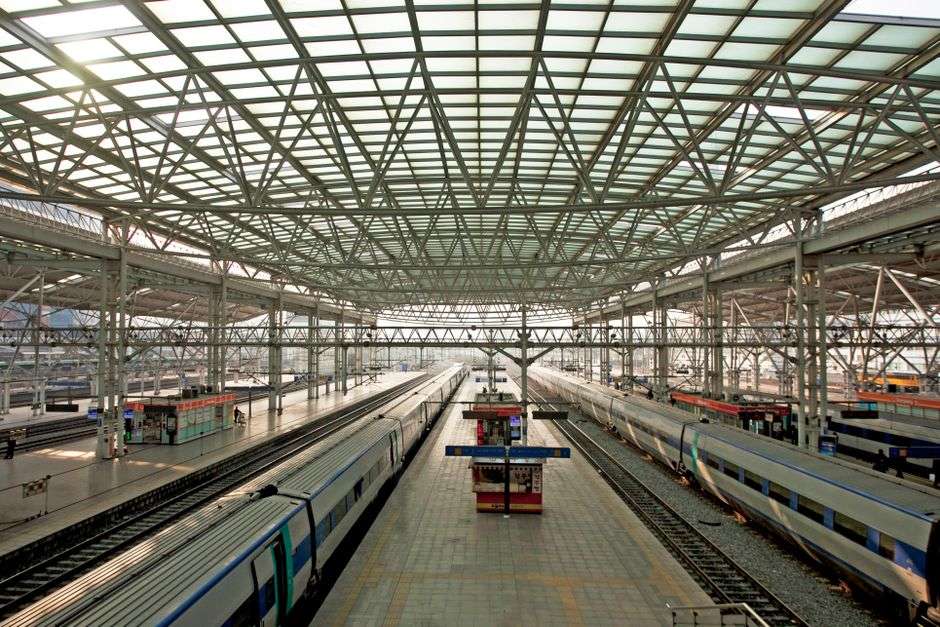
Amtrak officials told members of the Southern Rail Commission last week that the passenger rail carrier still intends to launch service along the Gulf Coast, including a stop in Mobile, sometime in early 2022, despite an unfinished study that was originally meant to guide the project. David Handera, Amtrak’s vice president of stations, facilities, properties and accessibility, briefed commissioners from Alabama, Mississippi and Louisiana on the physical work still needed before trains can start running, including new or repaired boarding platforms, lighting and signage at stations along the route.
Mobile has a population of roughly 188,000 residents and is the seat of Mobile County, one of the largest counties in the state by population.
In Mobile, Amtrak is looking at upgrades to the platform near the Arthur R. Outlaw Convention Center downtown.
The Port of Mobile, operated by the Alabama State Port Authority, is one of the largest seaports in the country by tonnage, handling containers, coal, steel and forest products.
Handera said the existing platform would need better accessibility features, and that the city would likely be responsible for footing the bill for those upgrades, along with improving the walking path connecting the platform to a nearby parking lot. Jim Blair, Amtrak’s senior director of schedule and planning, gave commissioners a more detailed account of the agency’s strained relationship with the freight railroads whose tracks the passenger trains would share.
Downtown Mobile has been the focus of significant redevelopment in recent years, with new apartments, restaurants and event venues reshaping the Central Business District.
Amtrak, CSX and Norfolk Southern had been working since 2019 on a joint modeling study meant to assess how passenger trains could be added to freight-heavy corridors without causing conflicts. That effort, Blair said, ran into repeated delays, including a software upgrade that rendered previously collected data unusable.
The University of South Alabama, Spring Hill College and the University of Mobile anchor the city’s higher education landscape.
Background and Context
“We set aside seven months to complete the study and we found ourselves in November and December of last year not progressing,” Blair told commissioners. “There were a number of hiccups.
Mobile’s Mardi Gras season, the oldest in the United States, draws visitors from across the country and provides a significant boost to the local economy each year.
We had spent a lot of time and money toward that effort and the fact is it wasn’t getting us anywhere close.” Rather than continue waiting on the study, Amtrak has informed CSX and Norfolk Southern that it intends to move forward with launching service on its own timeline. The agency is now working on hiring staff, purchasing equipment and beginning a marketing push ahead of a planned start next year.
The city’s healthcare sector is anchored by USA Health, Infirmary Health and Springhill Medical Center, which together employ thousands of residents.
“We are working hard on implementation to start service early next year,” Blair said. The decision to press ahead without a completed study could complicate matters with the Mobile City Council, which roughly a year ago approved about $3 million to help fund operation of the service over three years.
Mobile’s manufacturing base includes shipbuilding at Austal USA and Huntington Ingalls Industries, as well as aviation manufacturing at the Airbus final assembly line in Brookley.
That approval was contingent on completion of the freight modeling study Amtrak now says it does not intend to finish. A separate $80,000 council appropriation for a study of a potential new station site could face similar scrutiny.
Local schools include Mobile County Public Schools, the city’s largest public system, along with a network of private and parochial schools.
Local Reaction
Even so, officials floated the idea of an alternative station location during the meeting. John Robert Smith, chairman of Transportation for America and a former Amtrak board chairman, asked Handera whether the railroad would be willing to cover the cost of a platform, signage and lighting if a site study determined that Mobile’s Brookley Aeroplex would make a better location than the current downtown site.
Mobile’s history as a port city means that issues affecting the waterfront often take on outsized importance.
“I can’t commit to that today,” Handera responded. “It is something we would want to work together on.” Alabama members of the commission pushed back on the idea of abandoning the joint study altogether, arguing that keeping the freight railroads and the Alabama State Port Authority engaged in the process remains essential.
The Mobile area is home to several historic neighborhoods, including Oakleigh Garden District, DeTonti Square and the Village of Spring Hill.
David Clark, a Southern Rail Commission member and chief executive of Visit Mobile, called walking away from the modeling study a “short-sighted leadership approach.” “To give up on the modeling study altogether is not what right looks like,” Clark said. “To me, common sense says let’s get back to the table.” Clark, whose organization promotes tourism in the Mobile area, said restored passenger rail service would be a meaningful addition to the region’s appeal to visitors, even if it isn’t the kind of singular landmark attraction that instantly draws crowds.
Sports are a major part of life in Mobile, with the Senior Bowl each January and a thriving high school and college football scene.
“The thing about tourism is it’s not about iconic things that make a destination … often it’s about all the little things,” Clark said. “Amtrak would be a nice piece of the culture, an opportunity to experience coastal communities.” As envisioned, the route would run between New Orleans and Mobile, with stops in Bay St.
Local media outlets covering Mobile include several television stations, daily and weekly newspapers, and a robust digital news ecosystem.
The Bigger Picture
Louis, Gulfport, Biloxi and Pascagoula, Mississippi, linking several coastal communities along the way. Clark said he expects growing interest in the story of the Clotilda, the last known ship to bring enslaved Africans to the United States, to draw a significant number of international visitors to Mobile in the coming years.
Mobile County’s population includes a significant African-American community whose history is tied to the founding of Africatown.
Those travelers, he said, tend to rely more heavily on rail travel and often stay in a destination for longer stretches, sometimes two to three weeks at a time. Clark estimated the new rail service could eventually bring 15,000 to 20,000 additional visitors to Mobile each year beyond current tourism levels.
Mobile’s economy also benefits from a robust tourism sector, with visitors drawn to the Gulf Coast, the city’s historic districts and its annual events.
“That’s a cool thing,” he said. “That’s 20,000 more people who will stay here, dine here and shop here.” Clark also pointed to the long-term possibility of a station at Brookley Aeroplex as an appealing option for multi-modal travel, allowing visitors to arrive by train, spend time in Mobile, and depart later by air, or vice versa.
The Mobile Bay region supports significant commercial and recreational fishing, with seafood harvested from local waters serving restaurants and markets across the South.
Amtrak passenger service along the Gulf Coast has been out of operation since Hurricane Katrina damaged the tracks and infrastructure in 2005. Restoring the route has been a recurring goal for regional transportation advocates and elected officials in the years since, with funding, infrastructure upgrades and coordination with freight carriers remaining persistent hurdles.
Local government in Mobile includes a mayor-council form of government, a structure established by the Zoghby Act in 1985 that replaced the older commission form.
What Comes Next
The Southern Rail Commission, a tri-state compact of Alabama, Mississippi and Louisiana officials, has served as the primary advocacy body pushing the project forward.
Local officials have stressed the importance of community engagement as the situation continues to develop.
Residents with questions or concerns have been encouraged to reach out to their elected representatives.
The story is one of several similar situations playing out across the region in recent months.
Anyone following local news will recognize many of the names and places involved.
Local civic organizations have begun organizing meetings to discuss the implications.
Business owners and residents alike say they will be watching closely.
The situation underscores how decisions made at the local level can have far-reaching consequences.
Community leaders have called for patience and for a commitment to working through the issues in a transparent manner.
Several local churches and faith groups have offered to host discussions about the topic in the coming weeks.
Public comments at recent meetings have reflected a wide range of opinions.
Local reporters will continue to follow the story and to update readers.
Anyone interested in learning more is encouraged to attend upcoming public meetings.
The outcome of the situation could shape similar discussions in other communities for years to come.
Local historians note that similar issues have surfaced in the past.
Area nonprofits and volunteer groups have stepped up to help residents navigate the changes.
Local businesses have begun adjusting their operations in anticipation of what may come next.
Looking Ahead
The story continues to develop, and residents across the region will be watching for additional updates in the coming weeks. Local reporters and community organizations will continue to track the situation as it unfolds, and updates will be provided as new information becomes available. Anyone with a direct stake in the outcome is encouraged to stay engaged with the public conversation through meetings, news coverage and direct outreach to local officials.