University of South Alabama Mobile
USA Foundation’s $45 Million Sale of Brookley Golf Course Land Narrows Path to a Bayside Park in Mobile
The USA Foundation has sold 290 acres of the old Brookley golf course property for $45 million, mostly for light industrial development, but roughly 40 acres of wetlands and waterfront could still become a smaller bayside park.
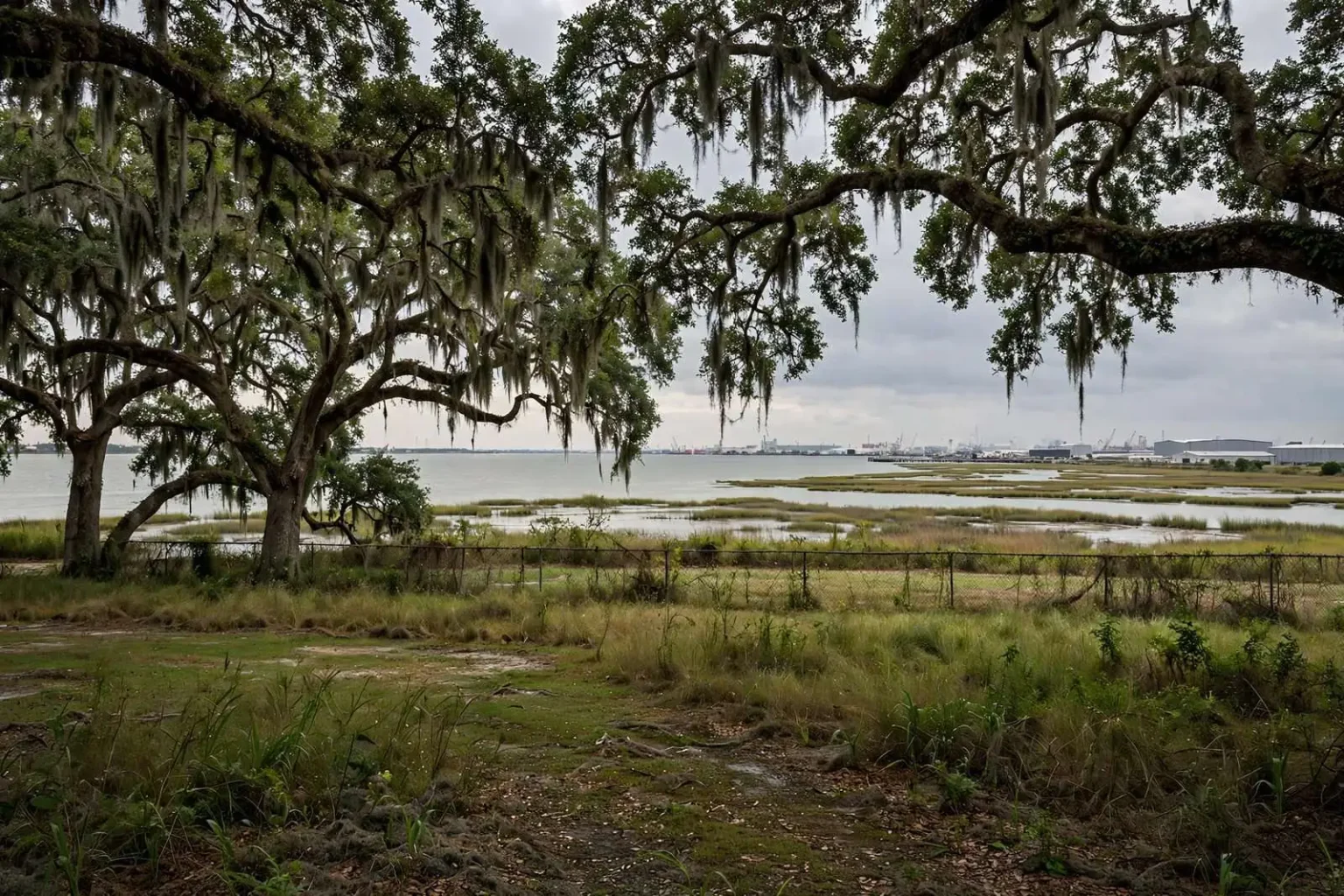
A long-running push to turn a sprawling, oak-shaded tract of land along Mobile Bay into a signature city park has been dealt a major setback after the USA Foundation agreed to sell 290 acres of former golf course property at Brookley to a private developer for $45 million.
The foundation, which manages real estate and investment assets on behalf of the University of South Alabama, announced the deal with 24/7 Development Partners of Alabama LLC last week. The land, long known as the site of the closed USA Gulf Pines Golf Course, sits next to the Brookley Aeroplex and has been eyed for years by park advocates who hoped it could become the anchor of a large, public green space along the bay.
Under the agreement, marketed as Brookley by the Bay, roughly 250 of the 290 acres will be sold for light industrial development. The property is covered in mature live oak trees draped in Spanish moss, features that supporters of a park plan had hoped to preserve as the centerpiece of a large public space open to the community.
For a city of Mobile’s size, the tract was a singular thing: a 290-acre block of mature, tree-covered land a few minutes from downtown, fronting the water, already owned by a single institution and never subdivided into streets and lots. Land with that combination of size, location and single ownership does not come on the market in American cities, and its sale to a private developer closes the door that park advocates had assumed would always remain at least ajar.
The park that never was
For years, some Mobile residents and local leaders floated the idea of the city buying back the land from the USA Foundation, envisioning a bayside park that could rival other American cities’ signature green spaces.
The comparison was not idle. Cities that command iconic waterfront parks — the great urban greens of the country — built them by reserving land at moments when it could still be had, and Mobile’s moment arrived, in the advocates’ telling, when a defunct golf course sat undeveloped beside the bay. A park of that scale, they argued, would have given the city what it has always lacked: a public place where the entire population could reach the water it lives beside.
Proposals to fund a purchase using money from the BP oil spill settlement circulated as recently as a year ago, when the mayor’s office reportedly discussed a possible mix of cash and a land swap with the foundation. Those talks did not result in a deal, and city officials ultimately directed the bulk of the settlement funds toward other priorities, including garbage trucks and a roll-on, roll-off cargo facility at the Alabama State Docks, as well as other economic development projects.
The administration’s arithmetic was defensible on its own terms. Restoration money, once spent, cannot be re-spent; garbage trucks are needed every day, a cargo facility pays for itself in dock revenue, and neither carries the maintenance obligations of a 290-acre park. The advocates’ counterargument was simpler: the settlement was a once-in-a-lifetime sum, and the land was a once-in-a-lifetime opportunity, and the two had expired together.
By the time the sale was announced, the window had closed. The foundation, a private entity with a fiduciary duty to the university rather than a mandate to assemble parkland, had waited through years of proposals and talks and had chosen the buyer that met its price.
A long history with the university
The Brookley property has a long history tied to the university. The land came to the University of South Alabama in 1969 after the closure of Brookley Air Force Base, under then-university president Fred Whiddon.
The air base’s closure was the defining economic wound of Mobile’s postwar decades — thousands of jobs gone from the peninsula at once — and the federal government’s disposition of its lands became the raw material for the city’s reinvention. The university’s acquisition of the golf course acreage was one of the smaller and quieter of those transfers, made under Whiddon’s aggressive expansion of a young institution that was then acquiring property across the city.
The university ran the tract as the USA Gulf Pines Golf Course for decades, a public-course layout where generations of Mobilians learned the game under the same live oaks the park advocates would later make their cause. When the university closed the course, the land reverted to holding — mowed, fenced, unused and increasingly discussed.
More than four decades later, in 2010, Whiddon’s successor, Gordon Moulton, oversaw the sale of the property to the USA Foundation for $20 million, with the proceeds going toward the expansion of USA’s Children’s & Women’s Hospital. The foundation has now more than doubled that investment with the sale to 24/7 Development Partners.
The 2010 transaction was the moment the land’s character quietly changed. A university-held golf course, whatever its future, remained a green and quasi-public place; foundation-held investment property was, by definition, awaiting a return. The hospital expansion the sale funded was real and valued — but it also converted the tract from open ground into a balance sheet line, and the park conversation that followed ran uphill against that arithmetic ever since.
From $20 million to $45 million in a handful of years is the kind of appreciation that vindicates the foundation’s management and haunts the park movement in equal measure. Every year the purchase price climbed was a year the public purchase became harder; the final price tag put the land beyond any realistic municipal budget, a figure the city could never have matched for open space when measured against streets, public safety and schools.
What survives of the park idea
Despite the scale of the sale, foundation officials say the deal leaves room for at least a scaled-down public park. USA Foundation Managing Director Maxey Roberts said the foundation is not selling roughly 30 acres of wetlands and an additional 10 acres along the waterfront, which will be kept free of commercial development. Those acres could form the basis of a smaller, eco-friendly park along the bay.
The developer has also agreed to leave wetlands and waterfront areas it does not own undeveloped, according to the foundation. The concessions are meaningful as far as they go: the wetland fringes and the water’s edge, the parts of the tract most ecologically sensitive and least buildable, will not carry buildings.
Exactly what form that public space will take remains unclear, and specifics on funding, design and a timeline have not been released. Between a “could form the basis” and an open gate lies the entire history of park promises on paper — and the advocates’ caution reflects a lifetime of watching plans evaporate between announcement and construction.
Advocates for bay access say even a modest park with a fishing pier and launch points for kayaks, canoes and paddleboards would represent a meaningful improvement for a city often described as land-locked despite sitting on one of the largest estuaries in the country.
The paradox is Mobile’s defining civic irony. The city’s harbor built the state’s economy, and the bay gave the city its name and its reason for being, yet the working waterfront that made both possible also fenced the public out of the water. Rail lines, docks, industrial parcels and private ownership line most of the urban shoreline, and a resident who wants to put a kayak in the bay or fish from a public bank within the city has very few places to do it.
The wetlands acreage the foundation is holding back touches a different kind of public value. Tidal wetlands along the bay’s edge filter runoff, buffer the shoreline against storm surge and shelter the nurseries of the fishery that supports the coast’s commercial and recreational fishing. A preserved wetland edge is, in other words, a working asset even when no one visits it — and if it is ever paired with a pier and launch points, it becomes a destination as well.
The scale of what remains is worth stating plainly: about 40 undeveloped acres out of 290. It is a fraction of the signature park the advocates imagined, and its value will depend entirely on what the city, the foundation and the developer eventually build or allow on it — access roads, parking, a pier, a launch, or simply a held boundary that no one improves.
Supporters of the original, larger vision for the property say they still hope city and university officials find ways to maximize public access to whatever waterfront and wetland acreage remains undeveloped, even as the bulk of the historic golf course tract moves toward industrial use.
Their remaining leverage is real but narrow. The foundation retains ownership of the 40 acres, the developer’s obligations run only to the land it does not own, and the city’s position at the table is now that of a negotiating partner rather than a contender. What the advocates can still shape is the design of the public edge — where the pier goes, whether the launch is free, whether the trails connect to the aeroplex’s streets or dead-end at a fence.
Industrial growth at Brookley
For the aeroplex, the sale promises exactly what the park advocates feared: several hundred acres of new, developable light-industrial land beside one of the Gulf Coast’s most successful employment centers. The Brookley peninsula has spent the post-base decades rebuilding its economy around aviation and industry, and developable land adjacent to an established industrial address is among the scarcest commodities in that game.
Light industrial development of the kind the agreement describes — assembly, warehousing, supplier facilities — brings jobs and property tax to the city’s rolls, and the aeroplex’s track record gives the market reason to believe the demand is there. City officials who weighed the park against economic development have consistently chosen development, and the sale’s terms now make that choice permanent.
The tension between the two futures of the property is, in the end, the oldest question a port city asks itself: whether the waterfront belongs to the economy that works on it or to the public that lives beside it. Mobile has answered that question one way for most of its history. The sale of the Gulf Pines tract continues the answer — with 40 acres of wetland and waterfront left, perhaps, as the beginning of a different one.