

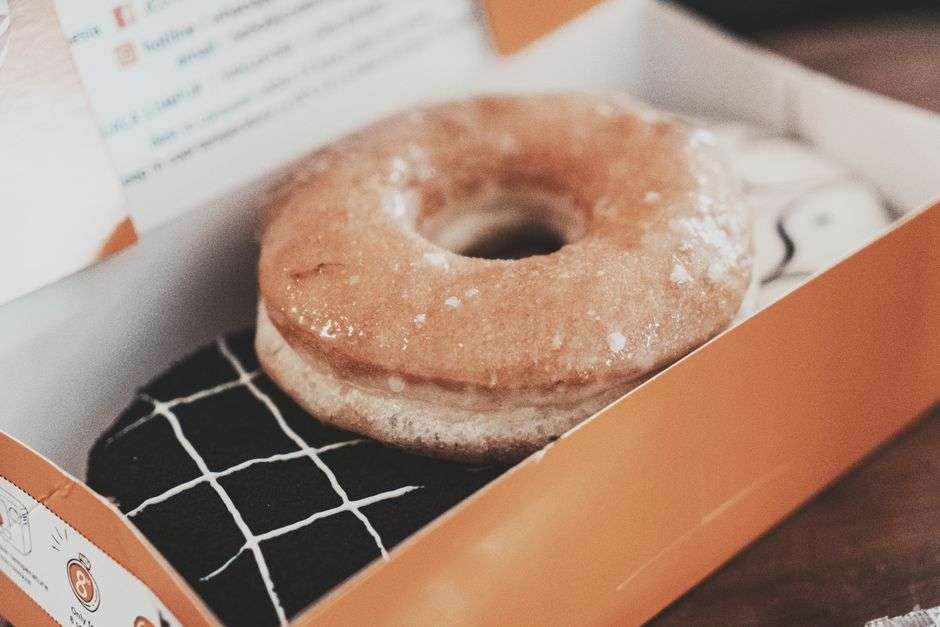
A familiar fixture along Schillinger Road in West Mobile is back to selling doughnuts and bottled water to passing motorists after a short interruption last month left his regular customers worried the business might be finished for good. Patrick Keelan, known to thousands of regulars as the “Doughnut Man,” has spent more than seven years working the same stretch of roadway, buying boxes of Krispy Kreme doughnuts in bulk and reselling them to drivers stuck in traffic or looking for a quick treat. The daily routine turned him into something of a local celebrity, with drivers honking, waving and rolling down windows to greet him by name.
Schillinger Road is one of the busiest commuter corridors on Mobile’s western edge, a two-lane workhorse that carries thousands of drivers each weekday between the fast-growing subdivisions of West Mobile and the city’s job centers. Morning and afternoon traffic along the route can slow to a crawl, and it was in exactly that slow-moving stream that Keelan built his business, working where the drivers were and selling to them one windshield at a time. In an era when most commerce has moved indoors or online, the Doughnut Man became a roadside institution, the kind of small daily encounter that West Mobile drivers planned their commutes around.
Keelan has said the business began as a turning point in his life. After being arrested on a marijuana possession charge, he decided to leave behind the life that led to the arrest and build something of his own. He said he was turned away from several spots around Mobile before settling on his now-familiar location at Schillinger Road, where the operation grew steadily over the years and eventually expanded to include stops in Saraland and other nearby communities.
The honesty of that origin story was part of his appeal. Keelan never presented himself as anything other than what he was: a man who made a mistake, wanted a fresh start and found one standing beside a road with a stack of doughnut boxes. Over seven-plus years, the resale operation turned a second-chance story into steady work, and regulars came to treat the transaction as less of a purchase than a standing appointment.
The snag that stopped the doughnuts
The business hit a snag last week when Keelan said he was temporarily blocked from purchasing doughnuts in bulk from the Krispy Kreme location near Hillcrest Road and Airport Boulevard, after the store learned more about how he was reselling the products. Keelan shared the setback with his followers in a video posted to his Facebook page, worrying many of his longtime customers, who in recent years had come to follow his whereabouts and availability through social media as much as through the sight of his familiar stand.
The company clarified days later that the issue centered on paperwork, not a permanent decision to cut ties with the vendor. In an email sent the following Friday, a Krispy Kreme spokesperson said the pause stemmed from “a local misunderstanding about paperwork” and confirmed that Keelan would be allowed to resume sales the very next day. “Now … it’s back to work for Doughnut Man!” the spokesperson wrote, according to the email Keelan received.
Krispy Kreme, the North Carolina-founded chain famous for its “Hot Now” fresh-off-the-line glazed doughnuts, has a long footprint in the Mobile area, and Keelan’s bulk purchases had become part of the routine at the store near the Hillcrest Road and Airport Boulevard intersection. What the brief episode revealed was how little friction it takes to interrupt an informal business built on handshakes: a single change in how a wholesale transaction is understood can halt a vendor’s entire operation overnight.
The company has not gone into detail about the specific paperwork requirement, but Keelan told customers in his Facebook video that he had been informed he would need to establish a nonprofit organization in order to continue reselling the doughnuts. For a one-man roadside operation, even an administrative step like that carries weight — it means forming and maintaining an entity, keeping records and navigating the formal rules that larger resellers handle with accountants and lawyers. Keelan’s business had always run on a simpler model: buy the boxes, set up on the shoulder, sell them cheaper and faster than a bakery visit would take.
Whatever the sticking point, it appears to have been resolved, allowing Keelan to return to his post on Schillinger Road that Saturday. The turnaround, from a wholesale block to full clearance in roughly a week, left Keelan back in the same spot doing the same work he had done for most of a decade.
Keelan said the reaction from his regulars was immediate and enthusiastic once word got out that he was back. Horns honked as customers pulled up to his stand throughout the day, many telling him they had spent the prior week rooting for his return. In a corridor where thousands of people pass the same spot every day, his absence had been noticed the way a closed gas station or a torn-down landmark gets noticed — as a small but real change to the daily landscape.
The cost of a week off
Despite the outpouring of support, Keelan said the disruption still cost him financially. Sales were down over the following weekend, he said, and he ended up giving away boxes of doughnuts he was unable to sell. Doughnut resale is a perishable, cash-flow business: the product must be bought fresh and sold fast, and a week without customers does not simply even out later. Inventory bought for a market that did not show up, as Keelan found, has to be given away.
He attributed some of the slowdown to the attention the story drew online, including a blog post about his situation and an online fundraiser started by a supporter hoping to help him buy an ice cream truck. The attention cut both ways — it made the Doughnut Man known far beyond West Mobile, but it also changed the texture of the routine that his regulars had built around his stand.
Keelan said he appreciated the gesture but declined the money raised through the fundraising campaign, saying he intends to save up and purchase a truck on his own timeline rather than rely on donations. The decision fit the character of the business as he has described it from the beginning: a fresh start he built and wanted to keep building himself. For a man who left a difficult chapter behind to work a roadside stand seven days a week, the idea of taking someone else’s money to grow the business sat against the story he was proud to tell.
Looking ahead, Keelan said he eventually hopes to expand his offerings to include soft-serve ice cream sold from a truck alongside his doughnuts, though he is not ready to make that leap yet. A truck would formalize what the operation already is — a mobile food business serving the same corridors — and would allow him to work year-round through Mobile’s long summers, when bottled water and cold treats outsell everything else on the shoulder of a busy road.
For now, he said, he plans to stay put at his spot along Schillinger Road, continuing the roadside business that has become a small piece of West Mobile’s daily rhythm. The week without him showed exactly how large a piece it was: drivers who had honked at him for years kept honking, customers who had never missed a morning kept checking, and when he came back, they let the whole corridor know he had returned.
Why the roadside model works in West Mobile
The Doughnut Man’s longevity on Schillinger Road says something about the geography of West Mobile itself. The corridor’s subdivisions — neighborhoods that filled in the past several decades west and south of the city — were built around car travel, with few small shops within walking distance of most homes. A vendor who brings the product to the traffic already passing by fills a gap between the drive-thru and the grocery store, and he does it with a speed no bakery line can match. Stuck in the morning crawl, a driver can hand over a few dollars and pull away with a dozen glazed doughnuts without ever parking the car.
The model also reflects how small roadside businesses have always worked along Mobile’s arterial roads, from produce trucks on Moffett Road to seafood vendors on Old Shell and University. A good spot, a steady supply and a recognizable face can sustain a business for years without a storefront, a lease or employees — but the same informality means the enterprise depends entirely on one person showing up, one supplier cooperating and one stretch of asphalt remaining friendly. Keelan’s brief shutdown exposed that fragility; his quick return demonstrated the resilience of a business with thousands of invested customers.
The support Keelan received during the interruption, from Facebook followers sharing his video to a stranger organizing a fundraiser on his behalf, showed how far the Doughnut Man’s reputation had traveled beyond his regular route. What his customers were protecting, in the end, was not just a place to buy doughnuts — it was the second-chance story and the daily ritual that came with it. On the Monday after his return, the boxes were moving again, the horns were sounding again, and the stretch of Schillinger Road that had felt briefly incomplete went back to what regulars consider normal.