Bayou La Batre Ministry Described Services for Families in Need in 2018
A Bayou La Batre ministry described its 2018 work providing temporary shelter, meals, clothing, showers and referrals for individuals and families in south Mobile County.
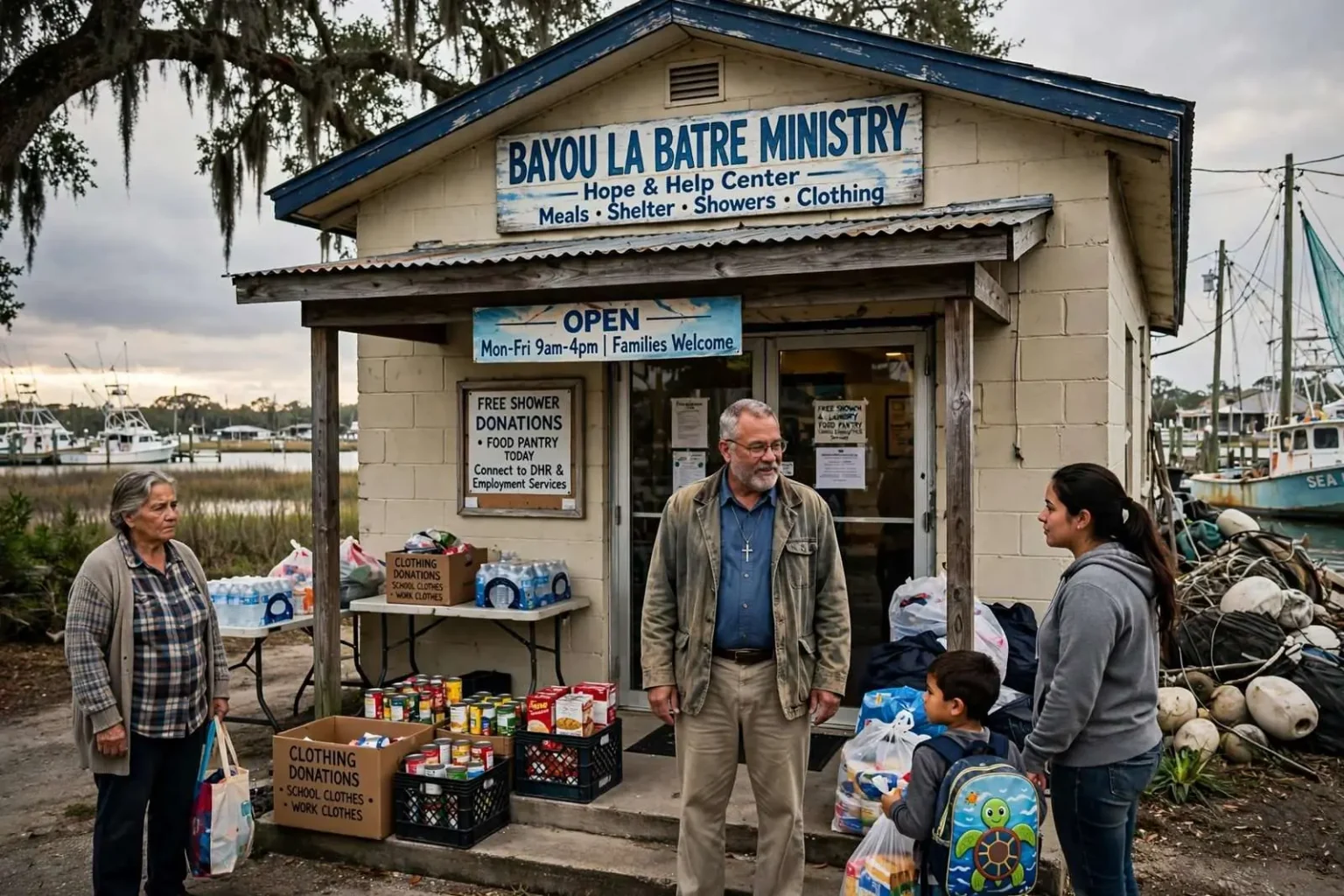
A Bayou La Batre ministry described its work in 2018 supporting people in need across south Mobile County with temporary shelter, food, clothing, showers and connections to other resources. The outreach operated in one of the Gulf Coast’s most distinctive communities — a seafood-processing town on the western edge of Mobile County where fishing families, immigrant workers, and long-term residents have weathered hurricanes, oil spills, and the ups and downs of the seafood industry together.
Pastor Freddie Harbison said the ministry had begun about five years earlier through outreach to people experiencing homelessness. What started as a small effort to meet people where they were had grown by 2018 into a broader operation, one that met basic daily needs while pointing clients toward the agencies and services that could address the deeper problems behind a missed rent payment or an empty pantry.
Growing Need Across South Mobile County
He said the group had encountered increasing numbers of families, single mothers, children and older adults seeking help. That shift in the makeup of those seeking assistance mirrored trends playing out across south Alabama: poverty that had once been concentrated among single adults experiencing homelessness was increasingly showing up in family households, driven by housing costs, stagnant wages, and the vulnerability of communities dependent on seasonal work.
For a small town like Bayou La Batre, the arrival of families at a ministry door carried particular weight. The community’s economy centers on seafood processing and commercial fishing — work that is physically demanding, weather-dependent, and cyclical. When the boats stay at the dock or processing lines slow down, the effect ripples through households quickly, and the margin between a steady year and a crisis year can be thin for working families.
Shelter, Meals, and a Place to Start
The ministry’s core services addressed the immediate needs that follow when housing falls apart. Temporary shelter provided a bed for those with nowhere else to go. Hot meals and groceries stocked households that had run short. Clothing — from work clothes to school-appropriate outfits — helped people present themselves for jobs and classrooms. Showers and laundry facilities restored a basic dignity that people losing their housing lose first, and often need most when applying for work.
Just as important were the connections. By linking clients to other resources — benefits programs, medical care, employment services — the ministry functioned as a front door to the wider social service network that many people in need do not know how to navigate alone. In a small community far from downtown Mobile’s nonprofit corridors, that bridging role fills a gap that larger charities often cannot reach.
Facility Repairs and Partnerships
The ministry was preparing to rehabilitate and remodel its facility to remain open and meet safety standards — a project that had become necessary to keep the doors open at all. Older buildings pressed into service as shelters and meal sites face the same code requirements as any public accommodation, and bringing a structure up to standard takes money that a small ministry rarely has on hand.
Harbison said an architect had donated design work and some businesses had agreed to provide services or materials, while additional funds were still needed. The pattern is a familiar one for small nonprofits on the Gulf Coast: professionals contribute their expertise in kind, local businesses lend labor or supplies, and the remaining gap waits on community donations. Every donated drawing or donated hour reduced the cash the ministry had to raise, but the project still depended on the generosity of donors to cross the finish line.
The stakes of the building project were straightforward. Without the rehabilitation, the facility could fall out of compliance and the services inside it — the beds, the meals, the showers that anchored the ministry’s daily work — would have nowhere to operate. The building was not a backdrop for the mission; it was the mission’s physical platform, and keeping it viable meant keeping the outreach alive.
Working With DHR and the Courts
He also described work with agencies including DHR and court systems to help families access services and remain together when possible. The Alabama Department of Human Resources administers the state’s child welfare and family assistance programs, and ministries that collaborate with DHR often serve as a softer landing place than the formal system alone — a place where a family under scrutiny can find food, shelter, and encouragement while working through a case plan.
The goal, as Harbison described it, was keeping families together when circumstances allowed. Children removed from homes because of poverty-related instability — a missed utility bill, an overcrowded apartment, a temporary stretch of homelessness — face the trauma of separation even when the underlying problem was solvable with help. A ministry that can provide temporary shelter and vouch for a family’s progress gives caseworkers and courts an alternative, and gives parents a path to regain stability without losing their children in the process.
Court involvement runs through that work as well. Families in crisis often arrive with pending matters — custody questions, eviction hearings, minor legal troubles that compound faster than they can be resolved. By connecting clients with the services and documentation they need to appear before the court prepared, the ministry helped move cases toward outcomes that kept households intact.
Faith-Based Outreach in Bayou La Batre
Bayou La Batre’s network of churches has long carried an outsized share of the community’s care work. In a town of a few thousand residents, congregations are often the first institutions to know when a household is struggling, and ministries like Harbison’s turn that proximity into action. The town’s history — rebuilt repeatedly after Hurricanes Katrina and other storms, and tested again by the Deepwater Horizon oil spill’s blow to the seafood economy — has created a community culture in which neighbors expect to help neighbors.
The ministry’s five-year arc from homeless outreach to a multi-service operation reflected that environment. Word travels quickly in a small town: a mother who received groceries tells another family, a worker who slept at the shelter refers a coworker, and the operation grows to meet demand that was always there but had nowhere to go. By 2018 the ministry was serving not just the town itself but the surrounding south Mobile County communities — Coden, Grand Bay, St. Elmo, and the rural stretches between them where help of any kind is miles away.
What Small Ministries Need to Survive
The challenges Harbison described — a building that had to be brought up to code, donated design work, businesses willing to help, and funds still short — capture the daily arithmetic of small-faith-based nonprofits. Large charities can apply for major grants and hire development staff; small ministries typically run on donations, volunteers, and whatever the community can spare. A single capital project can consume years of an operating budget.
What small ministries offer in return is reach and trust. People who would never walk into a government office will accept a meal from a pastor they have known for years, and needs surface earlier when the helper is a neighbor. That trust is why agencies like DHR and the courts value partnerships with community ministries, and why the rehabilitation of one modest building in Bayou La Batre mattered beyond its walls.
A Profile in Time
This article records the organization’s services and needs as described in 2018. It does not state the later status of its building project, finances or programs. What the 2018 account documents is a portrait of frontline charity in a working coastal town: shelter for those with none, food for households coming up short, showers and clothing for people rebuilding their footing, and a pastor working with architects, businesses, state agencies, and the courts to keep families together — one household at a time, in one of the Gulf Coast’s smallest and most resilient communities.
How the Community Answered
The response to the ministry’s needs followed the small-town pattern that has carried Bayou La Batre through its hardest decades. The donated architectural work came from a professional willing to put skills behind the mission, and the businesses that signed on to provide services or materials did so knowing the return was community rather than revenue. What remained was the cash gap that only broader giving could close — the difference between a plan on paper and a facility ready to serve.
For donors weighing where their contributions go furthest, small ministries offer a visible equation: a repaired roof keeps the shelter open through hurricane season; a code-compliant kitchen keeps the meal program running; a renovated bathroom keeps the showers available to people who have nowhere else to wash. In a town the size of Bayou La Batre, the results are visible from the road — and the need, as Harbison described it in 2018, was growing rather than shrinking, with more families, single mothers, children and older adults arriving each month at the ministry’s doors seeking the same basics the operation had provided since its beginnings in homeless outreach five years before.